Commercial cleaning equipment support: [email protected] Global service network | English
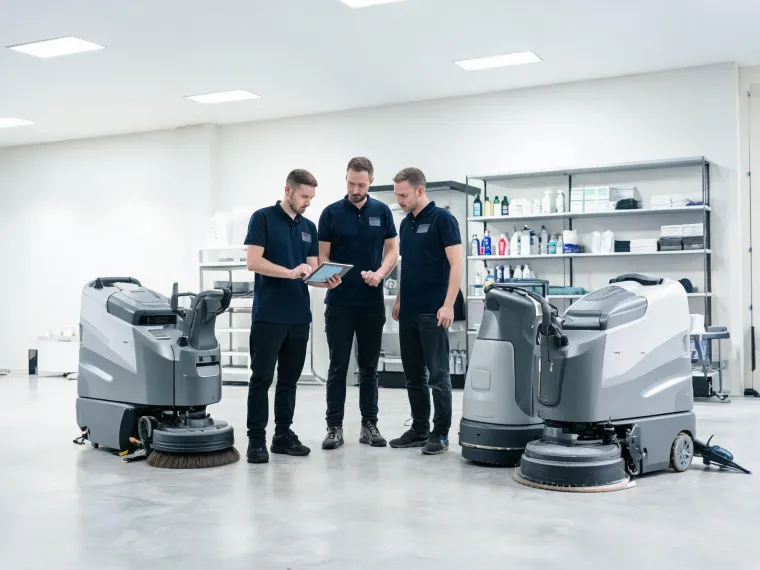
Nilfisk team reviewing cleaning equipment in a service center
About Nilfisk

Nilfisk is a reliable partner for professional cleaning equipment decisions

Our work centers on the facility teams who must keep floors, production zones, dock areas and public spaces ready while the business keeps moving.

Practical heritage

From machine engineering to floor-care confidence

Nilfisk is known in the commercial cleaning market because its equipment conversations begin with a practical question: what must the site prove at the end of the cleaning route? A glossy floor may matter in retail, dry debris capture may matter in logistics, and controlled extraction may matter near manufacturing processes. Those needs do not fit one generic answer. They require machines, consumables and service habits that fit the site.

Nilfisk works as a steady partner through clear documentation, measured recommendations and a preference for long-term operating clarity. When a team compares floor scrubbers, floor sweepers, pressure washers, industrial vacuums and dust collectors, the decision should connect machine capability to operator workflow. Tank capacity, brush pressure, filtration, battery runtime, squeegee recovery and hose durability become meaningful only when tied to how the crew actually cleans.

Good cleaning equipment earns trust when supervisors can explain why that machine is on that floor, on that route, with that service plan.
Route discipline

Cleaning is scheduled work

We frame recommendations around square footage, traffic timing, soil load and storage constraints so routes stay realistic, and we revisit each plan on a defined cycle, typically a 90-day consumable check and an annual fleet review, rather than waiting for a breakdown.

Machine clarity

Equipment has a defined role

Each scrubber, sweeper, pressure washer, vacuum or dust collector should have a job description that operators understand.

Service readiness

Parts and checks matter

Consumables, inspections and training are treated as part of the purchase, not as afterthoughts once uptime is at risk.

What we will tell a buyer to slow down on

A reliable partner is also willing to argue against a sale. We will flag when a ride-on scrubber is too large for a congested stockroom, when a battery machine's charge window does not fit a single-shift schedule, when an industrial vacuum's standard filtration is not rated for the fine or hazardous dust a process actually produces, and when a pressure washer is being considered for a finished interior floor that has no drainage. Naming these limits before the order is placed is slower than quoting whatever the customer asked for, but it is the part of the conversation that keeps the equipment on the floor a year later instead of parked in a corner.

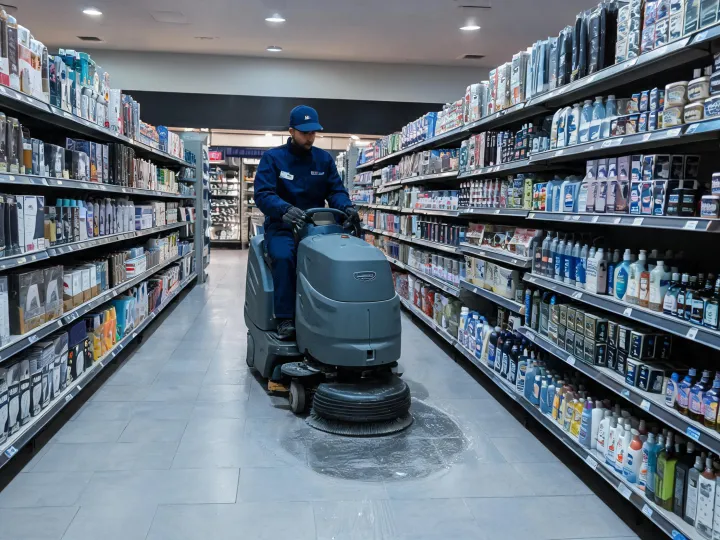
Operator using a compact floor scrubber in a retail aisle

Designed for the people who inherit the result

Commercial cleaning decisions often pass through many hands. Procurement reviews cost, facilities leadership reviews uptime, supervisors review route coverage, and operators handle the machine every day. A dependable program respects all of those perspectives. It explains how machine choice affects training time, how parts availability affects schedule risk, and how the right equipment mix reduces repeated manual work.

This approach also helps buyers avoid overbuying or under-equipping. A large ride-on scrubber may be perfect for open warehouse lanes but awkward in a crowded stockroom. A compact vacuum may be convenient yet unsuitable for fine process dust if filtration requirements are ignored. Nilfisk content and consultation should make those tradeoffs visible before the order is placed.

Talk through a facility cleaning plan with Nilfisk

Send floor types, cleaning hours, debris profile and operator constraints. The discussion can turn a machine list into a workable program.