What I Learned When Our 'Cheapest' Floor Scrubber Quote Cost Us $3,200
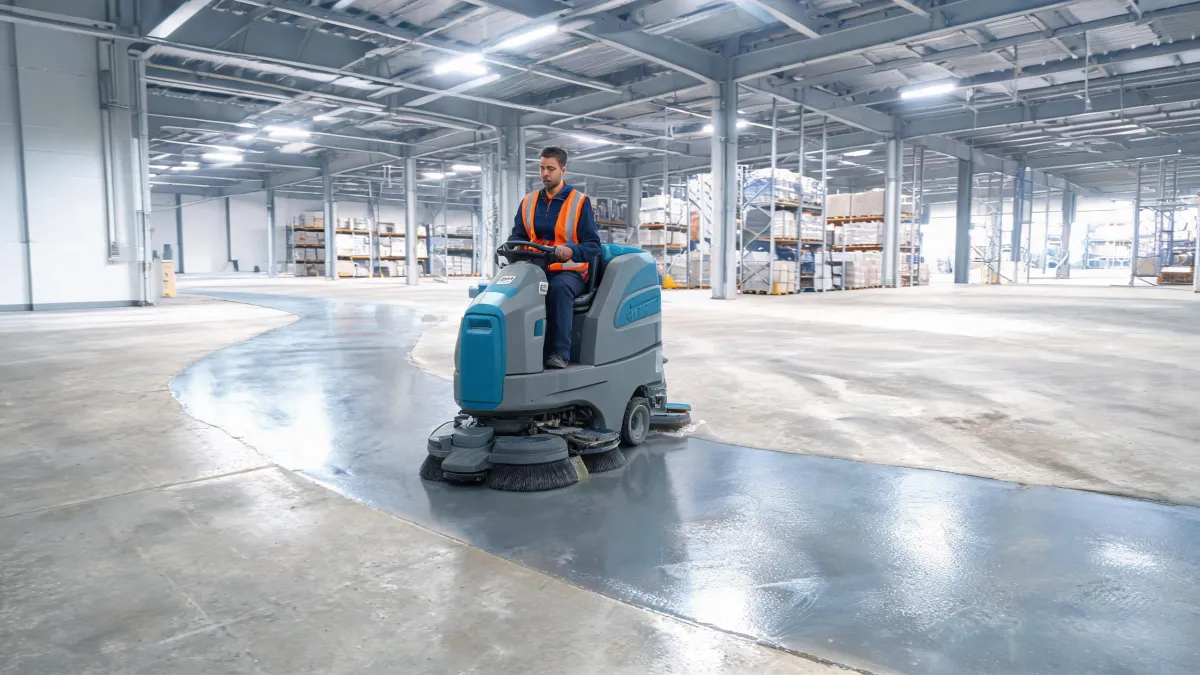
I still remember the Tuesday morning when our facility manager walked into my office holding a quote that looked too good to be true. It was for a mid-size floor scrubber—$2,800 less than the next closest bid. He wanted my sign-off by Friday.
That was October 2023. We have 340 employees across two buildings, and our janitorial crew had been asking for a walk-behind scrubber for over a year. I'd been dragging my feet because I wasn't sure how to evaluate industrial cleaning equipment. I'm an office administrator, not a facilities engineer. But a $2,800 gap is a $2,800 gap, right?
The Quote That Looked Like a Win
The vendor—a regional distributor I'll just call Supplier A—sent a one-page quote. Base unit: $4,100. Delivery: $350. That was it. Written confirmation that any bearings or belts failing within 90 days would be covered at no charge. Our facility manager, who'd done this before, said it looked clean. Finance approved it within a day.
What I didn't ask was a question I now ask every single time: What's NOT included?
Three weeks after the scrubber arrived, the squeegee blade assembly failed. Supplier A told me the blade was a 'wear item' and not covered. That was $340. Then the battery charger stopped working—another $520. By the time the motor burned out in month four (it was spec'd for lighter duty than we needed), we were staring at a $2,100 repair bill.
Total additional costs: $3,200. On a machine that was supposed to save us money.
The Assumption That Cost Me
I assumed 'standard duty' meant the same thing to every vendor. Didn't verify. Turned out Supplier A's 'standard' was rated for 8,000 square feet per cycle. Our buildings have 22,000 square feet of hard flooring. We were burning through that machine in one afternoon.
That's the thing about hidden costs. They don't show up on the quote. They show up six weeks later, when your facility manager is telling you the scrubber 'just doesn't work right.'
The vendor who originally lost the bid—the one $2,800 higher—had quoted a unit rated for 30,000 square feet per cycle. I went back and looked at their proposal. There it was, on page two: duty rating, battery cycle life, replacement part costs, estimated annual maintenance. All spelled out. I just hadn't known what to look for.
What I Changed
After that experience, I built a one-page checklist for any equipment purchase over $2,000. It has three questions:
- What's the duty rating, and does it match our actual usage? Not our average usage. Our peak usage.
- What does routine maintenance cost annually? Ask for a written estimate. If they won't provide one, that's a red flag.
- What voids the warranty? I've learned that some warranties exclude 'commercial use' entirely—which is absurd for commercial equipment, but it happens.
The last point matters more than you'd think. I've never fully understood why some vendors sell 'commercial' equipment with warranties that assume 40-hour work weeks. My best guess is it comes down to how they categorize risk internally. If someone has insight into that, I'd love to hear it.
When we replaced that scrubber last year, I went with a different approach. The new unit—a mid-size walk-behind from Nilfisk—came with a detailed total cost of ownership sheet. Purchase price, estimated annual maintenance, replacement part costs, even expected lifespan for each wear component. It wasn't the cheapest quote. But it was the most complete one.
I've learned to ask 'what's NOT included' before 'what's the price.' The vendor who lists all fees upfront—even if the total looks higher—usually costs less in the end.
Where This Applies Beyond Scrubbers
The same pattern shows up in every category of industrial cleaning equipment. We recently evaluated cordless vacuum cleaner industrial options for our warehouse. One quote was $400 less per unit. But when I asked about replacement HEPA filters, the difference disappeared. That vendor's filters cost $85 each and needed replacing every six weeks. The other vendor's filters were $60 and lasted four months. Over a two-year period, the 'cheaper' cordless vacuum cleaner industrial solution would have cost us about $1,400 more per unit.
Same story with HEPA floor sweepers. Same story with pressure washers—Nilfisk pressure washers included. The sticker price is rarely the real price.
I'm not saying the most expensive option is always right. That's not true either. I'm saying the quote with the most information is usually the safest bet. It means someone thought about what happens after the sale.
What I'd Tell Someone Starting Out
In my first year managing these purchases, I made the classic beginner error: I treated 'lowest quote' as 'best value.' Cost me $3,200 and a lot of credibility with my facility manager, who had to explain to our janitorial crew why their new equipment was in the shop more than it was on the floor.
Here's what I've settled on: transparency isn't a nice-to-have. It's the product. When a vendor hands you a quote with every line item spelled out—duty ratings, maintenance costs, warranty exclusions, replacement part pricing—that's not paperwork. That's respect for your time and your budget.
The vendor who hides costs behind a low sticker price is essentially borrowing your trust. They'll collect on it later, in repair bills and downtime and awkward conversations with your boss.
I'd rather pay more upfront for a number I can trust.
Prices and equipment specifications mentioned in this article reflect information provided by vendors in 2023–2024. Verify current pricing and warranty terms directly with manufacturers or authorized distributors, as these details change.

Meera Kulkarni
Meera Kulkarni is a textile-printing equipment analyst covering DTF, DTG, dye-sublimation, and eco-solvent printers with their pretreatment, powdering, curing, pressing, and finishing workflows. She uses ISO 105-C06 laundering tests for applicable printed textiles while tracking colour difference, ink laydown, transfer temperature, dwell time, curing profile, washfastness, nozzle reliability, media tension, and production yield. Her process guides help decorators, apparel producers, and print shops select equipment, inks, films, fabrics, and operating windows for repeatable output.