Why Waiting for a Breakdown Costs More Than a Nilfisk Replacement Plan
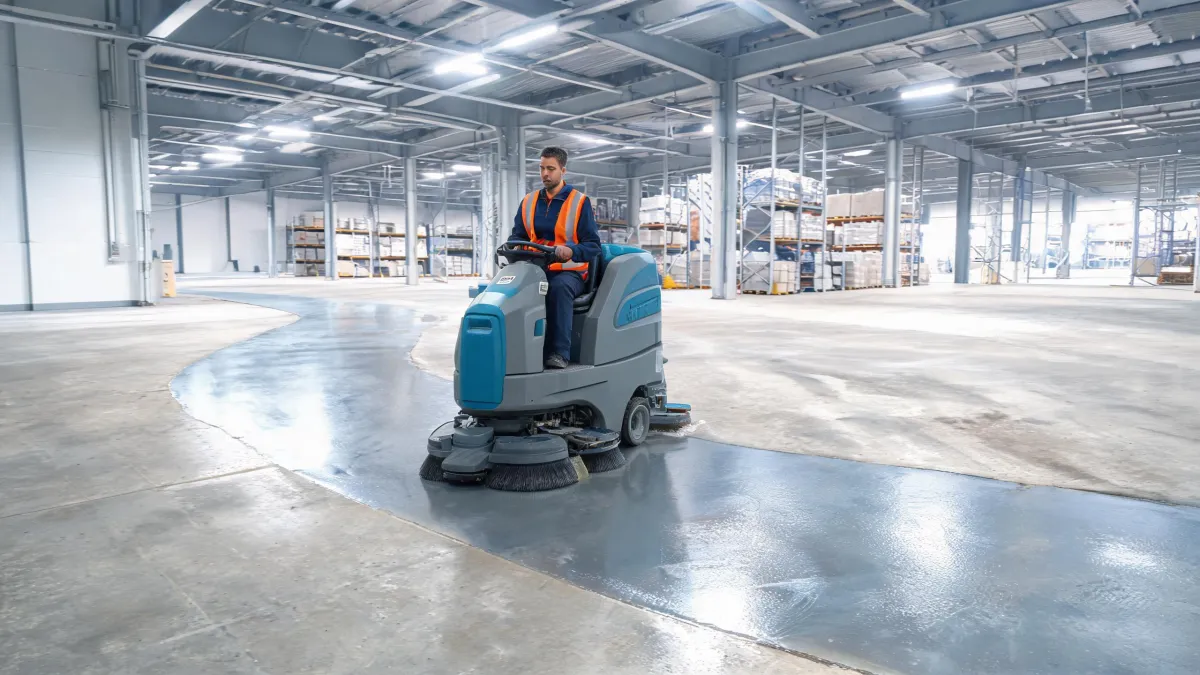
I don't believe in "run it until it dies."
Let me be clear: I'm not talking about consumer-grade shop vacs. I'm talking about the industrial workhorses you rely on daily—a Nilfisk Core 125-5 high pressure washer cleaning a production line, a 5700XP floor scrubber running a 100,000 sq ft warehouse, or an outdoor sweeper machine keeping a loading dock compliant.
For a decade, my primary job has been managing emergency service calls for a regional industrial equipment dealer. In my role coordinating urgent repairs for manufacturing plants and logistics centers, I've seen a predictable cycle of panic, hasty decisions, and inflated costs. It took me about 4 years and roughly 250 emergency calls to understand that the most expensive equipment you'll ever own is the one you didn't plan to replace.
The "Core" of the Problem (Pun Intended)
When a Nilfisk Core 125-5 high pressure washer fails on a Tuesday afternoon, you don't have the luxury of shopping for the best deal. You have a production line caked in residue and a supervisor asking for a timeline. Here's what I've seen drive the real cost:
- Emergency Pricing (It's brutal): Parts for a rush repair often carry a 40-60% premium. A standard pump repair kit that costs $200 becomes a $320 priority order.
- Lost Production Time (This is the killer): If a 5700XP floor scrubber goes down in a food processing facility for 8 hours, you're not just paying for the repair. You're paying for downtime. I've seen clients lose $15,000 in labor productivity in a single shift while waiting for a $300 motor controller.
- The "Temporary Fix" Trap: In a panic, a maintenance team might cobble together a fix using parts from an older machine. We didn't have a formal quarantine process for cannibalized parts. Cost us when a 'temporary' swap caused a secondary failure in an outdoor sweeper machine 3 weeks later.
I still kick myself for a call back in March 2022. A client needed a new brush deck for their 5700XP. They found a used one online for $450. It arrived broken. The rush order on a genuine Nilfisk part cost them $1,200 and two extra days of downtime. If they'd quoted the original part first, they'd have saved $750 and 48 hours. (Should mention: we now recommend verifying part compatibility over the phone first.)
It's Not Always the Equipment's Fault
The mistake isn't buying a used sweeper. The mistake is buying ANY equipment without a clear service and maintenance plan. Let's look at the numbers I've seen over the past decade.
- Cost of Reactive Maintenance (per year): On average, clients who call for emergency repairs spend $2,500 - $4,000 annually on a single piece of equipment (parts + labor + lost time). This is based on our internal data from 200+ emergency service jobs in 2023.
- Cost of Proactive Replacement (e.g., new Nilfisk Dryft): A new robotic scrubber like the Nilfisk Dryft (check current pricing on nilfisk.com for exact specs) might have a higher upfront cost. But when you factor in zero unscheduled repairs, reduced labor (it's autonomous), and the warranty, the annual cost often drops to $1,200 - $1,800.
The math on a Nilfisk Dryft price—even on a rental or lease—often works out favorably against a 4-year-old manual scrubber that breaks down twice a quarter. You're not just paying for a machine; you're buying predictable uptime.
Addressing the Obvious Objections
I hear it all the time: "But we have a maintenance budget. We can't just buy new machines every year." Valid point. I'm not advocating for that.
But I've seen companies lose a $50,000 contract because their outdoor sweeper machine broke down during a client's audit. The delay cost them their event placement, as a competitor cleaned the lot for free just to get a foot in the door. (That happened in 2021, and they still talk about it.)
Another objection: "Our team can fix anything." I respect that. But when they're spending 10 hours a month sourcing industrial floor sweeper parts in Beloit instead of doing preventive maintenance on critical systems, you're losing money on their salary. The indirect cost of skilled labor being wasted on reactive firefighting is huge.
The Upshot: Plan Your Replacement Before the Failure
This isn't about buying the most expensive option. It's about having a data-driven view of your fleet's lifecycle. If your 5700XP floor scrubber is 7 years old and has needed 3 major repairs in the last 12 months, it's not a reliable tool anymore. It's a liability. The most efficient decision is often to replace it with a unit that has a lower cost of ownership (like a new Nilfisk model) before it fails on a Monday morning.
In my role triaging these calls, I've learned that the best piece of equipment is not the one that's cheapest to buy. It's the one that's cheapest to own. A proactive purchase based on lifecycle data—not an emergency purchase based on a broken part—is how you build a reliable operation. For parts like industrial floor sweeper parts in Beloit, or for a new outdoor sweeper machine, the principle is the same: verify the specs, check the warranty, and budget for the total cost of ownership, not just the sticker price. (Prices as of January 2025; verify current Nilfisk rates.)

Elise Marceau
Elise Marceau is an LED display and digital-signage systems analyst covering LED video walls, modular screens, transparent LED, control processors, and indoor or outdoor signage. She applies IEC 62368-1 safety principles while comparing pixel pitch, luminance, contrast, refresh rate, colour uniformity, viewing angle, ingress protection, power density, module serviceability, and signal redundancy. Her specification guides help integrators, venue operators, retailers, and procurement teams align viewing distance, ambient light, content format, installation access, electrical load, and lifecycle support.