How a Last-Minute Powder Dust Crisis Taught Me the Real Cost of Hidden Fees
The Call That Changed Everything
In December 2024, at 3:15 PM on a Tuesday, my phone rang. The voice on the other end was panicked. "We've got a powder dust emergency," the plant manager said. "Our current dust collector failed inspection, and we're facing a $50,000 production halt penalty if we can't fix it by Friday morning."
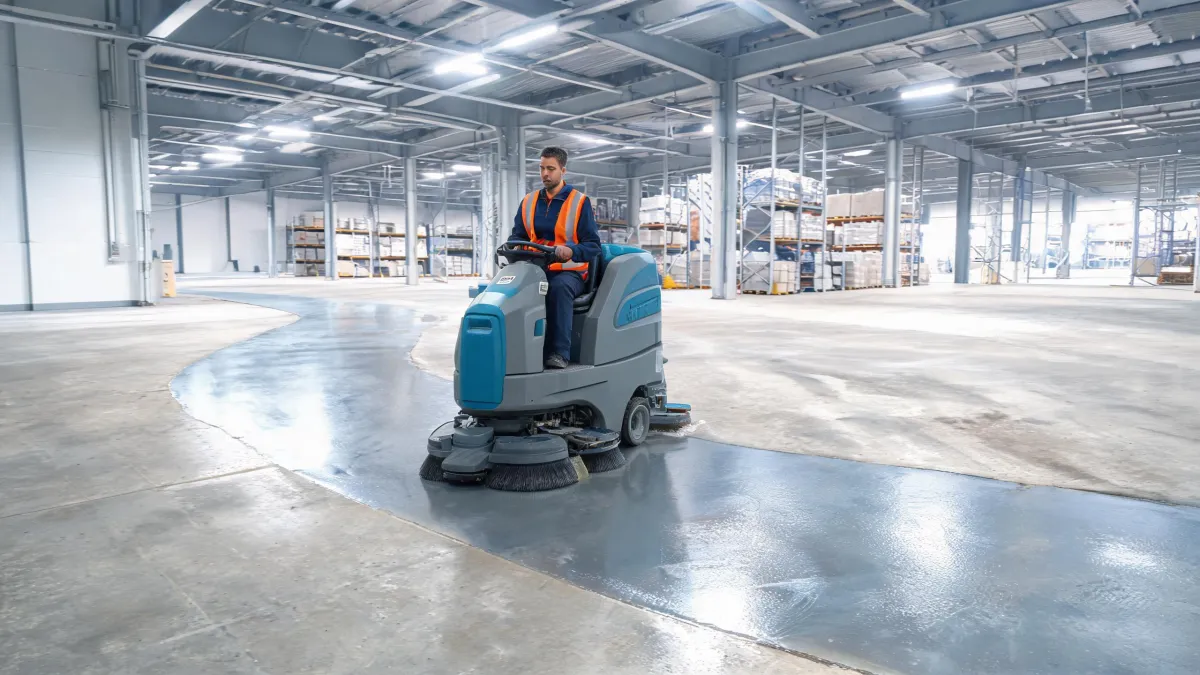
I'd been handling rush orders for Nilfisk for over 6 years, but this one was tight. The factory was in Birmingham, AL — not exactly next door to our main warehouse. And the specs were demanding: they needed a heavy-duty powder dust collector, two industrial vacuums for cleanup, and a commercial floor scrubber to prep the floor for the re-inspection.
But here's what really caught my attention: when I asked why they hadn't ordered earlier, he admitted they'd gone with a low-cost overseas supplier who promised the same specs at 30% less. Surprise, surprise — the "same specs" turned out to be optimistic marketing, and the hidden fees (shipping, installation, calibration) added 50% to the initial quote. They felt trapped.
The Price of Hidden Fees
I went back and forth between sympathy and frustration. I've seen this pattern too many times — buyers focus on the line-item price and completely miss the setup costs, rush delivery surcharges, and after-service fees that can double the total. (Note to self: this is why I always send a full breakdown before anyone signs.)
I laid out our total cost on a single page:
- Nilfisk powder dust collector (model VHS480) — $12,400
- Two Nilfisk industrial vacuums (VTR500) — $3,600 each
- Nilfisk Core 150 pressure washer for post-cleanup — $2,100
- Commercial floor scrubber rental for 3 days — $450
- Expedited shipping from Atlanta to Birmingham — $720
- On-site training (how to use a commercial floor scrubber Birmingham AL style) — $800
- Total $23,670 — all in, no surprises.
Compare that to the overseas supplier's "$17,000" which, after hidden shipping, customs, and installation, came to $25,500 — and they still couldn't deliver on time. I didn't need to say much. The numbers spoke for themselves.
The 48-Hour Sprint
The best-case scenario was tight. Normal lead time on those products is 10 days. We had 44 hours. I made three calls:
- Our Atlanta branch confirmed they had the VHS480 in stock.
- Our regional service manager agreed to personally drive the industrial vacuums to Birmingham that night.
- The distributor for the Core 150 pressure washer expedited from Nashville — they'd have it at the factory by 8 AM Wednesday.
Then the weather hit. An ice storm delayed the Atlanta truck by 6 hours. I remember staring at the tracking map, calculating worst-case scenarios. The upside of going through official channels? Nilfisk's backup network. We rerouted from the Charlotte warehouse — adding $300 in extra freight, but we delivered before the Friday cutoff.
When I finally got the photo from the plant manager — the floor gleaming, the dust collector running a perfect HEPA test — I exhaled. The client's alternative was a $50,000 penalty plus missed orders. They paid our rush fees (which I'd disclosed upfront) and still saved over $30,000 compared to the low-cost option's real cost.
What This Taught Me
I didn't fully understand the value of transparent pricing until that week. The vendor who lists all fees upfront — even if the total looks higher — usually costs less in the end. People assume the lowest quote means the vendor is more efficient. What they don't see is which costs are being hidden or deferred.
Now, I always tell buyers: "Ask for what's not included before you ask for the price." It's saved me from countless disasters. And when a client calls with a true emergency? We deliver — because we built our operations around transparency and reliability, not lowest-first pricing.
Oh, and the factory in Birmingham? They became a recurring customer. Last I checked, they'd also picked up a Nilfisk autonomous scrubber for daily maintenance. (As of January 2025, they've ordered three more industrial vacuums.)
Pricing is for general reference only. Actual prices vary by vendor, specifications, and time of order — but the principle stays the same: an honest number beats a hidden bargain every time.

Elise Marceau
Elise Marceau is an LED display and digital-signage systems analyst covering LED video walls, modular screens, transparent LED, control processors, and indoor or outdoor signage. She applies IEC 62368-1 safety principles while comparing pixel pitch, luminance, contrast, refresh rate, colour uniformity, viewing angle, ingress protection, power density, module serviceability, and signal redundancy. Her specification guides help integrators, venue operators, retailers, and procurement teams align viewing distance, ambient light, content format, installation access, electrical load, and lifecycle support.