I Buy Cleaning Equipment for a Living—These Nilfisk Mistakes Cost Me Real Money
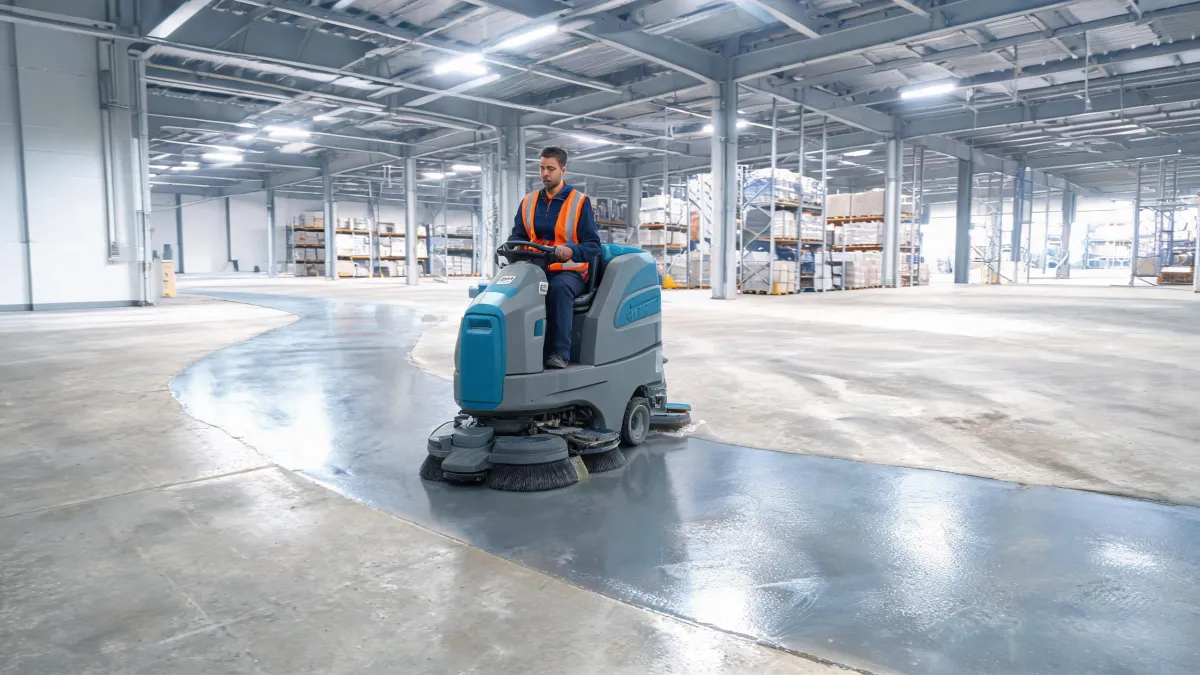
In five years of managing purchasing for a facility services company, I've signed off on just over $180,000 in cleaning equipment—machines, not consumables. If I could go back and change one thing, it wouldn't be a specific vendor or model. It would be how I chose them. The equipment almost never fails because it's a bad machine. It fails because it's a mismatch between the machine and the job. That sentence cost me a lot of money to learn.
It sounds obvious, but watch how buying actually happens. We compare PSI on pressure washers. We pick a dust collector because it sounds high-tech. We buy whatever floor detergent happens to be on sale. I've done all three, and each one cost me time, repair bills, and credibility with my own boss.
A bit of context so you know where this is coming from. I handle purchasing for a facilities operation in Germantown, MD. About 300 employees, three locations, and a department budget of roughly $90,000 per year across eight vendors. I report to both operations and finance, so when a purchase goes wrong, I hear about it twice.
The examples below are the ones I replay when we're evaluating something new. Not because they were the largest invoices—because they had the largest gap between assumptions and reality.
The Nilfisk High Pressure Washer: I Compared the Wrong Number
When we outfitted our wash bay, I bought a consumer-grade pressure washer because it had a higher PSI than the commercial unit we eventually purchased. The number on the box looked fantastic. The pump didn't care. It was never designed to run for hours, and it failed in week 11—on a Friday, naturally, with a full fleet wash scheduled for the weekend.
We run a professional car wash setup for our own vehicles and some client fleets: two bays, spray wands, foam cannon, six or more hours of runtime a day. In that environment, a Nilfisk professional pressure washer for car wash duty is engineered differently. The difference isn't spray pressure—it's the duty cycle. The commercial pump is rated for continuous operation, and the unit is built so pump seals and valves can be serviced without tearing the frame apart. Not exciting. But that's where your real cost lives.
The deeper mistake was chasing PSI. When we finally replaced the failed unit with a Nilfisk high pressure washer that moved about 4 GPM instead of 2.2 GPM, our wash time for a pickup dropped from 22 minutes to 9 minutes. The pressure spec barely changed. The flow did the work.
(Note to self: if a salesperson can't explain the pump's duty rating, they don't understand the machine. Ask that question before you ask about pressure.)
The ESP Dust Collector I Almost Bought for the Wrong Reasons
The next lesson came from our light fabrication and dry buffing area. A supplier recommended an ESP dust collector—electrostatic precipitator—and pitched it as the more sophisticated option. It sounded like the right upgrade. It wasn't.
From the outside, ESP technology looks like the premium choice. In practice, many of these units are designed for oil mist and fine aerosols, not the mixed dry debris that comes off grinding and buffing stations. The collection plates needed constant cleaning, and performance fell off quickly between cleanings. We demoed one for ten days, and the cleaning downtime alone convinced us to go a different direction. We ended up with a cartridge-style collector with a spark arrestor and proper grounding, which matched the actual dust.
Most buyers focus on airflow. The question everyone asks is how many CFM? The question they should ask is what kind of dust is this, exactly? Particle size, moisture, and whether the dust is combustible change the answer far more than airflow alone. If your process creates dust that can ignite, NFPA 654 is the standard to start with—and your local fire marshal may have opinions worth collecting before you sign anything.
One purchase that did work: a buffer dust collector for concrete floor prep. Wet grinding is miserable—slurry everywhere and a serious slip hazard. We bought a shroud kit that converts a standard floor buffer into a dust-controlled tool and connected it to a HEPA-rated Nilfisk vacuum. The first attempt used a cheap unsealed filter and just recirculated the dust, so we learned the hard way: the vacuum's filtration is part of the machine, not an accessory.
Floor Scrubber Detergent in Germantown: The Small Purchase That Caused the Biggest Downtime
Our most frustrating equipment failure wasn't equipment at all. The walk-behind scrubber started leaving a film on the floor, the squeegee streaked, and the recovery tank sensors went crazy. We changed pads, adjusted pressure, checked hoses, and argued with the service tech. The culprit turned out to be the detergent. Specifically, the wrong detergent.
A team member had swapped in an all-purpose cleaner because it was cheaper and foamed nicely. That foam was the red flag. Auto-scrubbers need low-foaming chemistry; high-foam detergents overwhelm the recovery system, damage the vacuum motor, and leave residue that customers walk on. The repair bill was about $640 for a vacuum motor and a service call—more than three years of savings from buying the cheap stuff.
Finding a reliable floor scrubber detergent in Germantown took three brands and a lot of test strips before we settled on one matched to our water hardness. The winner wasn't the most expensive or the best marketed product. It was the one with a technical data sheet we could actually read.
One more thing about chemistry: terms like 'eco-friendly' and 'non-toxic' show up all over cleaning supplies. Per FTC guidelines, environmental claims need substantiation, but that doesn't stop the marketing. I ask suppliers to back it up in writing. An informed customer asks better questions and makes faster decisions. A misled customer makes repeat phone calls.
Where I Still Don't Have Answers
I don't want to overstate the usefulness of any of this. My experience is based on one mid-sized company in the mid-Atlantic—roughly 30 machine purchases and a couple hundred consumable orders. If you run a food plant, a hospital, or any facility with sanitation certifications, ignore most of what I just said. Those environments live in a different regulatory world.
I've also only worked with regional dealers. National contract buyers will see different pricing, service terms, and obligations than I did.
And honestly, I still have mixed feelings about premium consumables. Part of me thinks some of the markup is branding. Another part remembers the $640 vacuum motor and wonders whether the cheap detergent was ever really cheaper. I've settled on a simple rule: chemistry is a specification, not a suggestion. If you don't know what's in the bottle, you're not making a cost decision—you're guessing, with expensive consequences.
If your pressure washer runs twice a month, buy the lighter machine and put the savings into a good hose. If your dust problem is occasional, renting might be smarter than buying. Match the equipment to the actual job—duty cycle, dust character, water chemistry—and the price tag becomes almost secondary. That's the thing I wish I'd understood before I started.

Elise Marceau
Elise Marceau is an LED display and digital-signage systems analyst covering LED video walls, modular screens, transparent LED, control processors, and indoor or outdoor signage. She applies IEC 62368-1 safety principles while comparing pixel pitch, luminance, contrast, refresh rate, colour uniformity, viewing angle, ingress protection, power density, module serviceability, and signal redundancy. Her specification guides help integrators, venue operators, retailers, and procurement teams align viewing distance, ambient light, content format, installation access, electrical load, and lifecycle support.