I Picked the Wrong Nilfisk Machine. Twice. Here's What I Wish Someone Had Told Me.
-
You're looking at Nilfisk machines. Good. But don't make my mistakes.
-
Q: What's the biggest mistake people make when buying a Nilfisk industrial vacuum?
-
Q: Can a Nilfisk floor scrubber replace a Tennant? What's the real difference?
-
Q: I need a commercial pressure washer for waste management. What specs actually matter?
-
Q: What about the 'Salon Dust Collector' keyword? That's not industrial, is it?
-
Q: How do I know if my Nilfisk machine is about to fail? What's the 'tell'?
-
Q: Last question. If you could only buy one Nilfisk machine for a new facility, which would it be?
-
Q: What's the biggest mistake people make when buying a Nilfisk industrial vacuum?
You're looking at Nilfisk machines. Good. But don't make my mistakes.
I'm Jonah. Operations manager for a mid-sized waste management and recycling facility. I've been handling equipment procurement for about 5 years now. In that time, I've personally made enough mistakes to fill a dumpster. Roughly $15,000 in wasted budget, by my count. I now maintain our team's equipment selection checklist. This article is that checklist, in question form.
Let's get into the questions I wish I'd asked.
Q: What's the biggest mistake people make when buying a Nilfisk industrial vacuum?
They buy a machine for the job they have today, not the job they'll have tomorrow.
I did this. In 2022, our facility was handling mostly dry waste—cardboard, plastics, dust. I bought the Nilfisk VHS120 industrial wet/dry vacuum. Perfect for the dry stuff. Powerful. Reliable. Then six months later, we got a contract for a food processing plant's waste. Wet. Sludgy. The VHS120 handled it, barely, but the filters clogged twice a shift. I spent $200 a week on replacement filters and lost production time. (Should mention: I could have just bought the optional liquid kit for $150. I didn't know it existed. I was an idiot.)
The lesson: Buy for the worst-case scenario, not today's workload. The VHS120 is a beast for dry dust and occasional wet pick-up. If you're regularly dealing with liquids, get the full wet kit upfront. It's cheaper than retrofitting.
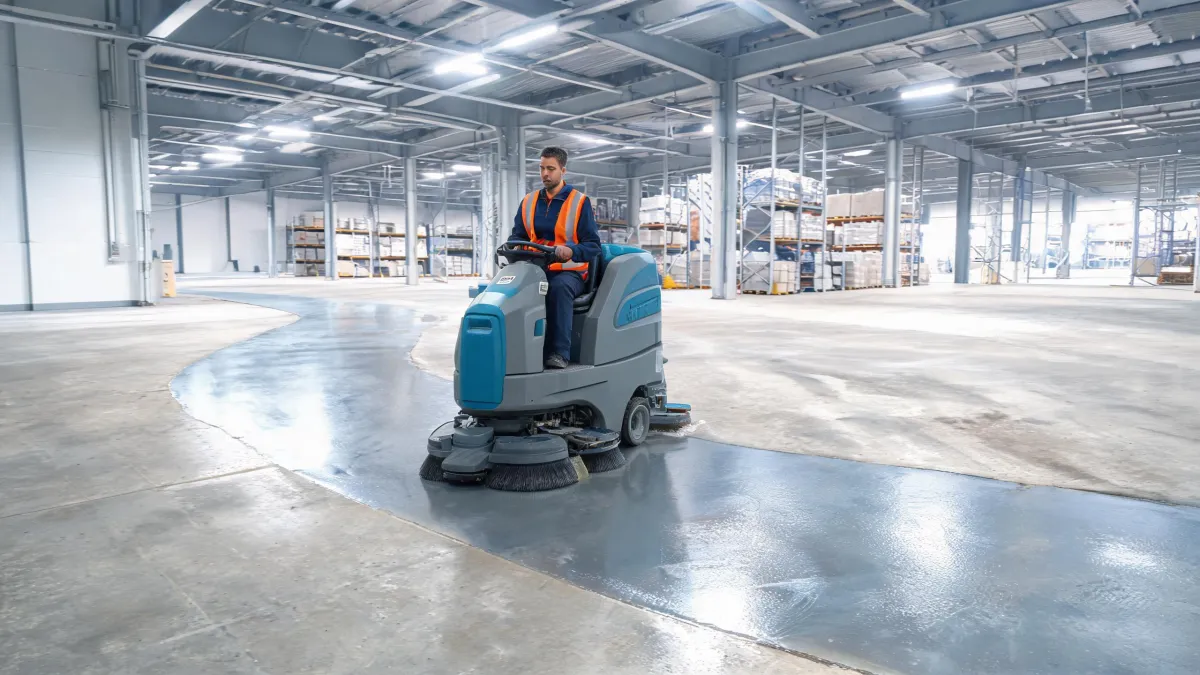
Q: Can a Nilfisk floor scrubber replace a Tennant? What's the real difference?
This is the 'Ford vs. Chevy' of the cleaning world. I've used both. Here's the honest truth, from someone who has not been paid by either brand:
- Tennant: Excellent if you need a machine that a new operator can run after a 10-minute tutorial. Their controls are intuitive. The build quality is solid. You pay a premium for that simplicity. Think of it as the 'Apple' of floor scrubbers.
- Nilfisk: Often more rugged for industrial abuse. Better for long, straight runs in warehouses. Their battery technology on newer models is impressive. However, the user interface can be less forgiving. An untrained operator will break a Nilfisk faster than a Tennant.
Here's my rule: If your operators change weekly (high turnover), get the Tennant. If you have a dedicated, trained team and you want a machine that can take a beating and has lower long-term maintenance costs, get the Nilfisk. I'd recommend Nilfisk for 70% of industrial settings, but if you're a school or a hospital with contract cleaners rotating through? I'd point you to Tennant. Not every machine is for every buyer.
Q: I need a commercial pressure washer for waste management. What specs actually matter?
I've bought two pressure washers for our yard. The first one was a mistake. A textbook 'penny wise, pound foolish' situation.
I saved $400 by buying a 'heavy-duty' consumer unit from a big-box store. Looked fine on paper. The specs claimed 3,500 PSI at 4 GPM. It lasted three months. Why? The pump was a Chinese axial cam unit that couldn't handle continuous industrial use (we run our washers for 4-6 hours straight). The replacement pump cost more than the whole machine. Net loss: about $1,200 and a month of a filthy loading bay.
For waste management, ignore the PSI. Focus on GPM (gallons per minute) and pump type. You want at least 4 GPM to move grease and mud. You want a triplex ceramic plunger pump (commercial standard). The Nilfisk professional units use these. A belt-drive pump (like the Nilfisk MC series) is also better than a direct-drive for continuous use because it runs cooler and lasts longer. Reference: Industry standard for commercial/industrial pumps is a triplex ceramic plunger per ASME B30.1 guidelines.
Q: What about the 'Salon Dust Collector' keyword? That's not industrial, is it?
It isn't, but I'll address it because it's a common search trap. If you're searching for a "salon dust collector" for nail dust or barber clippings, do not buy an industrial Nilfisk dust collector. You don't need a $3,000 machine with a HEPA H14 filter for a small amount of silica dust. You need a unit like the Nilfisk Core 130 or similar small portable vacuum with a proper pre-filter. The industrial units are for woodworking shops, concrete cutting, or factory floors where you're filling a 55-gallon drum with fine dust every day. Reference: OSHA 29 CFR 1910.1000 for respirable crystalline silica exposure limits—a HEPA filter is required for hazardous levels, but not for normal salon use. Don't over-buy.
Q: How do I know if my Nilfisk machine is about to fail? What's the 'tell'?
Oh, I can answer this from experience. At my last job, I ordered a VHS 120 for a high-dust woodshop. I checked it myself. Approved it. Processed it. We caught the error when the new operator couldn't figure out why the auto-filter shake wasn't working. (I had ordered the wrong model without the feature. $2,500 mistake. Straight to the trash cost. Lesson learned: Verify the SKU suffix against the application checklist every single time.)
The tell for most Nilfisk industrial machines is the sound. When the motor starts 'laboring' even though the tank isn't full, it means the filter is blinding (clogging). Ignore this for more than two shifts, and you'll burn out the motor. The repair cost on a VHS motor is about 40% of a new machine. Don't do it. Clean your filters. Their 'Tritan' polycarbonate filter housing is tough, but the filter media inside isn't invincible. Reference: Nilfisk factory service manuals recommend filter cleaning after every 8 hours of heavy use, or when vacuum pressure drops below 60% of max rating.
Q: Last question. If you could only buy one Nilfisk machine for a new facility, which would it be?
If I had to start over, it would be the Nilfisk VHS120.
Why? It's the Swiss Army knife. It vacuums dry dust. It vacuums wet sludge. It's maneuverable. It's repairable. Parts are everywhere.
But here's the catch: Buy the optional liquid kit, buy the HEPA filter, and buy a spare hose. The stock hose is adequate, but it kinks. That $60 investment in a better hose will save you $300 in frustration over the first year. (I learned this the hard way. My spare hose saved my butt when the original split during a critical cleanup. Surprise, surprise.)
Don't let the 'industrial' label fool you into thinking it's invincible. It's a tool. A great tool. But you need to know its limits. That's the honest truth.

Elise Marceau
Elise Marceau is an LED display and digital-signage systems analyst covering LED video walls, modular screens, transparent LED, control processors, and indoor or outdoor signage. She applies IEC 62368-1 safety principles while comparing pixel pitch, luminance, contrast, refresh rate, colour uniformity, viewing angle, ingress protection, power density, module serviceability, and signal redundancy. Her specification guides help integrators, venue operators, retailers, and procurement teams align viewing distance, ambient light, content format, installation access, electrical load, and lifecycle support.