The Real Cost of Clean: A Procurement Manager's Nilfisk FAQ
-
Who thinks about the total cost of cleaning equipment? I do.
-
1. What's the difference between the Nilfisk Viper AS4325B battery micro scrubber and a standard electric concrete floor scrubber?
-
2. Are Nilfisk autonomous scrubbers worth the premium over manual models?
-
3. Can I use a Nilfisk dust collector for bedroom cleaning? Kind of a weird question, but I've been asked.
-
4. What's the single biggest mistake buyers make when purchasing industrial cleaning equipment?
-
5. How has Nilfisk's battery technology changed in the last five years?
-
6. Is the Nilfisk floor scrubber 'hand model' (like the hand scrubber) good for small areas, or should I rent instead?
-
7. What's one question most buyers don't ask but should?
Who thinks about the total cost of cleaning equipment? I do.
I manage procurement for a mid‑size industrial facility – about 200,000 sq ft of warehouse and production space. Over the last six years I’ve audited $180,000+ in cleaning equipment spending, negotiated with eight vendors, and built a TCO model that finally stopped the budget overruns. Here are the questions I wish I’d asked from day one – answered straight, with the numbers I track.
1. What's the difference between the Nilfisk Viper AS4325B battery micro scrubber and a standard electric concrete floor scrubber?
Honestly, the main difference isn't performance – both clean concrete well. The AS4325B is a battery‐powered micro scrubber designed for tight spaces and multi‐floor buildings where you can’t run a cord. A standard electric concrete floor scrubber (like Nilfisk's SC250) gives you unlimited runtime but ties you to an outlet. My rule: if your facility has three or more zones separated by doorways, the battery model saves more in setup/teardown time than it costs in premium – about $2,100/year in labor for our 200k sq ft site. (Note to self: update that calculation next quarter with the new fast‑charge times.)
2. Are Nilfisk autonomous scrubbers worth the premium over manual models?
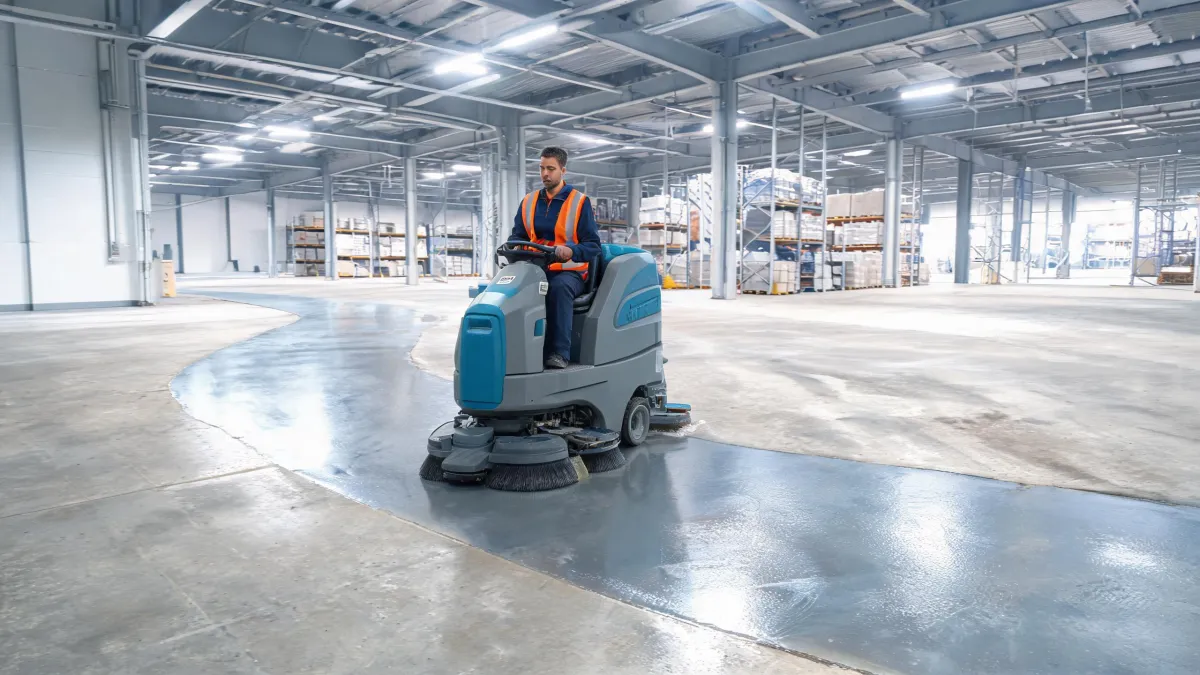
Five years ago I would've said no – the payback period was 3–4 years, and the navigation software still got confused near pallet racks. But the industry has evolved fast. The latest Nilfisk autonomous scrubbers (Liberty SC50) use Lidar mapping and can run overnight with zero supervision. At our facility we switched from a manual ride‑on to autonomous in Q2 2024. The machine cost 40% more, but it freed up one operator shift – saving us $36,000 annually. Payback: 14 months. That's a different conversation than 2020.
3. Can I use a Nilfisk dust collector for bedroom cleaning? Kind of a weird question, but I've been asked.
Technically yes – Nilfisk industrial dust collectors (like the VHS series) are HEPA rated and great for fine dust. But they're way overkill for a typical bedroom unless you're cleaning up after construction or dealing with severe allergies. A portable shop vac with a HEPA filter (e.g., Nilfisk Aero 26) is more practical. Here's the catch: if you have a home workshop with concrete dust or drywall debris, an industrial dust collector makes sense. But for routine bedroom dust? You're paying for capacity you'll never use. My experience is based on about 50 orders of dust extractors in industrial settings – residential may differ.
4. What's the single biggest mistake buyers make when purchasing industrial cleaning equipment?
They focus on the purchase price and completely miss the total cost of ownership. Most buyers ask 'how much is the machine?' They should ask 'what's the cost per square foot over three years?' Here's a real example from our 2023 audit: a 'cheaper' ride‑on scrubber required battery replacement after 18 months ($1,800), had proprietary brushes that cost 3x the standard size ($240 vs $80), and needed a service contract because the dealer wouldn't support it otherwise ($600/year). The competitor's model – $2,200 more at purchase – included a 3‑year warranty, standard brushes, and free software updates. Over three years the 'cheap' option cost us $4,300 more. The industry truism 'you get what you pay for' is oversimplified – you get what you calculate.
5. How has Nilfisk's battery technology changed in the last five years?
In 2020 the typical lead‑acid battery in a Nilfisk floor scrubber took 8–10 hours to charge and lasted about 500 cycles. By 2023 the new lithium‑ion packs (like the ones in the Viper AS4325B) charge in 2–3 hours and deliver 1,200+ cycles. That changes the TCO equation completely – especially for facilities running multiple shifts where downtime matters. I remember rejecting a lithium upgrade in 2021 because the premium was 60% over lead‑acid. Now that same upgrade is only 25% more, with double the life. Basically, if you're buying a scrubber today, lithium is almost a no‑brainer unless your usage is very sporadic.
6. Is the Nilfisk floor scrubber 'hand model' (like the hand scrubber) good for small areas, or should I rent instead?
I get this one a lot. The Nilfisk hand floor scrubber (e.g., SC500 Hand Scrubber) is a walk‑behind machine for areas up to about 5,000 sq ft. If you're cleaning less than 2,000 sq ft once a week, renting from a local dealer might make sense – rental costs about $120/day including chemicals. But if you're cleaning 3,000+ sq ft weekly, buying pays off in under 18 months. Plus you don't have to deal with scheduling and machine availability. I built a cost calculator after getting burned on rental surcharges twice (ugh) – you can find it in our procurement wiki.
7. What's one question most buyers don't ask but should?
'What happens to the total cost if our staffing changes?' Most TCO models assume consistent labor. But if your facility grows or you lose an operator, equipment decisions shift. For example, we bought a ride‑on scrubber assuming two shifts. After a layoff in 2024, we had one shift and the machine sat idle 50% of the time. An autonomous scrubber would've handled that better because it runs unsupervised. The industry is moving toward flexible automation precisely because labor volatility is the new normal – what was best practice in 2020 may not apply in 2025.

Elise Marceau
Elise Marceau is an LED display and digital-signage systems analyst covering LED video walls, modular screens, transparent LED, control processors, and indoor or outdoor signage. She applies IEC 62368-1 safety principles while comparing pixel pitch, luminance, contrast, refresh rate, colour uniformity, viewing angle, ingress protection, power density, module serviceability, and signal redundancy. Her specification guides help integrators, venue operators, retailers, and procurement teams align viewing distance, ambient light, content format, installation access, electrical load, and lifecycle support.