Professional Cleaning Equipment vs General Alternatives: Maxshine, Nilfisk SC401, and What's Actually Worth It
I've spent the last four years as a quality inspector for commercial cleaning equipment. Every quarter, I review a few hundred units before they're shipped to customers. In our Q1 2025 audit, we rejected about 12% of first deliveries because of specification mismatches. That's not a flex. It's just context for why I don't trust buying guides that say "buy the premium option and stop thinking."
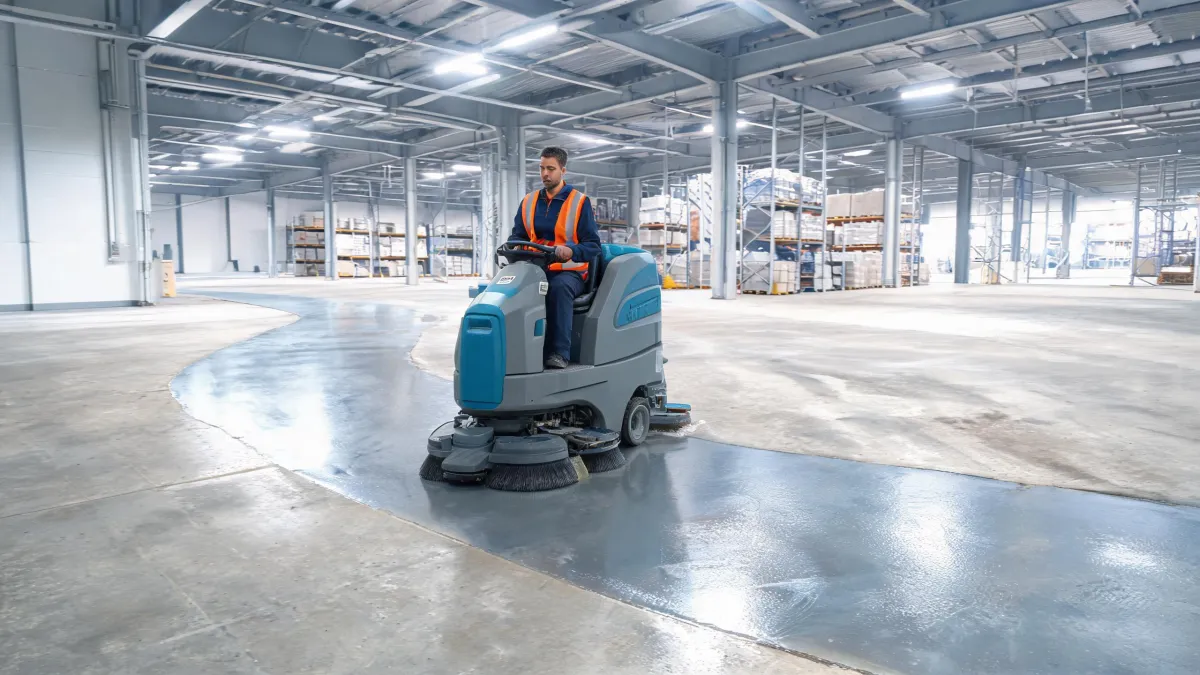
If you're setting up a car wash bay or upgrading the floor in a warehouse or retail space, you're probably weighing two decisions at once: a Maxshine pressure washer vs a general pressure pump washer, and a battery scrubber dryer like the Nilfisk SC401 vs a manual scrubbing setup. Let's compare them honestly, dimension by dimension.
1. Purchase Price vs Total Cost
On paper, the general pressure pump washer wins. It's cheaper, it's everywhere, and it might be perfectly fine for occasional use. But "occasional" is the key word. When you're running a business, the machine isn't the real cost. The real cost is the work it does while it's operating—or doesn't do while it's sitting broken.
Most buyers focus on the sticker price. They miss the cost of downtime, repair parts, and the hour on a Saturday morning when the bay goes dark because the pump won't build pressure. I've seen this pattern show up in my own inspections: consumer-grade components that look fine in the box but fail after a hundred hours of real work.
A Maxshine pressure washer—or any Nilfisk professional pressure washer car wash bay setup—costs more upfront. But the cost per working hour tends to be lower because the components are selected for commercial duty. That's not marketing talk. When you open up a pump head and look at the bearings, seals, and valve materials, the difference is visible.
And here's the part that surprises people: the cheap pump can be the more expensive one. A couple of years ago, I approved a batch of pump washers without running the full endurance test because we were behind schedule. Three out of ten units came back with seal leaks within two months. The rework cost us more than we saved. Now that test never gets skipped.
2. Consistency of Results
In quality work, consistency beats peak performance. A machine that delivers 1900 PSI for fifteen minutes and then drops off is less useful than one that holds 1600 PSI all day. A general pressure pump washer might look impressive in a demo. The question is what it looks like after two hours of continuous use.
For floors, the same principle applies. A scrubber machine floor setup like the Nilfisk SC401 is battery-powered, so the brush pressure and water flow stay steady until the battery is done. A person with a deck brush or a mop is a different story. The first hour is fine. The third hour depends on how tired the person is, how fast they're moving, and whether they're cutting corners to get done before the shift ends.
The Nilfisk SC401 battery scrubber dryer also does something that manual cleaning doesn't: it leaves the floor drier. That's a safety issue as much as a cleanliness issue. I've walked through facilities after both cleaning methods, and the dry time difference is noticeable. A wet floor is a slip hazard. A machine that scrubs and extracts water in one pass reduces that risk.
But let me be honest about the limitation here. If your floor area is tiny—a few hundred square feet, a restroom, a small office—a battery scrubber dryer isn't worth it. The setup time, charging time, and maintenance outweigh the benefit. A mop is the right tool in that situation. The SC401 only starts to make sense when you have enough square footage to justify it. That's not a criticism. It's just reality.
3. Durability and Serviceability
This is where I earn my keep. When I inspect a pressure washer, I don't just turn it on and check the numbers. I look at the pump housing, the hose fittings, the wiring, and the fasteners. I look at whether the parts are standard or proprietary, and whether a repair technician can actually get replacements without waiting three weeks.
General pressure pump washers are not all bad. Some are built surprisingly well for the money. But the service network is the problem. If a seal fails, you're chasing a random part number from a brand that may have changed suppliers twice since you bought the unit. That downtime is a hidden cost that never shows up on the receipt.
I remember a shipment we rejected because the seal housing on a batch of pumps was slightly undersized. The vendor claimed it was "within industry standard." But the tolerance was off, and the machines started leaking after 20 hours of run time. We sent the batch back, and they redid it at their cost. Now every contract we write includes both dimensional checks and a run test. You learn that kind of thing the hard way.
Nilfisk has a professional distribution network, and it shows in the product design. The SC401 uses modular components that are meant to be replaced. The same logic applies to their professional pressure washers. Parts are available. Manuals exist. That matters more than you'd think when the alternative is a machine sitting in a corner for two weeks because nobody can source a switch.
4. The Question Everyone Should Ask
The most common question I hear is "what's the PSI?" The better question is "what's the PSI after 50 hours of use?"
That's the kind of question that separates a buying decision based on marketing from one based on quality. A Maxshine pressure washer is designed for repeated use in a commercial setting. A general pressure pump washer is designed for lighter duty. Neither is evil. They're just built for different workloads.
I'm not a hydraulic engineer, so I can't walk you through impeller designs or pump curves. What I can tell you from the quality side is which machine is more likely to still be running in a year. And that's usually the one with commercial-grade internals, regardless of brand.
Which One Should You Buy?
If you're running a commercial car wash bay, get the Maxshine pressure washer or another Nilfisk professional pressure washer. Buy it from a distributor that stocks parts. Pay attention to the chemical injection options if you use foam or detergents. And plan for routine maintenance instead of waiting for a failure.
If you're using a pressure washer for light residential or occasional work, a general pressure pump washer might be fine. But don't treat it like a commercial machine. Keep run times short, drain the water in cold weather, and accept that it won't last as long. That's okay.
For flooring: if you've got enough hard floor to make manual scrubbing a real time sink, the Nilfisk SC401 battery scrubber dryer is worth a serious look. It gives repeatable results without the fatigue factor. If your space is small, skip it and save the money.
There's no single right answer for every site. The right answer depends on your square footage, your hours of operation, and how much downtime you can afford. But if you're a professional operation, your equipment should be professional too. Just don't buy more machine than you actually need—and don't buy less than your workload demands.

Elise Marceau
Elise Marceau is an LED display and digital-signage systems analyst covering LED video walls, modular screens, transparent LED, control processors, and indoor or outdoor signage. She applies IEC 62368-1 safety principles while comparing pixel pitch, luminance, contrast, refresh rate, colour uniformity, viewing angle, ingress protection, power density, module serviceability, and signal redundancy. Her specification guides help integrators, venue operators, retailers, and procurement teams align viewing distance, ambient light, content format, installation access, electrical load, and lifecycle support.