The Real Problem With Nilfisk Cleaning Products (It's Not Choosing a Model)
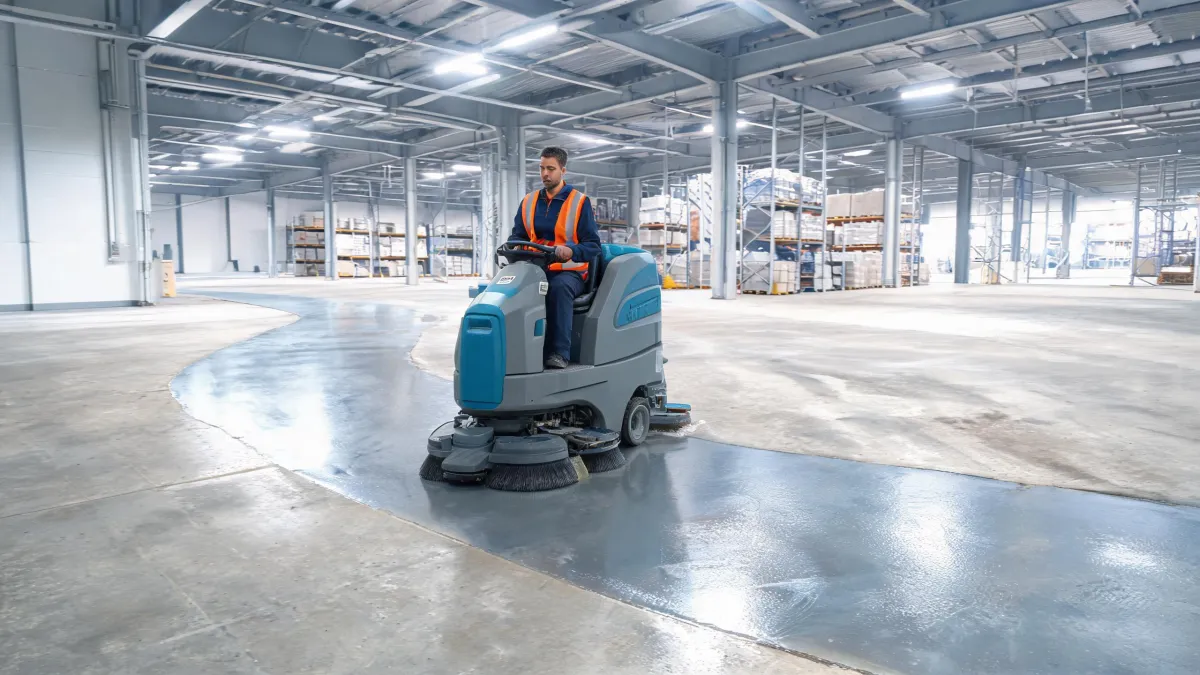
I spend my workdays on the buying side of cleaning equipment, and a lot of my calls are real emergencies. Not "ASAP" emergencies. The "an inspector is coming next week" kind. In Q3 2024, we had three of those in one month. So when someone asks me about Nilfisk cleaning products, I don't assume they're just shopping. They're usually trying to fix a problem that's already costing them.
If you're looking at the Nilfisk catalog and feeling stuck, I understand. There's the VHS011N1 LC mini industrial vacuum, an SDS dust collector, a cyclone dust collector lite, and floor scrubber liquid. It's a wall of model numbers. But I don't think your real problem is choosing a model.
The Surface Problem: Which Nilfisk Cleaning Product Do I Need?
A lot of people start with exactly that question. It makes sense. The product lineup is broad, and every model seems to have a slightly different filter, hose, or tank size.
But when you dig in, the question "which machine?" hides the deeper one: "what exactly are we cleaning, and why is the current setup failing?" I've watched teams buy a new vacuum when their real problem was using the wrong filter. I've seen them replace a scrubber when the real problem was the floor scrubber liquid, not the machine.
That's why I say the model number is the last detail, not the first.
The Deep Problem: We Sort Equipment by Category Instead of Contaminant
Walk into any supply store and you'll see categories: vacuum, scrubber, dust collector, pressure washer. Clean and neat. But surfaces don't care about our categories. A floor produces dust, spills, metal shavings, sticky residues. A machine that works beautifully for one contaminant can fail at another.
Fine Dust Is a Different Animal
I once saw a crew use a normal wet/dry vacuum for drywall sanding. It worked great for about twenty minutes. Then the filter clogged, the suction died, and the crew spent more time opening the tank than sanding. That's not a vacuum problem. That's a classification problem: they treated fine dust like coarse sawdust.
An SDS dust collector—or a cyclone dust collector lite for pre-separation—is built around a different job. It's not just a bigger motor. The filter, the air-to-cloth ratio, and the filter cleaning mechanism are designed for dust that stays suspended in the air. When I compare a standard shop vacuum and a proper dust collector side by side, that difference is obvious.
Floor Scrubber Liquid Is Part of the Machine
This one took me a while. I used to treat cleaning chemicals as a "buy whatever is cheapest" item. Then we had a floor that looked worse after scrubbing than before.
What happened? The floor scrubber liquid didn't match the floor finish or the machine's dilution rate. It left a film. The machine looked fine, but the chemistry was wrong. That experience changed how I think about consumables: they're not accessories; they're part of the cleaning system. A floor scrubber is only as good as the floor scrubber liquid you put in it.
What It Costs to Get This Wrong
This is where I get specific, because the price of a mistake is usually bigger than the machine we were trying to save.
- Downtime. A vacuum that clogs every fifteen minutes isn't a cleaning tool; it's a time-hole. One drywall job took us two extra days because the equipment couldn't handle the dust load. A compact industrial vacuum from Nilfisk would have paid for itself in that one job.
- Health and compliance. Respirable silica dust is a real issue on construction sites. According to OSHA's silica standard (29 CFR 1926.1153; verify current rules at osha.gov), employers must protect workers from dangerous dust. I'm not saying every fine-dust job is a silica job. But I've met plenty of people who didn't think about the dust until someone got sick.
- Chemical damage. The wrong floor scrubber liquid can strip a sealer or leave a slippery film. We once spent more on resealing a floor than the "cheap" chemical saved us.
- Total cost of ownership. The price tag is only the beginning. Filters, bags, downtime, training, and repairs all count. A lower quote with lousy parts availability isn't cheaper. It's just slower.
The value of a reliable cleaning system isn't speed. It's certainty. On a deadline, certainty is worth more than a lower invoice.
What I Learned the Hard Way
A contractor once told me our vacuum wasn't suitable for fine dust. I thought he was trying to sell us something. "What are the odds?" I remember thinking. The odds caught up: after a week of drywall sanding, the filter was ruined and the dust was still hanging in the air. We had to re-clean a 14,000-square-foot space.
That's when I started comparing filters side by side. Seeing a standard filter next to a HEPA-grade filter made me understand why these specs matter. The differences aren't marketing. They're engineering limits.
I can only speak to normal commercial and trade environments. If you're doing production woodworking, pharmaceutical work, or hazardous material handling, your requirements are more complex. But the basic lesson applies broadly: don't guess the contaminant.
The Solution: Start With the Mess, Then Choose the Machine
Okay, so the fix isn't complicated. It's just different from what we're used to.
- Name the contaminant: wet, dry, coarse, fine, hazardous, not hazardous.
- Name the duty cycle: ten minutes a week or three hours a day. That changes the class of machine you need.
- Name the maintenance reality: can the operator wash filters, change bags, and know when something's wrong?
- Then look at models.
When I look at Nilfisk products with that framework, the choices make sense:
- The Nilfisk VHS011N1 LC mini industrial vacuum is the kind of compact unit that fits under a bench or in a service van. It's not a household wet/dry vac pretending to be industrial.
- An SDS dust collector is for the fine-dust jobs where a vacuum without a proper filter class will let you down.
- A cyclone dust collector lite makes sense when you want to keep bulk chips out of the main filter. But it protects the vacuum; it doesn't replace it. "Lite" means lighter duty, not better in every situation.
- Floor scrubber liquid needs to be chosen deliberately, not by habit. Check the surface, the machine, and the dilution system before you buy.
And if you're a small operation, don't let anyone make you feel like a nuisance. The vendors who treated my early, small orders seriously are the ones who got my bigger orders later. Small doesn't mean unimportant; it means potential. That should apply to cleaning equipment too.
A Quick Note on Price (January 2025)
I'm not going to quote exact prices because they shift with specs and regions. As of January 2025, a compact Nilfisk industrial vacuum can range from a few hundred to over a thousand dollars depending on filters and accessories, and dust extraction systems go higher. Check the official Nilfisk site or current distributor quotes. More importantly, compare total cost: machine, filters, consumables, downtime, and service lead time. (Source for general reference: Nilfisk product documentation and distributor quotes, January 2025; verify current pricing.)
Here's my rule now: "The right cleaning machine is the one you can operate safely, maintain easily, and trust at 4pm on a Friday—not just at the demo." When you start with the problem instead of the model number, that rule is easy to follow. And the product choice stops being a headache.

Elise Marceau
Elise Marceau is an LED display and digital-signage systems analyst covering LED video walls, modular screens, transparent LED, control processors, and indoor or outdoor signage. She applies IEC 62368-1 safety principles while comparing pixel pitch, luminance, contrast, refresh rate, colour uniformity, viewing angle, ingress protection, power density, module serviceability, and signal redundancy. Her specification guides help integrators, venue operators, retailers, and procurement teams align viewing distance, ambient light, content format, installation access, electrical load, and lifecycle support.