Stop Buying the Wrong Nilfisk Machine: Pressure Washer, Dust Collector, or Driving Scrubber?
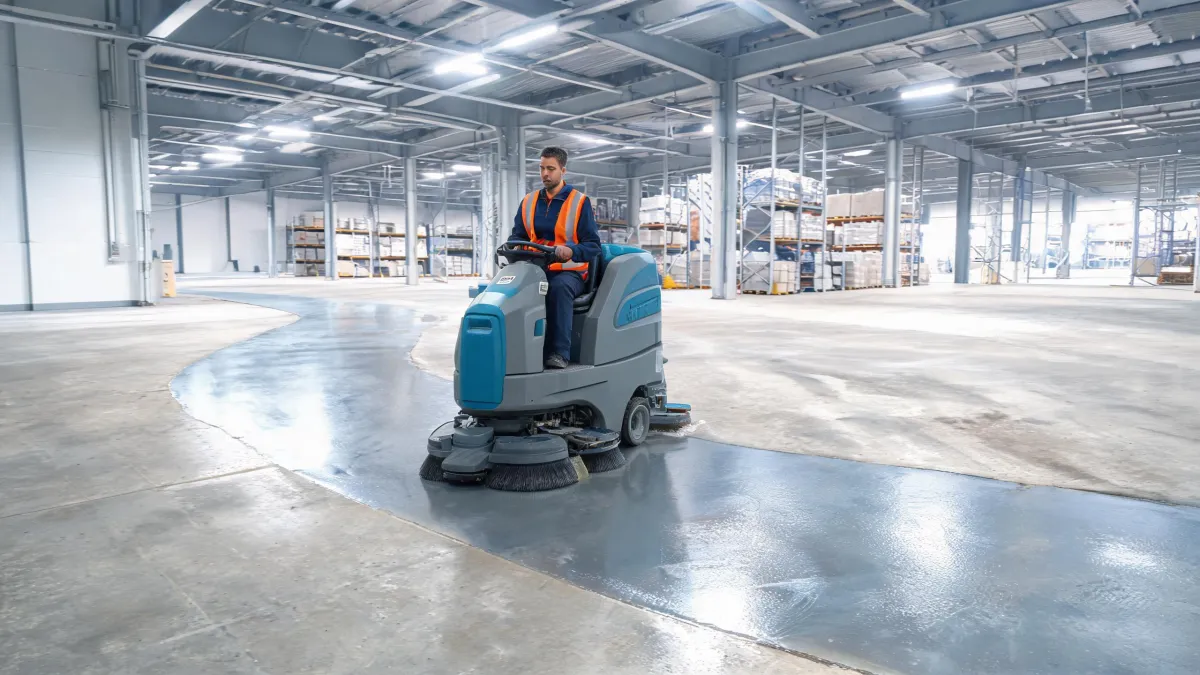
I've spent eight years buying and writing specifications for industrial cleaning equipment. In that time, I've personally made and documented 11 significant mistakes, totaling roughly $46,000 in wasted budget. Some of those mistakes were mine; some came from my team following my bad advice. Now I maintain our equipment checklist so nobody has to repeat them.
Let's start with the thing most guides skip. There is no single "best Nilfisk machine." There's only the right machine for the mess you actually have. Anyone who tells you different has either never walked your facility or is trying to clear warehouse inventory—which, honestly, could be both.
What My First Big Mistake Taught Me
In September 2021, I approved a $10,500 driving floor scrubber for a packaging facility that was mostly generating dry dust. It looked fine on my screen. It's a scrubber—how can a scrubber be the wrong machine? The result came back three weeks later. The scrubber pushed dust into corners, the water left a film, and the operators were back to sweeping. We eventually bought a Nilfisk industrial vacuum cleaner paired with an auto dust collector, but the total bill included labor, downtime, and a very patient maintenance manager.
Here's the part that still stings: I had saved $3,200 by choosing a discounted scrubber instead of the better-suited dust collection setup. That "budget" choice ended up costing $7,800 in labor and a second machine. Net loss: $4,600, plus embarrassment.
We didn't have a formal process for evaluating cleaning equipment. That process gap cost us. The third time I saw the same pattern in another facility, I finally created a checklist. Should have done it after the first.
Three Scenarios, Three Different Nilfisk Machines
Instead of starting with model names or horsepower, start with the dirt. In my experience, every facility falls into one of three buckets:
- Dry dust dominant – powder, sawdust, cement, sanding residue, any fine particle that gets into the air.
- Wet or oily floors – kitchens, warehouses with leaking pallets, production lines with cutting fluids.
- Exterior or heavy build-up – concrete stains, grease, paint prep, rust, graffiti.
If your facility is a mix, get ready to buy more than one machine. That isn't a failure. It's a sign that you're looking at the actual problem rather than the problem in the brochure.
Scenario A: Dry Dust Dominant – Skip the Scrubber, Buy an Industrial Vacuum and Dust Collection
This is the one I got wrong. Dry dust on the floor makes a scrubber look like the answer because a riding scrubber is the most impressive thing in the room. But dry dust isn't wet dirt. The scrubber moves it, chases it, and turns it into mud.
The "scrubber first" thinking comes from an era when industrial cleaning meant soap and water. That's changed. Modern vacuum and dust collection systems capture dry soil at the source, which is faster and safer. But the old habit of buying one big wet machine is hard to shake.
For dry dust, the first purchase should be a Nilfisk industrial vacuum cleaner with the right filter for your material. Then, if the dust is continuous, add an auto dust collector. We use a Shemax Pro Dust Collector in our own facility because it pulses the filter automatically when pressure builds up—so nobody has to stop and clean a clogged cartridge every 40 minutes.
Counterintuitive advice: don't buy a driving floor scrubber until you measure how much liquid actually reaches the floor during a normal week. If it's close to zero, a riding scrubber is just an expensive way to push dust around.
If your space is small, even a walk-behind scrubber is overkill. Start with a Nilfisk industrial vacuum cleaner and a longer hose. You'll get more dust out of the air, and you won't have to convince yourself that a machine sitting in the corner will eventually pay for itself.
Scenario B: Wet or Oily Floors – This Is Where a Driving Floor Scrubber Makes Sense
If the floors are regularly wet, oily, or sticky, and you have enough square footage to justify it, a driving floor scrubber is the right tool. Nilfisk has several models in this class, and they're built for continuous duty.
But "enough square footage" is the tricky part. I once saw a small operation buy a 40-inch riding scrubber because it looked productive. It sat in the corner because their aisles were narrow and the machine would only have run two hours a week. The machine wasn't bad. The match was bad.
My rule of thumb: if a riding scrubber won't run at least ten hours per week, buy a walk-behind or a good wet/dry vacuum instead. That rule isn't in any brochure. I learned it by watching a $21,000 machine collect dust—in a facility that thought it had a dust problem.
For facilities that do have the hours, a driving floor scrubber will reward you with labor savings. Just don't buy the driver-on-board technology before you need it. Get the machine that fits the floor plan, not the one that impresses visitors. Also, if a vendor calls their scrubber "autonomous," ask for substantiation. Per FTC guidelines (ftc.gov), claims like that have to be backed up. If the rep can't show you test data, that's a red flag.
Scenario C: Exterior Concrete, Grease, and Paint Prep – Pressure Washer, But Not Always the Premium One
When you're cleaning outdoor concrete, grease stains, or prepping a surface for coating, a pressure washer is the obvious starting point. And this is where the "pressure washer Nilfisk premium price" question gets real.
Is it worth it? Sometimes. If the machine is running all day, every day, the premium gets you a continuous-duty pump, better seals, and parts that you can actually get. That last point matters more than people think. I've had a cheap machine die on a Thursday afternoon before a long weekend shutdown—with no spare pump within 400 miles.
But if you're using it two hours a week to rinse dumpster pads, the premium price is hard to justify. I've bought both. I've also paid the repair bill for a non-premium unit that failed at the wrong moment. The lesson: buy the premium for continuous use, buy the practical model for intermittent use, and keep a rental company's number for the rare huge job.
This advice seems obvious, but it's ignored all the time because salespeople (I used to be one) like to sell the top spec. A wrong premium pressure washer is just an expensive way to spray water for 20 minutes once a month.
How to Know Which Scenario You're In
You don't need a consultant or a fleet of sensors. You need one honest week.
- Walk the facility at the end of a shift, not the beginning. Look at what's actually on the floor.
- Take photos. Dry powder or dust clouds? Scenario A. Oily streaks or wet footprints? Scenario B. Crusty stains around exterior drains? Scenario C.
- Write down how many minutes per hour cleaning tasks take. That number, not a brochure, will decide what you should buy.
If you're still not sure, ask for a demo. Most Nilfisk dealers will bring in a machine for a trial. This is where my "small customer" rule comes in. When I was starting out, the vendors who took my small trial orders seriously are the ones I still use for much bigger orders. Small doesn't mean unimportant—it means potential. If a rep won't take your small trial seriously, that says more about their service culture than any product spec ever will.
The Checklist That Finally Stopped the Bleeding
I don't want to end with "choose what fits your needs." That vague advice is what cost me years. So here's the pre-purchase checklist I use now:
- What is the dominant soil type? Dry, wet, or sticky?
- How many hours per week will the machine actually run? Estimate in hours, not "a lot."
- Where will you store it? Can it get to the mess without needing a forklift?
- When it breaks, who fixes it? Parts availability matters more than the color.
- What's your Plan B? If it's down for three days, can you still operate?
This checklist won't make the decision for you. It just makes sure you've looked at the variables that actually matter. It would have saved me mistake number 1, mistake number 7, and probably mistake number 11.
I've seen this pattern many times. But when I say "many," I do not mean a few—I mean 11 documented mistakes. I'm not looking to make number 12.

Elise Marceau
Elise Marceau is an LED display and digital-signage systems analyst covering LED video walls, modular screens, transparent LED, control processors, and indoor or outdoor signage. She applies IEC 62368-1 safety principles while comparing pixel pitch, luminance, contrast, refresh rate, colour uniformity, viewing angle, ingress protection, power density, module serviceability, and signal redundancy. Her specification guides help integrators, venue operators, retailers, and procurement teams align viewing distance, ambient light, content format, installation access, electrical load, and lifecycle support.