The $4,000 Lesson I Learned About Buying a Cheap Industrial Vacuum
Our production line was choking. I'd been at the plant for about 18 months, and in late 2022, the old dust collection system finally gave up. I needed a solution fast.
That's when I made my first big mistake. I bypassed the proper spec review and went straight to price comparison.
The Setup: A Classic Procurement Trap
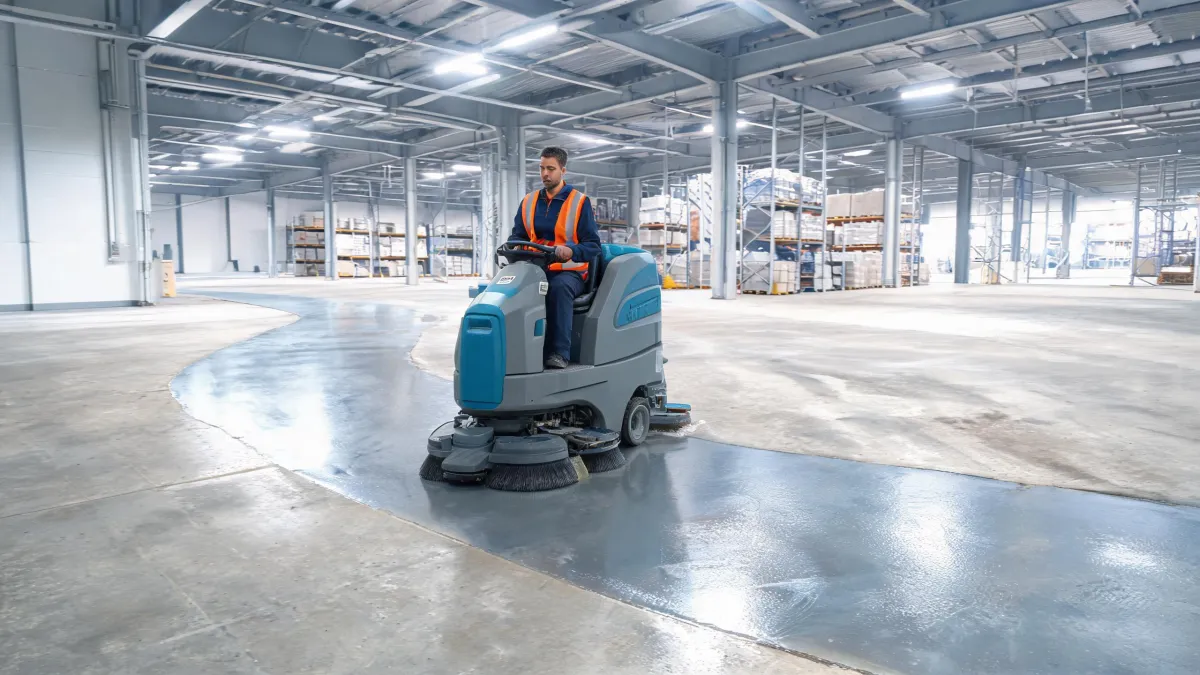
I was tasked with finding a replacement for our main motor dust collector. The budget was tight—the finance director had made it clear that January wasn't the month for big spends. So, when I found a used riding floor scrubber for sale new berlin and a budget-friendly vacuum solution from a no-name brand, I thought I'd cracked it.
The price was right. The lead time was short. I felt like a hero for saving the company money.
I was wrong.
I'm not an engineer, so I can't speak to the finer points of motor winding or impeller design. What I can tell you from a facilities management perspective is that the whole thing fell apart in about 45 days.
The Turning Point: When Cheap Gets Expensive
The first three weeks were fine. The machine did its job, the line stayed clean, and I was patting myself on the back. Then came week four. The suction dropped. We unclogged it. Week five? The motor started making a noise I'd only heard on dying appliances.
I called the supplier. They blamed the dust load. They recommended a steel dust collector instead—the same machine, but with a metal impeller. That would be another $1,200, plus shipping, plus a week of fabrication.
By week six, the original motor seized completely. Production stopped for two hours while we scrambled to find a temporary solution. The cost of that downtime? Roughly $1,800 in lost output—give or take, I'd have to check the exact figures. Plus the $890 for the replacement motor parts that didn't fit.
I want to say I spent around $2,800 on the initial purchase and repairs. But really, by the time I was done, the total waste was around $4,000. And that's not including the shipping costs for the replacement parts I had to air freight.
Why does this matter? Because I ignored every piece of experience I'd gathered in the previous year. I assumed that 'similar specifications' from a different manufacturer would mean identical results. Didn't verify. Turned out each had slightly different interpretations of what 'heavy duty' meant.
The Rebuild: Going Back to Basics
After the third breakdown in Q1 2024, I created our pre-purchase checklist. It's 14 points long now. It saved us from a similar mistake on a nilfisk backpack vacuum price evaluation last month.
I called a proper supplier. I said, "I need a nilfisk commercial pressure washer spec and a dust collector that won't die in six weeks."
The sales rep—a guy who's been in the business for 12 years—asked me three questions I hadn't considered:
- What's the exact micron rating of the dust you're collecting?
- How many hours per shift is the motor running?
- Do you need continuous-duty or intermittent-duty cycling?
I didn't know the answers. I had made assumptions. That was the root of the problem.
To be fair, the original budget pressure was real. But the 10-point checklist I created after my third mistake has saved us an estimated $8,000 in potential rework across four different purchases in the past 18 months.
The Lesson: Prevention Over Cure
Here's what I learned: 5 minutes of verification beats 5 days of correction. A proper nilfisk unit, correctly specified, costs more upfront. But that purchase includes a support network, parts availability, and a machine that handles the spec it's designed for.
The question isn't 'Can I afford the right equipment?' It's 'Can I afford the downtime from the wrong one?'
I'm not 100% sure what the final ROI is on that lesson, because I'd have to factor in soft costs like credibility. But I know this: I haven't had a dusty line stop since we replaced the entire system with a properly specified motor dust collector from a reputable brand. The production manager noticed the difference on day one.
Which, frankly, was worth the $4,000 of tuition.

Elise Marceau
Elise Marceau is an LED display and digital-signage systems analyst covering LED video walls, modular screens, transparent LED, control processors, and indoor or outdoor signage. She applies IEC 62368-1 safety principles while comparing pixel pitch, luminance, contrast, refresh rate, colour uniformity, viewing angle, ingress protection, power density, module serviceability, and signal redundancy. Her specification guides help integrators, venue operators, retailers, and procurement teams align viewing distance, ambient light, content format, installation access, electrical load, and lifecycle support.