The $12,000 Mistake I Made Spec'ing a Nilfisk Industrial Vacuum (and Why You Should Check TCO, Not the Sticker)
-
Don't Buy the Cheapest Nilfisk Industrial Vacuum—Seriously, Don't
-
My Credentials: The Mistakes That Made This Checklist
- Your Real Cost Isn't the Price Tag—It's What Happens Next
- Why This Matters for Your Big Floor Scrubber or Pressure Washer
-
What I'm Not Qualified to Tell You
-
When This Approach Doesn't Work
Don't Buy the Cheapest Nilfisk Industrial Vacuum—Seriously, Don't
After 7 years handling procurement for a mid-sized manufacturing facility, I've personally made (and documented) 23 significant equipment-buying mistakes. The worst? Spec'ing the wrong nilfisk industrial vacuum for our dust collection line back in 2021. That error directly cost us roughly $12,000 in redo work, downtime, and an emergency replacement. Here's what I learned: the sticker price is a trap. You need to think in total cost of ownership (TCO).
My Credentials: The Mistakes That Made This Checklist
I'm not a certified industrial engineer—I'm the guy who handles service orders for our plant. After a particularly painful $3,200 order where every single item had the wrong filter spec, I started a personal checklist. We've now caught 47 potential errors using this approach in the past 18 months. That $12,000 disaster? It was the catalyst.
The worst part? The sales rep from the competitor (I won't name them) actually quoted me a lower price. I thought I was being smart. I was being penny-wise and pound-foolish.
Your Real Cost Isn't the Price Tag—It's What Happens Next
The $500 quote turned into $800 after shipping, setup, and the revision fees. The $650 all-inclusive quote? It was actually cheaper. Why? Because it included the correct hoses, a longer warranty, and a support call that actually helped us configure it right. I now calculate TCO before comparing any vendor quotes.
Let's break this down with a real example from my notebook—a comparison of three quotes for a nilfisk industrial vacuum we needed for a specific dust collection task.
The Three Quotes (Names Changed, Details Real)
- Vendor A: Sticker price: $2,100. Setup fees: $300. Shipping: $150. Warranty: 1 year. Filter replacements: $400/year.
- Vendor B (Nilfisk): Sticker price: $2,650. Setup fees: $0. Shipping: $0. Warranty: 3 years. Filter replacements: $100/year.
- Vendor C: Sticker price: $1,800. Setup fees: $500 (we had to buy an adapter). Shipping: $200. Warranty: 90 days. Filter replacements: $600/year.
What I calculated after 3 years: Vendor A = $3,250. Vendor B (Nilfisk) = $2,950. Vendor C = $3,800. The 'cheapest' one (Vendor C) was actually the most expensive. The 'expensive' one (Nilfisk) was cheaper in the long run. I learned this the hard way after picking Vendor A initially and having to redo the entire setup.
Why This Matters for Your Big Floor Scrubber or Pressure Washer
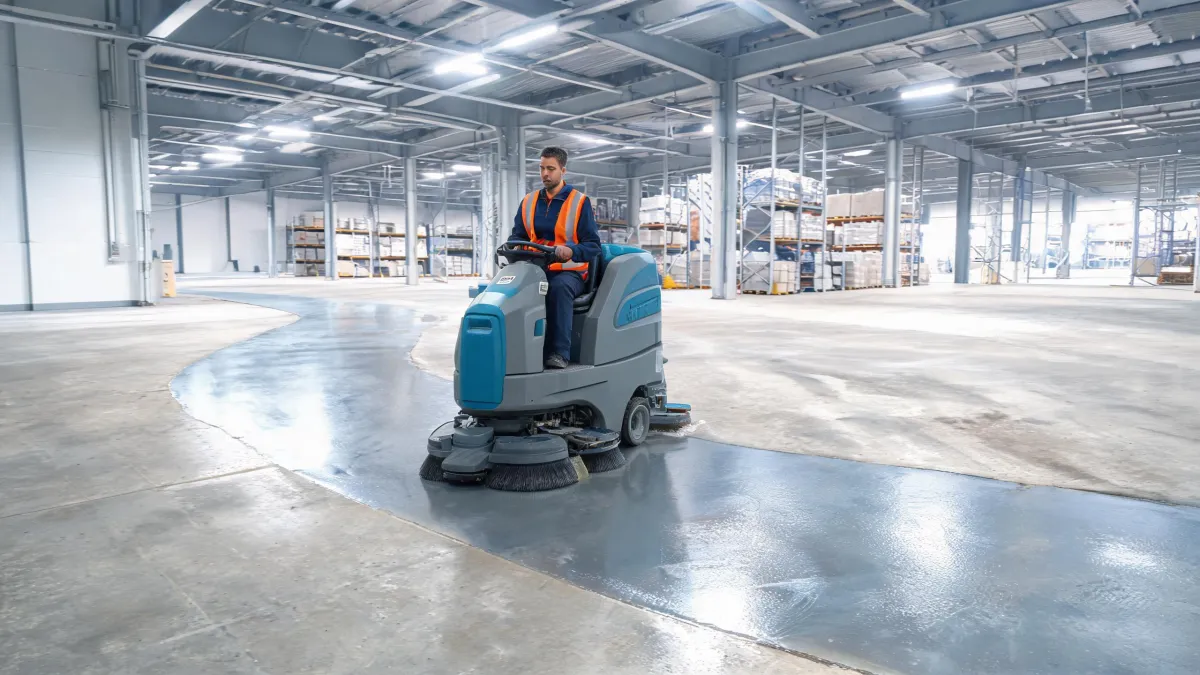
The same thinking applies to any major purchase: a big floor scrubber, a nilfisk ride on scrubber dryer, or even a greenworks 1900 psi electric pressure washer. The question isn't "what's the upfront price?" It's "what will this thing cost me to own over its lifetime?"
I once ordered 12 nilfisk ride on scrubber dryer brushes without checking the pad hardness. Checked it myself, approved it, processed it. We caught the error when the first machine left streaks on the floor. $450 wasted on the wrong brushes plus a 2-day delay for the correct ones. Lesson learned: always verify consumable specs.
A Checklist for TCO on Industrial Equipment
Three things you must know before buying:
- The consumable cost: Filters, brushes, pads, belts. How often do they need replacing? What's the annual cost?
- The hidden fees: Setup, calibration, training, shipping, and any mandatory service contracts.
- The downtime cost: If the machine breaks at a critical moment, what does an hour of lost production cost? That's your real risk.
Per FTC guidelines (ftc.gov), all claims about performance and durability must be substantiated. When a vendor says "low maintenance," ask for the data. We now add a 'TCO calculator' column to our equipment comparison spreadsheets.
What I'm Not Qualified to Tell You
I'm not a logistics expert, so I can't speak to optimizing an entire facility's cleaning routes with a nilfisk ride on scrubber dryer fleet. What I can tell you from a procurement perspective is how to evaluate the vendor's delivery promises—are they factoring in their own lead times or just quoting from stock? That's the difference between a 3-day delivery and a 3-week one.
This gets into fleet optimization and facility layout territory, which isn't my expertise. I'd recommend consulting your facilities manager or a system integrator for that.
When This Approach Doesn't Work
Sometimes you have to buy the cheapest option. A one-time project, a temporary need, or a budget that's locked. In those cases, my checklist just helps you know the risks. For example, if you're renting a big floor scrubber for a single event, TCO over 3 years is irrelevant—you're only concerned with the rental price and reliability for that day. (Should mention: we once rented a unit that failed halfway through an event. The 'cheap' rental cost an extra $800 in emergency replacement and cleanup.)
Oh, and don't forget to verify current pricing. As of January 2025, according to USPS (usps.com), a First-Class stamp costs $0.73—but that doesn't help you with vacuum cleaners. Prices for specific models change, so always get a current quote.
But for most of your equipment needs, especially if you're a regular or heavy user? Ignore the sticker. Calculate the TCO. You'll thank me later.

Elise Marceau
Elise Marceau is an LED display and digital-signage systems analyst covering LED video walls, modular screens, transparent LED, control processors, and indoor or outdoor signage. She applies IEC 62368-1 safety principles while comparing pixel pitch, luminance, contrast, refresh rate, colour uniformity, viewing angle, ingress protection, power density, module serviceability, and signal redundancy. Her specification guides help integrators, venue operators, retailers, and procurement teams align viewing distance, ambient light, content format, installation access, electrical load, and lifecycle support.