The Discount Floor Scrubber Trap: Why Cheap Cleaning Equipment Costs More
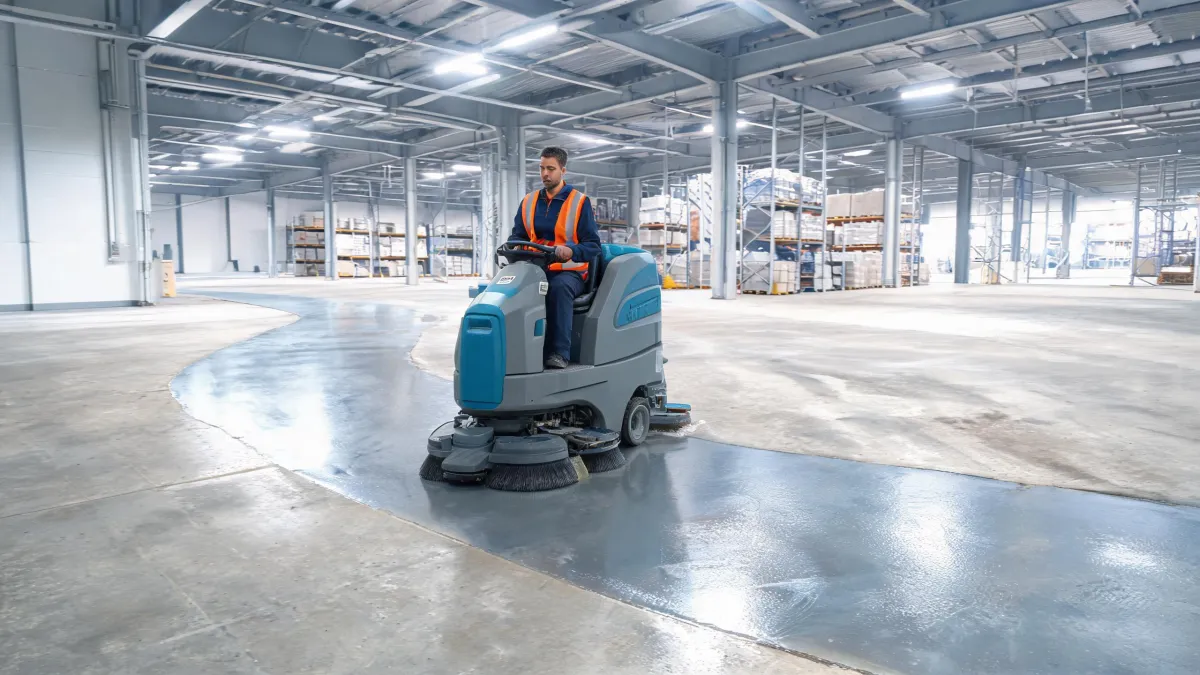
When I first started reviewing industrial cleaning equipment for our facilities, I assumed the machine with the lowest quote was the sensible choice. Same specifications on paper. Same types of components listed. A discount floor scrubber from a lesser-known supplier looked like a rational purchase—especially when budget pressure was coming from above.
That assumption survived about three months.
I now review equipment quality professionally—roughly 200 industrial cleaning machines a year, across floor scrubbers, vacuum cleaners, pressure washers, and dust collection systems. I've rejected about 11% of first deliveries in 2024 due to specification mismatches. Not cosmetic issues. Real functional gaps that showed up within the first 50 hours of operation.
(Should mention: it took two rejected batches and a $22,000 redo before our procurement team stopped arguing with the spec sheet.)
That's the thing nobody tells you about discount industrial cleaning equipment. The price difference between a budget machine and a professional brand like Nilfisk isn't the real cost difference. The real cost difference is everything that happens after the machine arrives.
The Spec Sheet Is a Story, Not a Contract
Let me tell you what I found when I compared discount floor scrubbers against the Nilfisk SC250 units we eventually standardized on.
On paper, the specs were nearly identical. Same brush width. Similar solution tank capacity. Comparable battery voltage. But when we ran them side by side in a controlled test—which I now recommend every facility do before committing to a purchase—the differences became obvious. The budget machine's motor ran hotter. The seals around the recovery tank were thinner. The wiring harness wasn't routed or protected the way it should be. Nothing that would fail a basic checklist. Everything that would fail within a year.
In Q1 2024, we received a batch of 12 discount scrubbers where the brush deck pressure was visibly off—measuring 28 kg against our 40 kg specification. We used a force gauge, not guesswork. The vendor claimed it was "within industry tolerance." It wasn't. We rejected the batch, and they redid it at their own cost. But our installation schedule took a two-week hit we never recovered.
That's the core misunderstanding, in my opinion. People assume the difference between budget and premium cleaning equipment is branding. In my experience, it's more likely to be components, testing, and tolerances that you can't see on a spec sheet. The budget machine will do the job on day one. The question is whether it will do the job on day 200.
The Service Network Gap
The second issue is what I'd call the service network gap. When you buy a discount floor scrubber from an import supplier, you're not just buying the machine. You're buying their parts availability, their technician network, and their willingness to honor warranty claims. All three are usually the first cost-cutting casualty.
One example: while we were deciding on our permanent fleet last year, we rented a battery-powered floor sweeper from a local equipment dealer. That rental performed flawlessly for six weeks. When we asked the dealer about purchasing equivalent units, the quote seemed high—roughly 30% more than the discount scrubbers we were evaluating. But the dealer offered something the discount supplier didn't: 24-hour response time, a technician within 50 miles, and a loaner program if the machine had to go to the shop.
At the time, that seemed like marketing fluff. At least, it did until one of our cheap scrubbers broke down and we waited nine days for a replacement part to clear customs.
What the Discount Actually Costs
Let me put numbers on this, because "hidden costs" sound abstract until they're in a spreadsheet.
We purchased 14 discount floor scrubbers across two facilities in 2023. Total invoice: roughly $42,000. That was about $9,000 less than equivalent Nilfisk units would have cost. By the end of 2024, we'd spent $11,300 on repair calls, $6,800 on replacement parts (some of which took three to four weeks to arrive), and lost approximately 60 machine-days to downtime. Supervisors started hiding the machines that still worked so their teams could finish their routes.
Net result: the $9,000 in savings turned into $18,100 in additional costs—and that doesn't include labor time spent chasing parts and service. In Q3 2024, we ran a comparison test: a discount scrubber from that 2023 batch versus a rented Nilfisk SC250. Over 200 equivalent operating hours, the Nilfisk machine required zero unscheduled maintenance. The discount unit required two service visits and a battery replacement.
The battery replacement alone cost $780. The budget machine's battery wasn't the same grade as what goes into a Nilfisk unit. It looked the same on the outside. (Should mention: we opened both up. Different cell manufacturer, different capacity rating. Same connector, same label.)
We're not talking about exotic conditions either. These machines ran on flat warehouse floors, charged nightly, and serviced according to the manufacturer's schedule. The budget machines just couldn't handle the same duty cycle. That's the most frustrating part—we weren't abusing them.
This is the surface illusion I keep encountering. From the outside, two scrubbers look like the same machine. The reality only becomes visible when you measure performance under load, check internal components, and track downtime over a full year.
The Same Pattern Applies to Vacuums and Dust Collectors
Floor scrubbers aren't the only category where this happens. The same pattern shows up with industrial vacuum cleaners and dust collection systems. The dust collector supply market is full of budget options that claim similar CFM ratings to brands like Nilfisk. But CFM is only part of the story. Filter efficiency, cleaning mechanism reliability, and explosion-proofing all matter—especially if you're working with combustible dust. We now specify nilfisk industrial vacuum cleaners for our fabrication area because we tested alternatives that matched the paper specs but failed to contain fine particulates in practice.
A dust collector that doesn't filter properly isn't a cost-saving purchase. It's a regulatory liability waiting to happen. Per OSHA's housekeeping standards (29 CFR 1910.22, effective November 2023), facilities must control dust accumulation effectively. If your budget collector isn't doing its job, the liability is yours, not the supplier's.
The same logic applies to pressure washers. A cheap unit might match the PSI rating of a Nilfisk pressure washer, but pump internals, thermal protection, and service life are where the real value sits. We've had budget washers fail at roughly 300 hours while Nilfisk units from the same period are still running at 2,000+.
Prevention Costs Less Than Cure
So what should you do? My advice is straightforward, and it comes from making the expensive mistake ourselves.
- Run a total cost of ownership calculation before you buy. Include projected downtime, parts availability, service response time, and expected lifespan. A discount floor scrubber might last 3,000 operating hours. A Nilfisk SC250 is often still performing well at 8,000+ hours (based on our fleet data and industry benchmarks from ISSA, 2024).
- Demand a side-by-side demonstration. Any serious supplier will let you run their machine against the alternative in your own facility, on your own floors.
- Check the service network before you sign. Where are parts stocked? How fast can a technician get to your site? What happens if the machine is down for a week? Get those answers in writing.
- Rent before you buy if you're uncertain. Renting battery-powered floor sweepers and scrubbers short-term gives you access to professional-grade equipment without locking you into a questionable asset. The rental cost is worth the data you'll collect.
These steps take maybe a day of work. A day. In exchange, you get clarity about what you're actually buying. That's a trade I'll make every time, because I've seen what the alternative looks like: equipment that fails in the field, budgets that blow out, and a quality inspector standing in a warehouse with a force gauge, telling procurement they were wrong.
In my opinion, the 30% you "save" on discount cleaning equipment is the most expensive 30% you'll ever put on a purchase order. I wish someone had told me that before I signed our first one.

Elise Marceau
Elise Marceau is an LED display and digital-signage systems analyst covering LED video walls, modular screens, transparent LED, control processors, and indoor or outdoor signage. She applies IEC 62368-1 safety principles while comparing pixel pitch, luminance, contrast, refresh rate, colour uniformity, viewing angle, ingress protection, power density, module serviceability, and signal redundancy. Her specification guides help integrators, venue operators, retailers, and procurement teams align viewing distance, ambient light, content format, installation access, electrical load, and lifecycle support.