Nilfisk Equipment on a Deadline: What to Buy, What to Rent, and What to Skip
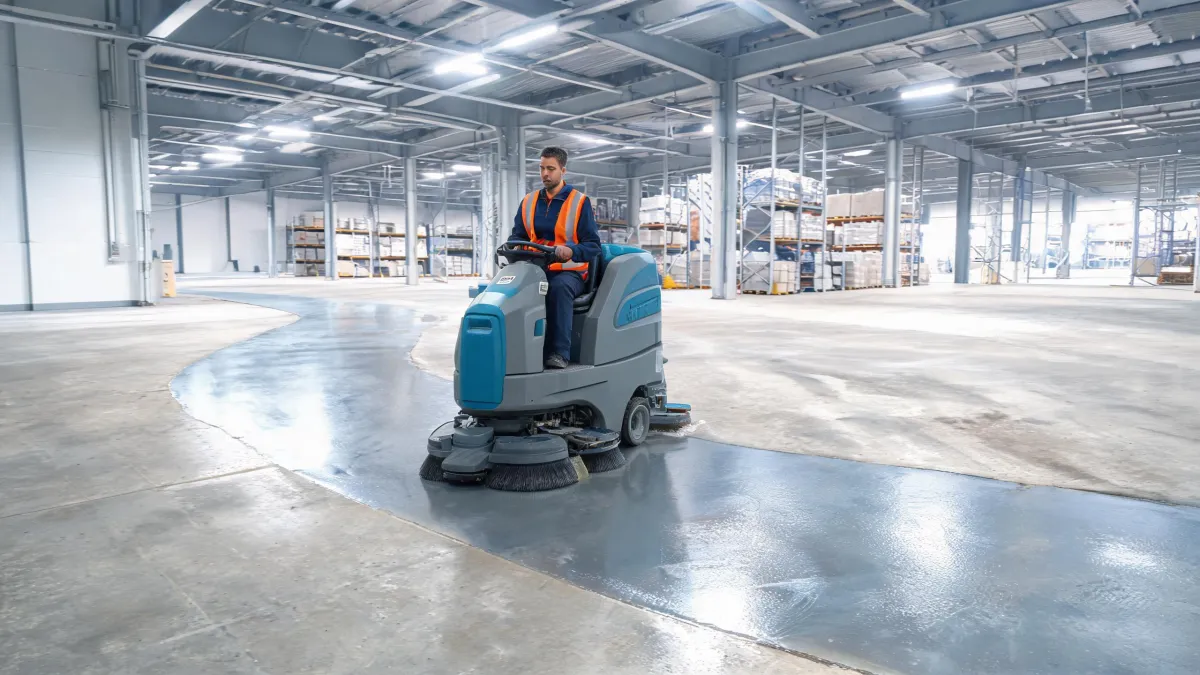
If you need Nilfisk equipment in the next 48 hours, rent the floor scrubber and buy the pressure washer—unless this is a recurring need. Then the Nilfisk autonomous floor scrubber (the Liberty SC50) is the better investment. That's the conclusion I keep landing on after more than 60 emergency equipment requests. I coordinate cleaning equipment for facilities that can't shut down, and I've learned that the difference between a good day and a disaster is usually one decision made early.
Let's get one thing out of the way: the phrase everyone searches is "best pressure washer Nilfisk premium." For most commercial facilities, that's the C120.5-8. It's not the biggest unit in the line, but in my experience it's the one that doesn't quit when you need it on a Thursday morning for a Friday audit.
In my role coordinating equipment for a regional facility services company, I'm the person who gets the call after the original plan falls apart. Last quarter alone, we handled 47 rush requests with 95% on-time readiness. I don't have hard data on industry-wide equipment failures, but based on what I see at job sites, I'd estimate that about one in five "urgent" deliveries either shows up late or with the wrong accessories. That's why I always ask two questions: How much time do we have, and what exactly is on the machine when it arrives?
The 48-Hour Rule: Rent the Scrubber, Buy the Pressure Washer
When I'm triaging a rush order, the first question is always what time the deadline is, not which machine is best. The best machine is the one that shows up in time. If you're under 48 hours from needing a floor scrubber, renting is almost always the right call. Renting a floor scrubber from a Nilfisk dealer costs roughly $150–$300 per day for a walk-behind unit, including basic brushes and delivery (based on dealer quotes I've seen in January 2025; verify current pricing).
But the price isn't the main reason to rent. The main reason is certainty. A rental dealer has a machine already in stock and a service van with spare parts. When you buy new, even an expedited order can be delayed by freight issues, missing batteries, or a late accessory shipment. I've seen it happen.
"Probably" is not a delivery date. It's an expensive guess.
In March 2024, a food plant called on Monday afternoon for a scrubber that had to be running by Wednesday at 7am. We rented a walk-behind from a local Nilfisk dealer, paid $150 extra for a guaranteed 5am delivery, and it ran through the plant's audit week. The alternative was a new machine order with a "probably by Thursday" quote. The plant would have lost a supplier contract worth around $12,000.
Nilfisk Autonomous Floor Scrubber: What It Actually Does
If you keep seeing "Nilfisk autonomous floor scrubber" in marketing and wondering if it's worth the cost, here's the honest answer: it's not a replacement for your team. It's a replacement for the part of your team's day that doesn't need judgment.
Here's something vendors won't tell you: an autonomous scrubber still needs a human to fill the water tank, add detergent, and change pads. What it removes is the back-and-forth zigzag. The machine drives itself, and that frees your people for tasks that need actual thinking—like organizing inventory or running that pressure washer.
The model I've seen handle multiple floor types is the Liberty SC50. According to Nilfisk's product pages (nilfisk.com), it's designed for autonomous operation across different surfaces. People ask me about "a robotic scrubber for multiple floor types" as if it's a magic wand. It's not. It works because you can set separate cleaning programs for each zone—sealed concrete in the warehouse, tile in the break room, epoxy in the lab—and the machine switches when it crosses into a new area. I want to say it covers around 6,000 square feet per charge, but don't quote me on that; check the current spec sheet on nilfisk.com. My point is the programming matters more than the sensors.
People think you buy an autonomous scrubber because robots are cheaper than labor. Actually, you buy it because labor is scarce and schedules are unpredictable. The robot doesn't reduce headcount; it makes the headcount you have more reliable. For a facility that has to hit the same standards every night, that reliability is the real ROI.
The Best Pressure Washer Nilfisk Premium Makes: C120.5-8
If you've typed "best pressure washer Nilfisk premium" into a search bar, I'm going to save you some time. For facility work, the answer is the C120.5-8. It's rated at 120 bar and around 500 liters per hour, which sounds average on paper. But in a working plant, "average" is what you want for daily cleaning—high enough to strip grime, low enough that your operator doesn't accidentally damage a painted wall or a seal.
We ran one for three years in a food plant and only replaced a hose and one spray gun. I wish I had tracked maintenance hours more carefully because I know that sounds too good to be true. But anecdotally, it was the machine that broke least. The other units with higher pressure specs spent more time in the shop.
One caveat: don't buy a premium pressure washer if you only need it once a year. Rent it. The premium is worth paying when you need reliability, not when you need a dust collector—speaking of which.
Don't Skip the Broom Dust Collector
Here's the piece that almost everyone forgets: broom dust collector. If your facility generates dry dust—wood shavings, grain, insulation dust, powdered ingredients—a broom dust collector is what keeps that dust from ever reaching the floor. A shop vac can't handle continuous dust; it clogs and slows you down. A stationary dust collector captures the dust at the source, so your scrubber doesn't have to fight it all day.
I see the causation reversed all the time. Companies buy an expensive floor scrubber because their floor is always dusty, then wonder why the scrubber's filters need constant attention. The dust collector should have come first. It won't show up in a search for "floor scrubber," but it's often the better investment for a dusty facility.
Renting Floor Scrubber vs. Buying: The Math
Renting a floor scrubber is the right answer for a one-time event, an emergency, or a season where you need extra capacity. The daily rate might look high—$250 a day adds up. But if you're renting 20 times a year, that's $5,000, which is past the price of a decent used walk-behind scrubber. Once you hit that point, buy.
The other reason to rent: you can test a machine before you commit. I've had clients rent a Liberty SC50 for a weekend trial and realize the autonomous route mapping worked for their space, or didn't. That's a $300 test instead of a $15,000 mistake.
One more thing: pay for guaranteed delivery. The $150–$200 extra for a time-certain window is not a waste. In 2023, we tried to save $80 on a rental with a "should be there by breakfast" promise. The machine didn't show until 11am, and the client's event started at 9. We paid $350 for a last-minute replacement and still had to apologize. The cheap option wasn't cheaper—it was just delayed.
Where This Advice Stops
My experience is mostly in warehouses, food plants, distribution centers, and schools. If you're in a cleanroom, a hospital operating suite, or any facility with validated cleaning protocols, don't trust a generic guide. You need a machine with documented performance and a service plan that matches your regulatory requirements.
Also, if your floor is damaged—cracked epoxy, spalled concrete—no scrubber fixes that. The equipment keeps it clean, but it won't repair the substrate. Fix the floor first, then buy the machine to protect it.
Finally, don't overlook the human part. Two of my worst rush jobs were caused by operators who didn't know how to switch the brushes on the rental. That wasn't the machine's fault. I should have asked the dealer to send the 15-minute setup demo. The training is part of the delivery, and it's worth paying for.
The bottom line is simple: buy for recurring work, rent for emergencies, and never accept "probably" when the schedule matters. If you do that, you'll get more done with less drama—and you'll know exactly which Nilfisk equipment belongs in your building.

Elise Marceau
Elise Marceau is an LED display and digital-signage systems analyst covering LED video walls, modular screens, transparent LED, control processors, and indoor or outdoor signage. She applies IEC 62368-1 safety principles while comparing pixel pitch, luminance, contrast, refresh rate, colour uniformity, viewing angle, ingress protection, power density, module serviceability, and signal redundancy. Her specification guides help integrators, venue operators, retailers, and procurement teams align viewing distance, ambient light, content format, installation access, electrical load, and lifecycle support.