The Real Price of a 'Great Pressure Washer': A Buyer's TCO Story with Nilfisk
The first quote I got in 2021 actually made me laugh out loud. A local equipment dealer was selling a pressure washer for $1,850—less than half of what the Nilfisk rep had quoted. On paper, the spec sheet looked fine. Maybe even great. I almost signed the PO that afternoon.
I'm glad I didn't. No—wait, that's not right. I did sign it. And then I spent the next eight months paying for that decision in ways the purchase order didn't show.
This is a long story about how I learned to think about total cost of ownership. It starts with a failed pressure washer and ends with two Nilfisk machines and a dust collector. If you manage purchasing for a company, I hope you catch your own cheap-quote mistake before it costs you as much as mine did.
My Job: The Person Who Orders Everything
I'm the office administrator for a 400-person manufacturing and distribution company with three locations. My title doesn't say 'procurement manager,' but that's what I do. I manage all facility-related ordering—roughly $300K annually across 8 vendors. I report to both operations and finance, which means I hear about it when things go wrong and I hear about it again when the budget is reviewed. (And again in between.)
When I took over purchasing in 2020, I assumed the lowest quote was the best. That's what I'd been taught by the person I replaced. She used to say, 'if it's from a known brand, buy the cheapest one.' That logic lasted about 14 months.
The 'Great Pressure Washer' That Wasn't
We needed a heavy-duty pressure washer for the maintenance bay in 2021. The old one died, so we weren't in a luxury-budget position. I collected three quotes. The cheapest was $1,850 from a dealer who had the machine in stock. The Nilfisk quote for a comparable unit came in at $3,400 with local support and a service contract.
The $1,850 machine looked like a great pressure washer. It had a good PSI rating, brass fittings, and a hose reel. The Nilfisk rep spent a lot of time explaining why support mattered. I nodded along and then bought the cheaper one. I thought I was being a good steward of the budget.
In hindsight, the PSI number was the only thing that was great.
The pump failed in the tenth month. The dealer said he'd have to order the part. I asked how long. He said 'maybe three or four weeks.' It ended up being six. Meanwhile, our maintenance team had to clean heavy equipment by hand, which meant overtime for two technicians. The part wasn't $120—I'm mixing it up with another project—it ended up being $360 plus freight. And the first replacement part didn't fit because the manufacturer had changed the pump design without updating the manual. (Should mention: it took three emails to get the right part number.)
Let me add this up for you:
- Pressure washer quote: $1,850
- Replacement pump parts: $360
- Freight and expedite fees: $120
- Overtime labor while the washer sat broken: $3,400
- Replacement pressure washer we eventually bought: $3,400
That's $9,130 for what started as a 'cost-saving' purchase. And that doesn't include the meetings I had to sit through explaining to the VP of operations why the maintenance bay couldn't get cleaned properly for six weeks.
The second machine? It was the Nilfisk. I paid the extra $1,550 without blinking. It's still running today. So yes, in my book, that's what makes a great pressure washer: not the sticker price, but the absence of follow-up costs.
Searching 'Nilfisk Pressure Washer India Price'
Here's where the lesson got global. Last year, our company opened a small production line in India, and the site manager asked me to help source a pressure washer. I typed 'nilfisk pressure washer india price' into Google and immediately got confused. The same model name appeared with different price ranges depending on the distributor, whether it included a hose reel, whether GST was included, and whether the warranty was local or 'imported unit.'
The cheapest listing was tempting—almost 40% less than the others. But I asked a simple question: 'if the pump fails, where does it get repaired?' The answer was: 'You'd need to send it to a service center in another state.' That's not a lower total cost. That's a delayed landmine.
I'm not saying the India price doesn't matter. It does. But the lowest unit price was only the beginning. Shipping, local service, warranty execution, and downtime were all part of the real price. This time I didn't pick the cheapest. That's progress.
The Nilfisk Auto Scrubber Decision
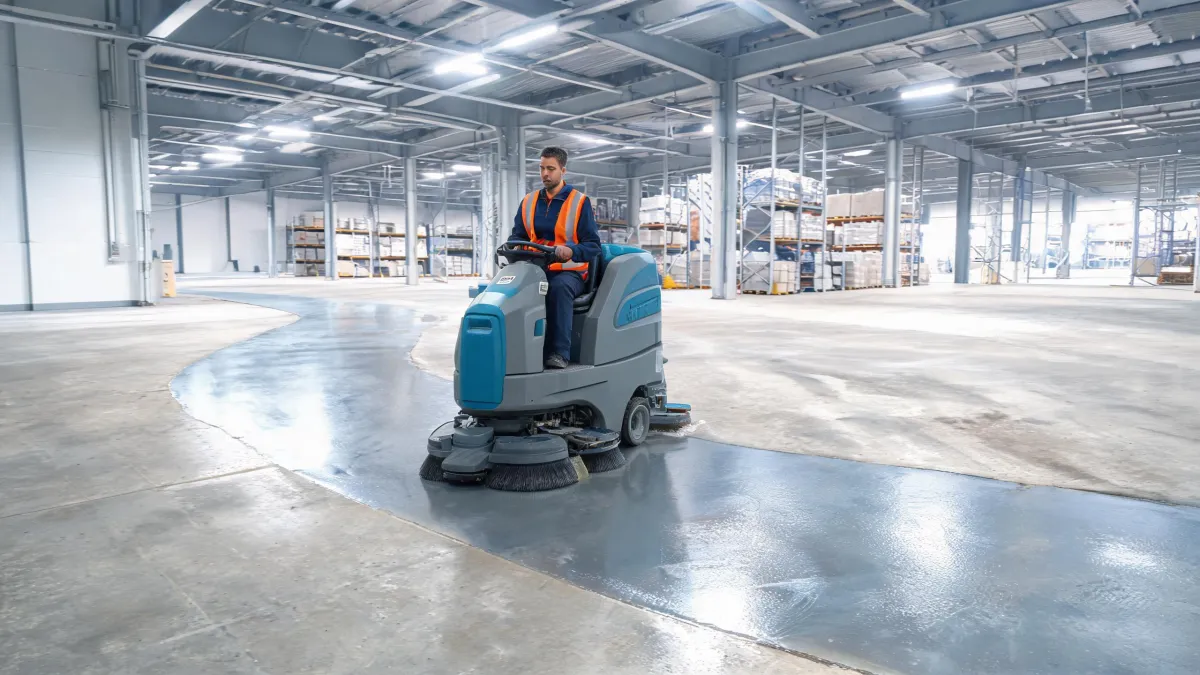
Then, in 2023, we needed a floor scrubber for a 40,000-square-foot warehouse at our new facility. Manual mopping was eating about 16 hours a week of our janitorial staff's time, and the floors still looked terrible. So I looked at ride-on auto scrubbers.
The numbers said a Nilfisk auto scrubber would pay for itself in about 14 months just from labor savings, compared to walking with mops and buckets. The spreadsheet was clear. But my gut still said, 'this is a lot of money.' I'd been burned by an expensive purchase before, and I didn't want to justify another one to finance.
Every cost analysis pointed to buying it. Something still felt off. Then I realized the feeling was just the old mistake talking. I had been conditioned by that 2021 pressure washer to distrust big-ticket purchases. But the data had changed.
We bought the Nilfisk auto scrubber. I'm so glad we did. It cut cleaning time from 16 hours to 4 hours a week. At $35/hour including burden, that's $1,820/month in labor savings. The payback was actually 11 months, which is even better than predicted. Does it occasionally need service? Sure. But the local dealer stocks common parts, and the service contract I added has already paid for itself twice. (Once when a squeegee wore out early, once when a wheel sensor needed adjustment.)
So glad I didn't repeat the pressure washer mistake. There was a week where I almost talked myself into a cheaper off-brand unit. That would have been a very expensive 'savings.'
The VPRO Dust Collector and the China Quote
The most recent test was a dust collector for our new fabrication area. We produce some metal components in-house, and we needed dust collection for the cutting and grinding station. I knew enough by then to look at the bigger picture, but I still had to fight the same impulse.
We found a mechanical dust collector manufacturer in China through a trade directory. Their delivered price was $12,000. That's real. The Nilfisk VPRO dust collector system—the dealer's sheet actually said 'dust collector VPRO'—was quoted at $19,500. Yes, that's a $7,500 difference. At first, I thought going with the Chinese quote was self-evident. But then I started digging into the actual total cost.
The $12,000 quote didn't include:
- HEPA filters (an additional $2,200)
- Explosion isolation valves that OSHA's combustible dust guidance basically requires for metal dust (an additional $3,100)
- Commissioning and training by a certified technician ($1,800 if we hired a third party)
- Spare parts stocked in-country—there were none
- Freight from the port to our site: another $900
And the lead time was 10 weeks, not the 4-week lead time on the Nilfisk dust collector VPRO system. We had a production launch already scheduled. A 10-week wait would have delayed the launch, and that cost would have been several times the equipment price.
I'm not trying to bash that mechanical dust collector manufacturer in China. I never actually saw their unit in person—maybe it would have worked fine. But my job isn't to be a test pilot. My job is to make sure fabrication starts on time and keeps running without a dust explosion. When I added everything up, the $12,000 quote had become $20,100 on paper, not counting the schedule risk. The $19,500 Nilfisk quote included the filters, the isolation valve, the commissioning, and local support.
The VPRO unit has been running seven months now. Zero unplanned downtime. I've learned this by now: the moment someone starts comparing only sticker prices is the moment hidden costs start showing up.
The TCO Formula I Now Use
I don't evaluate equipment purchases anymore without a total cost of ownership view. It's not complicated. I just have a checklist I run through for every machine above $500:
- Unit price (obviously)
- Freight, customs, and delivery
- Installation and commissioning
- Training for the people who'll use it
- Warranty terms and claim location
- Spare parts availability and lead time
- Consumables like filters, belts, and brushes
- Energy consumption
- Expected maintenance cost over 5 years
- Risk of downtime and production delay
- Resale or disposal cost at end of life
I don't need a fancy system. I open a spreadsheet, put the line items in, and let the numbers argue. When I'm honest with the numbers, they usually point to the same thing: the upfront quote tells you very little about the actual cost.
If I could go back to 2021, I'd have asked the $1,850 dealer three questions: where do you keep spare parts? How long does a warranty claim take? And what happens while the machine is waiting? The guy probably would have hemmed and hawed. That's all the answer I needed.
According to Nilfisk's own product materials, their industrial cleaning equipment is designed for continuous use and maintainability. That's marketing talk, sure, but after watching a cheaper machine fail and a Nilfisk machine keep working, I'm a convert. Let me be clear: I do not work for Nilfisk and I don't get a commission. I just can't justify repeating my own mistake.
Bottom line: a great pressure washer, auto scrubber, or dust collector is only great if it keeps working when you need it. The cheapest price can be the most expensive decision you make. I've got a maintenance bay full of proof.
Note: Quotes in this story are from my specific bids in 2021-2024 and are not current. Verify pricing with local distributors.

Elise Marceau
Elise Marceau is an LED display and digital-signage systems analyst covering LED video walls, modular screens, transparent LED, control processors, and indoor or outdoor signage. She applies IEC 62368-1 safety principles while comparing pixel pitch, luminance, contrast, refresh rate, colour uniformity, viewing angle, ingress protection, power density, module serviceability, and signal redundancy. Her specification guides help integrators, venue operators, retailers, and procurement teams align viewing distance, ambient light, content format, installation access, electrical load, and lifecycle support.