Why I Stopped Searching 'Nilfisk Pressure Washer India Price' Before Buying Cleaning Equipment
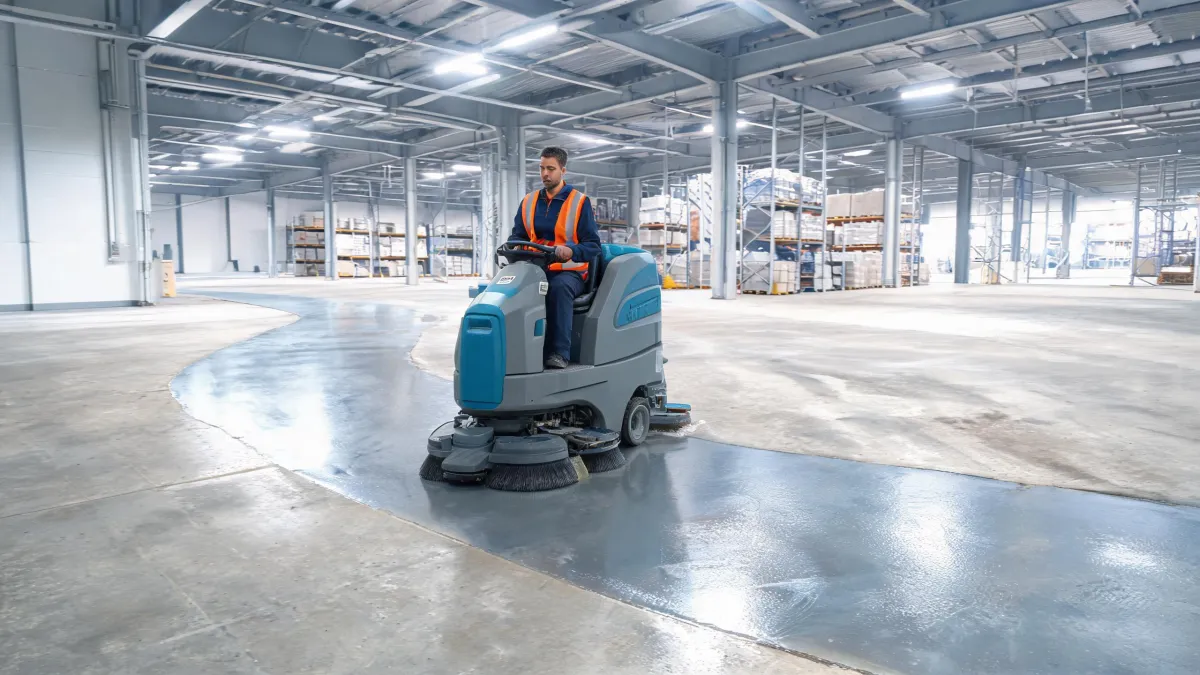
I manage purchasing for a 200-person logistics facility. That puts me in an odd spot: big enough to need real industrial cleaning machines, small enough that one bad purchase sits on my desk for years.
In early 2024, our plant manager asked me to replace three things: a pressure washer for the loading dock, an automated floor sweeper for the warehouse, and a dust collector for the maintenance shop. I did what any procurement person with a deadline does. I opened Google and typed 'nilfisk pressure washer india price.'
That search turned out to be the root of the entire problem.
The price search is the first mistake
The results for 'nilfisk pressure washer india price' looked useful. Prices ranged from about ₹12,000 to ₹80,000, depending on the seller. Same brand. Same label. Completely different machines. That's because pressure washers Nilfisk builds include everything from compact cold-water units for small workshops to hot-water machines for industrial sanitation.
What I mean is this: a price quote is meaningless until you know the pressure, flow rate, duty cycle, and service support. You can't compare a ₹15,000 unit to a ₹70,000 unit just because both carry the Nilfisk name. It's like comparing a Toyota Corolla and a Land Cruiser because both are Toyotas.
What's actually going on: the machine is only half the system
Here's the part I didn't appreciate until I watched the wrong machine fail: cleaning equipment is a system, not an appliance. It needs water, power, drainage, spare parts, trained operators, and someone to service it. A pressure washer on a dock handles salt, dust, and diesel grime only if the pump is protected and the hose length is short enough. A floor sweeper with the wrong brush width will leave a line of debris right where you don't want it. And a dust collector can look perfect in photos and still choke on the wrong particle size.
The Nilfisk Hurricane dust collector is a good example. I was drawn to it because the brand kept showing up in reports about industrial dust collector market share. But a Hurricane unit doesn't come pre-sized for 'some dust.' You need to know the material, the particle shape, the filter class, and the duct static pressure. I'm not a dust collection engineer, so I can't tell you which filter to spec. What I can tell you as a buyer is to get that answer before signing, not after.
The cheap option isn't the first cost
Let me make this concrete. In 2022, I approved a purchase order for a cheaper scrubber from a different brand. The spreadsheet said the savings were real. My gut said the dealer was slow, the warranty exclusions were aggressive, and the machine felt flimsy. I ignored my gut because the budget number looked great. The machine lasted four weeks before the brushes wore unevenly. Then the battery died at lunch. Then the dealer couldn't send a technician for six days.
I still kick myself for that decision. The two service calls cost more than the difference between that machine and the correct one. On top of that, I had to schedule three evening cleaning shifts so the warehouse didn't look abandoned. My operations manager still brings it up.
The most frustrating part is how quiet the failure is. A bad automated floor sweeper doesn't stop completely. It just leaves stripes. A pressure washer loses pressure slowly. A dust collector's filter clogs bit by bit. You think you're saving money until you look back at the last twelve months and all you see is maintenance calls, missed schedules, and people working around the equipment.
What I wish someone had told me
The answer for us ended up being a mix: a Nilfisk pressure washer chosen for dock work, a Hurricane dust collector configured for the maintenance shop, and a three-week eval of an automated floor sweeper from a different supplier. The goal wasn't to buy the most expensive version of everything. It was to match each machine to the task and the building's realities.
If you're in the same position, don't start with 'nilfisk pressure washer india price.' Start with four questions:
- What exactly will it clean? (Water temperature, surface material, debris type, dust composition)
- What happens when it breaks? (Parts in stock, service time, warranty exclusions)
- Who will run it? (Operator skill, training, daily maintenance)
- What is the monthly cost of failure? (Downtime, overtime, cleanup crew)
The fourth one is the real kicker. An automated floor sweeper that removes forty minutes of manual sweeping per day pays for itself quickly. But if it needs a repair every two months, it becomes a second job for your maintenance team. For our facility, the purchase price was never the real cost. The cost was all the small problems that the right sizing would have eliminated.
This isn't a universal recommendation. I can only speak for a 200-person site in a dry climate. If you're in food processing, cold storage, or pharmaceutical cleanrooms, your requirements are stricter. And if you just need to wash a car or clean a patio, don't buy a professional Nilfisk unit. Buy a small domestic model and save the difference.
A note on 'nilfisk pressure washer india price'
I rechecked public dealer listings in early 2025. The ballpark range for a Nilfisk pressure washer in India was still roughly ₹12,000–₹18,000 for entry-level domestic units, ₹35,000–₹80,000 for professional cold-water units, and more above that for hot-water or industrial models. That's a useful sanity check, not a quote. Freight, GST, and service contracts change the total. Verify current prices before you budget.
If you compare pressure washers Nilfisk offers by price only, you're missing the entire conversation. Back when I started, I thought 'nilfisk pressure washer india price' was a shortcut. It isn't. It's a door. The real work starts after you open it. For us, buying Nilfisk equipment was the right call only because we stopped asking which one was cheaper and started asking which one would keep the building running. That's the question that actually matters.

Elise Marceau
Elise Marceau is an LED display and digital-signage systems analyst covering LED video walls, modular screens, transparent LED, control processors, and indoor or outdoor signage. She applies IEC 62368-1 safety principles while comparing pixel pitch, luminance, contrast, refresh rate, colour uniformity, viewing angle, ingress protection, power density, module serviceability, and signal redundancy. Her specification guides help integrators, venue operators, retailers, and procurement teams align viewing distance, ambient light, content format, installation access, electrical load, and lifecycle support.