Nilfisk Pressure Washer, Standing Floor Scrubber, or Food-Grade Dust Collector: Three Scenarios, Three Answers
-
Scenario 1: Sensitive product? Start with a food-grade dust collector
-
Scenario 2: Large flat floors? A standing floor scrubber gives the best labor return
-
Scenario 3: Grease, docks, vehicles? A Nilfisk pressure washer — premium manual if you want to avoid downtime
-
How to decide what your facility actually needs
When someone emails me asking, "Which Nilfisk should we buy?", they usually want one model number. Six years ago, I did the same thing. I thought cleaning equipment selection was like picking a laptop: compare specs, buy the winner. That approach failed me three times. It cost me money, an audit, and a few months of unnecessary maintenance calls.
Now I manage cleaning equipment budgets the same way I manage any budget: track every invoice, calculate the total cost of ownership, and figure out which failure we're trying to prevent. The useful question isn't "which brand." It's "what are you cleaning, and what happens if you get it wrong?"
Most facilities I've audited fall into one of three scenarios:
- You need to keep products safe from contamination — food-grade dust collector territory.
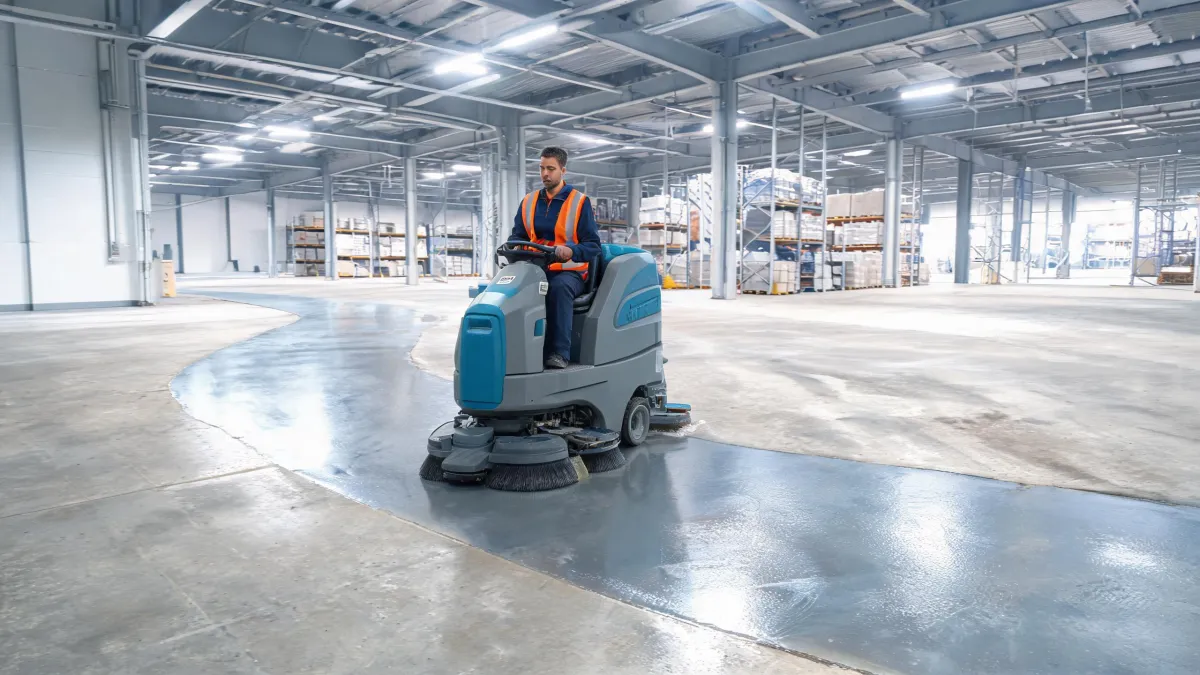
- You're covering large hard floors on a regular basis — a standing floor scrubber is the right workhorse.
- You're removing grease, grime, and outdoor dirt — a pressure washer, like a Nilfisk premium manual model, takes priority.
Let's walk through each one. The order matters because each has a different thing that must not go wrong.
Scenario 1: Sensitive product? Start with a food-grade dust collector
If you're milling, blending, packaging, or handling anything that can absorb or react to dust, the dust collector is critical. I'm not talking about keeping the place tidy. I'm talking about keeping the product safe enough to sell.
In this scenario, the cheapest option is almost never the cheapest option. I found this out the hard way. A vendor warned me that a truly food-grade dust collector had specific material grades in the filter housing and hopper. I didn't want to pay the difference, so I bought an industrial unit instead. It collected dust fine. But at the audit, the inspector asked whether every component in the airflow path was food-contact approved. We couldn't prove it. Replacement cost: $1,400. The downtime cost even more.
Food-grade doesn't mean a different color. It means the surfaces that contact airborne dust can be cleaned without trapping product, the materials don't shed particles, and the manufacturer can tell you exactly what the machine is made of. A cheap collector with cast aluminum housing may work, but cast surfaces are porous. They hold dust and bacteria. Stainless steel or food-safe coatings cost more and clean better. That's where the premium goes.
If a manufacturer says "food-grade" but can't produce documentation, treat it as a marketing label, not a spec. Per FTC advertising guidelines, product claims must be truthful and substantiated. In a food facility, documentation is the substance.
If you're buying equipment in bulk, the "wholesale collector dust" listings you see online are often industrial-grade, not food-grade. There's a difference in certification, materials, and cleanability. Pay extra for the documentation. It's the cheapest insurance you'll buy.
Scenario 2: Large flat floors? A standing floor scrubber gives the best labor return
Warehouses, distribution centers, retail backrooms, automotive shops — these places don't have a dust problem as much as they have a floor problem. You need clean floors, quickly, several times a week.
I used to think a walk-behind scrubber was enough and the larger ride-on was the only real upgrade. Then I spent time watching how operators actually worked. A walk-behind works for small areas, but in a 45,000-square-foot facility, operator fatigue is a cost that never shows up on the quote. The first three hours are fine. Hour four slows down. That's where a standing floor scrubber earns its keep.
We shifted to a stand-on model in 2023 and cut our regular cleaning route from about five hours to three and a half. Same concrete, same cleaning solution, less time. The reason wasn't more brush pressure. It was the operator's body position, meaning less fatigue and steadier pace. Not the stat most buyers compare.
Things I check for now when comparing scrubbers:
- Battery runtime that covers your longest shift, not the marketing claim.
- Easy access to the squeegee and brush deck for maintenance.
- Chemical and pad costs for three years. These often exceed the machine price.
- Tank design that drains and rinses quickly. Stagnant tanks create smells operators have to tolerate.
- Noise level. If your crew runs the machine during operating hours, a loud unit becomes a source of complaints.
If your facility is smaller or your floor is uneven, the stand-on might not be the answer. I can only speak to our situation: large, smooth concrete floors, one shift per day. But when a first-time buyer asks what to prioritize, standing floor scrubber is usually the right starting point for that type of operation.
One more thing: if clients ever visit your site, floor condition shapes more of their impression than the lobby does. Clean floors are a low-cost brand statement. A standing scrubber isn't a luxury; it's a reputation tool.
Scenario 3: Grease, docks, vehicles? A Nilfisk pressure washer — premium manual if you want to avoid downtime
Pressure washers get the wrong stage debut in this conversation. They're not ideal for general floor maintenance, and they're useless for food dust control. But if you're cleaning loading docks, equipment, trailers, and machine parts covered in grease, few tools can match them.
When someone searches for a pressure washer nilfisk premium manual, they're usually asking, "Is it worth paying more for the premium version of a manual machine?" My answer is yes, for most B2B operations.
Here's what surprised me when I dug into the cost side: in a pressure washer, premium isn't about more PSI. It's about the pump, the trigger, the hoses, and serviceability. A lower-cost unit might clean just as well in month one. Then the seals start leaking. The pump fails. Replacement components take ten days to arrive. Meanwhile, expensive technical staff are cleaning things by hand.
The "manual" part matters too. Fully automated or mobile washing systems are overkill for a fixed cleaning station. A premium manual pressure washer gives you control without unnecessary electronics. Fewer modules to fail. Less complex maintenance. That fits cost control perfectly.
I didn't believe this until I ignored a warning and bought the cheaper unit. The "cheap" quote ended up costing 30 percent more to operate over six months than the "expensive" Nilfisk quote, once we counted downtime, parts, and the labor that couldn't use the machine. In Q2 2024, we switched one of our sites to a Nilfisk premium manual pressure washer. The maintenance tickets on that machine dropped to almost nothing.
How to decide what your facility actually needs
Forget the model list for a second. Answer these three questions:
- Is there a contamination risk to your product? If yes, start with a food-grade dust collector. This isn't a preference; it's a process requirement.
- Do you clean large flat floors at least five days a week? A standing floor scrubber will pay for itself faster than most other machines you can buy.
- Are most of your contaminants stuck on outdoor or production equipment? Then a manual pressure washer—ideally a Nilfisk premium model if you want a long trouble-free life—is the one to prioritize.
You might fit more than one scenario. That's fine. But start with the one that protects your process or your client relationship first. The most expensive mistake isn't buying the wrong brand. It's buying the right-looking price tag that fails at the wrong moment.
Bottom line: the best Nilfisk machine is the one that matches your risk. A food facility needs the certified dust collector. A warehouse with large floors needs the standing scrubber. A grease-heavy operation needs the premium manual pressure washer. Brand matters, but the math matters more.

Elise Marceau
Elise Marceau is an LED display and digital-signage systems analyst covering LED video walls, modular screens, transparent LED, control processors, and indoor or outdoor signage. She applies IEC 62368-1 safety principles while comparing pixel pitch, luminance, contrast, refresh rate, colour uniformity, viewing angle, ingress protection, power density, module serviceability, and signal redundancy. Her specification guides help integrators, venue operators, retailers, and procurement teams align viewing distance, ambient light, content format, installation access, electrical load, and lifecycle support.