Why Nilfisk Floor Cleaning Machines Are a Smart Long-Term Bet (and When They’re Not)
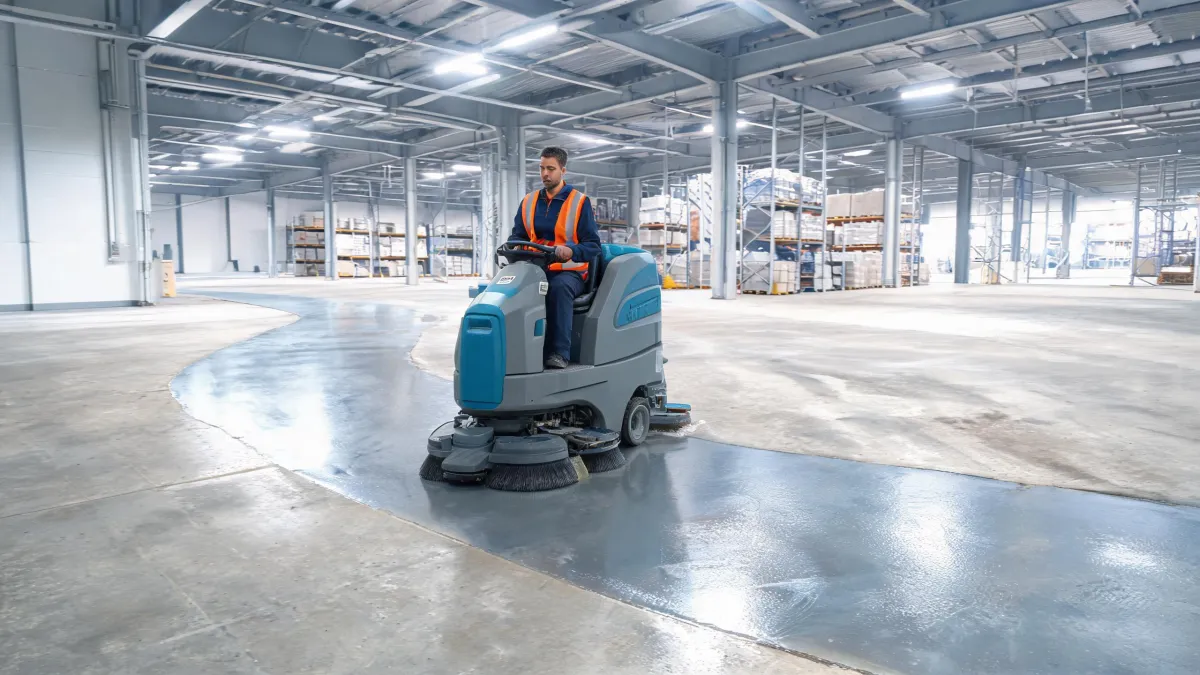
I’ll Say It Straight: Buying the Cheapest Floor Scrubber Is Often a Mistake
I’ve been coordinating facility maintenance and equipment procurement for over seven years now—everything from emergency replacements to long-cycle capital purchases. And if I’ve learned one thing, it’s this: when you’re looking at floor cleaning machines, the upfront price tag is a terrible predictor of your total cost of ownership. I’ve come to believe that brands like Nilfisk—specifically, the Nilfisk Advance SC351 walk-behind floor scrubber—are almost always the better bet. But I’m also not going to pretend they’re perfect for everyone.
To be fair, a basic floor scrubber from a budget brand will clean a floor. It just might not do it as efficiently, as reliably, or for as long. And that gap? It’s where your real costs live.
What Took Me Years to Understand
It took me about four years and managing over 120 equipment purchases to understand that the initial purchase price is almost irrelevant compared to the cost of downtime, repairs, and lost productivity. Early on, I’d look at a quote for a Nilfisk dust collector fabric system or a 240v dust collector and think, “That’s expensive.” I’d go with a cheaper alternative. And I’d inevitably regret it.
My biggest regret? Once, I saved about $1,800 by buying a non-Nilfisk dust collector for a client’s woodworking shop. The unit failed within six months. The downtime cost them more than the original savings. We ended up replacing it with a Nilfisk system anyway. Net loss: about $3,000.
Three Reasons Nilfisk Wins (for the Right Customer)
1. Reliability Is Baked In, Not a Marketing Claim
This is the obvious one, but it’s worth stating clearly. Nilfisk builds equipment for industrial use—eight-hour shifts, heavy debris, continuous operation. The motors on their floor scrubbers and vacuums are rated for longer service life. The seals on their dust collector fabric systems are designed to handle fine particulates without quick degradation.
I can point to a specific example. In March 2024, we needed a backup dust collector for a facility that runs three shifts. Normal delivery on a comparable budget unit was two weeks—but we needed one in 36 hours. We paid a 40% rush premium on a Nilfisk model, and it’s been running non-stop since. The budget alternative would have saved us money upfront but carried a higher failure risk. Sometimes you pay for the guarantee of uptime.
2. The “Total Cost of Ownership” Is Not a Cliché
If you’re buying a floor cleaning machine, look past the sticker price. Consider:
- Parts availability: Nilfisk has a wide dealer network. Need a squeegee blade for the Advance SC351? You can get it in 1-2 days. For budget brands, you might be waiting 2-3 weeks.
- Serviceability: Every local service tech I know can work on a Nilfisk. For some off-brands, they won’t even take the job.
- Resale value: Used Nilfisk equipment holds value. A well-maintained SC351 can be sold for 40-50% of its original price after three years. Try that with a no-name scrubber.
I’ve run the numbers internally. For a large-scale project needing three Nilfisk floor scrubbers vs. three budget machines over a five-year period, the Nilfisk option was roughly 15% more expensive upfront but saved about 22% in total operating costs. I want to say that 22% figure is accurate—though I’d need to double-check the exact maintenance logs. Ballpark it.
3. The Automation Bet Is Real
This one surprised me. I didn’t fully understand the value of investing in automation-ready equipment until we tried to integrate a budget scrubber into a facility’s cleaning schedule. It just couldn’t handle the software interface. The Nilfisk autonomous scrubbers? They’re built for it. If your facility is even thinking about going semi-autonomous in the next five years, buying a machine that can’t support it is a costly mistake.
Not every facility needs automation. But if you’re in that 30% that does, the decision is clear.
But Here’s When You Shouldn’t Buy a Nilfisk
Let me be honest—because the “honest limitation” approach is what makes these recommendations trustworthy.
If you’re a small operation with a single, low-usage shift and a tight budget, a Nilfisk might be overkill. For example, if you clean 2,000 square feet of light-duty retail space once a day, spending $6,000+ on a Nilfisk Advance SC351 is like buying a commercial truck to move a couch. In that case, a floor scrubber rental from a local place—maybe even “floor scrubber rental Brookfield” or similar—is the smarter play. You pay $200-$400 a week, you get a clean floor, and you’re not tying up capital.
Also, if you absolutely need the lowest possible upfront cost and you can handle higher maintenance risk, a cheaper brand will technically “work.” It’s just a trade-off. I get why people make that choice—budgets are real.
The Bottom Line
If you’re a B2B buyer—a facility manager, a maintenance director, someone who answers to uptime and budget—I believe Nilfisk floor cleaning machines are usually the right call. The reliability, the parts network, and the resale value justify the premium. But the key word is “usually.”
Know your use case. If you’re a small operation or have highly intermittent needs, a rental or a budget option might make more sense. Don’t let anyone tell you there’s a one-size-fits-all solution.
My advice: if you’re looking at a 240v dust collector for a workshop running daily, or an Advance SC351 for a 50,000 sq. ft. warehouse, spend the extra money. You’ll thank yourself in two years. Period.

Elise Marceau
Elise Marceau is an LED display and digital-signage systems analyst covering LED video walls, modular screens, transparent LED, control processors, and indoor or outdoor signage. She applies IEC 62368-1 safety principles while comparing pixel pitch, luminance, contrast, refresh rate, colour uniformity, viewing angle, ingress protection, power density, module serviceability, and signal redundancy. Her specification guides help integrators, venue operators, retailers, and procurement teams align viewing distance, ambient light, content format, installation access, electrical load, and lifecycle support.