Nilfisk Premium 180-10 Pressure Washer & SC250 Scrubber Dryer Reviews: A Buyer's Truth
-
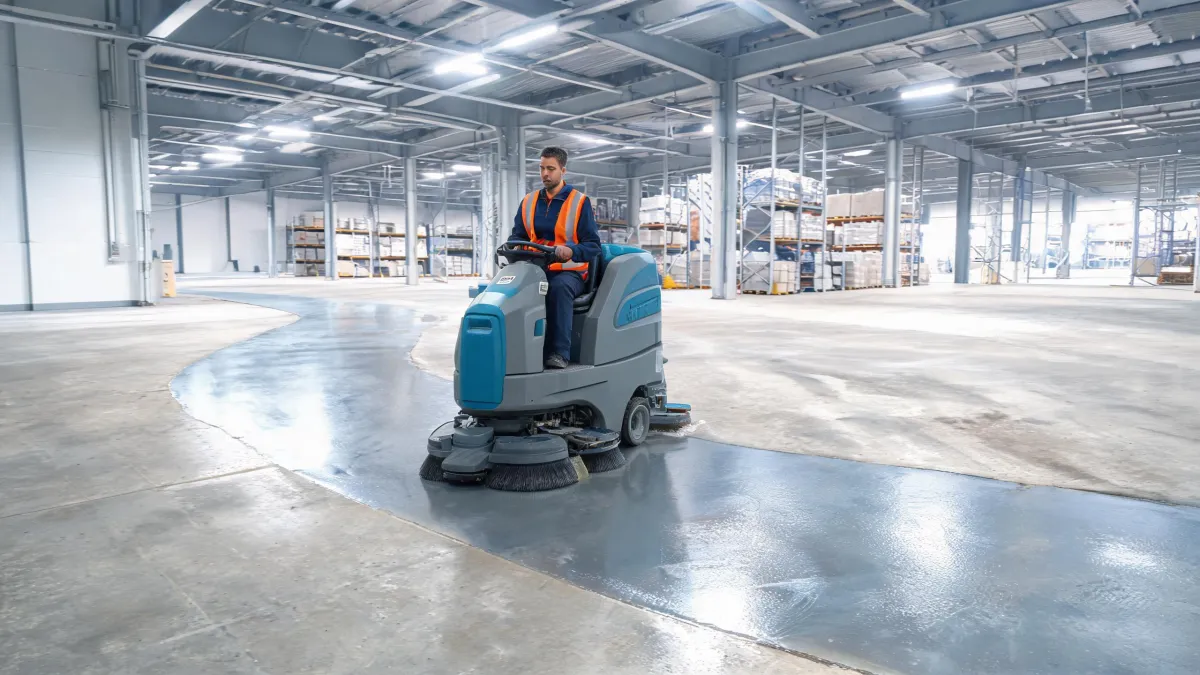
Nilfisk SC250 scrubber dryer: the machine that changed my purchasing priorities
-
Nilfisk Premium 180-10 pressure washer: buy the right spec the first time
-
Dust collector tools and the dust nail collector question
-
Robot floor scrubber with large water tank: the honest reality check
-
Where Nilfisk isn't the answer
I manage purchasing for a 230-person logistics company—roughly $90,000 a year across seven equipment vendors. When I took over cleaning equipment buying in early 2021, our fleet was split between three brands, maintenance was scattered across contractors, and I couldn't tell you which machines were actually earning their keep. Four years and a lot of invoices later, here's my direct answer: the Nilfisk SC250 scrubber dryer is the best equipment ROI I've made in that time—it paid for itself in 14 months. The Premium 180-10 pressure washer is worth the money if you run it daily. Dust collectors are solid but require a specialist's input. And the robot floor scrubber with a large water tank? Wait until you've fixed the behaviors around it, not just the specs.
Before the details, my context. I'm an office administrator, not a facilities engineer. I can't speak to motor insulation classes or pump tolerances. What I can tell you is how these machines survive contact with a real warehouse crew, whether the dealer network delivers when something breaks, and whether finance stops asking questions. That's the lens this review comes from. I process 60-80 orders annually across all categories; cleaning equipment is maybe 20% of that but generates the most internal complaints and the most budget scrutiny. People notice dirty floors. They really notice a downed scrubber.
Nilfisk SC250 scrubber dryer: the machine that changed my purchasing priorities
The SC250 wasn't my first choice. In early 2023, our previous scrubber—purchased before my time from a lower-priced brand—started leaking hydraulic fluid across the warehouse floor. Twice. The repair quote came to $1,850, roughly 40% of the machine's original price. That's when I stopped optimizing for sticker price and started tracking cost per working month.
We bought the SC250 in March 2023. It's been in daily operation for about 22 months as of this writing, and we've had exactly one issue: a kinked drain hose from improper storage. Cost to fix: one hour of our maintenance guy's time. The old machine had three service calls in its final six months.
From a procurement standpoint, the dealer network is what sealed it. Nilfisk's local distributor stocks parts for the SC250, so we're never down a week waiting for a shipment. Downtime isn't on a purchase order, but it's very visible in the monthly ops review.
The scrubbing performance itself isn't magical—it does what it's rated to do, consistently, over our 40,000-square-foot warehouse floor. The tank capacity means our crew isn't constantly stopping to refill mid-shift. And the floor just looks better—visitors from corporate commented on it within the first month, which had never happened before.
Nilfisk Premium 180-10 pressure washer: buy the right spec the first time
The Premium 180-10 was my second Nilfisk purchase, and it happened because of a mistake I still kick myself over. In 2022, I tried to save money with a consumer-grade pressure washer for our truck-washing station. The vendor's marketing promised "light commercial duty." It overheated within four months on a two-truck-per-day schedule, and the repair quote was $240—more than half of what we'd originally paid.
I bought the 180-10 in early 2023. The difference isn't just the motor; the flow rate and pump durability are what matter for regular use. (I'm not a mechanic, so I won't pretend to break down the internal specs beyond what a buyer needs to know—don't hold me to the exact PSI, but it's somewhere around 2,600.) The 180 bar output handles the concrete stains and truck grime our crew throws at it, and after two years, zero repairs.
Here's the caveat most reviews skip: if your washing needs are occasional—a couple of times a month—you don't need the 180-10. Nilfisk makes smaller units that cost half as much and last fine at low frequency. The 180-10 earns its premium because it's scheduled almost daily at our facility. That's the threshold. If you're not running it four or more times a week, you're paying for capacity you won't use.
Dust collector tools and the dust nail collector question
This is the category that gets the least attention and where I've seen the biggest failures. Our maintenance shop produces fine sawdust, and the building-maintenance crew creates drywall dust during small repairs. We tested a general-purpose dust collector that looked fine on paper. The filter clogged within three weeks because the particle-size distribution didn't match what the equipment assumed.
That's where I hit my expertise limit: matching a dust collector to a specific dust type is a technical decision. I can compare CFM ratings, but I'm not the right person to choose between a cyclone separator and a cartridge filter. Getting it wrong cost us $700 in additional filtration hardware.
The dust nail collector attachment—the type that catches concrete dust at the source on a nail gun—was a more straightforward win. A $120 attachment saved our building crew about three hours per anchoring job, plus eliminated one recurring cleanliness complaint that had made it into a regional safety audit last year. Small line item, steady payoff. Those are the purchases that are easy to skip on paper but visible to every visitor who walks through the building.
Robot floor scrubber with large water tank: the honest reality check
Let me be upfront: I wanted the autonomous scrubber to work more than I let on at the time. The pitch—large water tank, fewer refills, autonomous cleaning, predictable labor savings—is exactly what a facilities budget wants to hear. We trialed one in early 2024, and what surprised me wasn't the machine.
The robot itself navigated our racking cleanly, and the large tank genuinely delivered: roughly 18,000 square feet on a fill. The problem was the recharge station. Our facilities manager placed the dock near the loading dock—in hindsight, a bad spot, but it was the only area with convenient power. Inbound pallets kept blocking the robot's path back to charge. It would complete its cycle, find the dock blocked, and shut down before the next shift's cleaning run.
It took four months to solve: a designated exclusion zone, retraining for the dock crew, and a bollard to keep pallets away from the charging area. Our lead maintenance tech summed it up best:
"The machine works fine. It's the people around the machine we had to fix."
So here's the counterintuitive part that zero spec sheets mention: the biggest cost of going autonomous isn't the robot—it's reorganizing the workspace habits around it. If you're evaluating a robot floor scrubber, map the dock placement, the clearance path, and the human behaviors before you sign. The large water tank is a great feature. It doesn't matter if the machine can't reliably get back to where it charges.
Where Nilfisk isn't the answer
I'm not a brand ambassador. Nilfisk's consumer-grade line is fine but not meaningfully better than comparable brands at that price. Their fleet-tracking software is clunkier than newer systems I've seen demoed. And if you're a small operation cleaning under 10,000 square feet, the commercial equipment is capacity you'll never use.
The reason we standardized on Nilfisk for heavy equipment is straightforward: total cost of ownership. To be fair, that conclusion is based on our specific use—daily scrubbing, heavy truck washing, a crew that doesn't pamper machinery. If your facility runs at lower intensity, cheaper options become viable, and I wouldn't judge anyone who picks them.
One regulatory note: if a supplier pitches you on "eco-friendly" cleaning claims, check their specifics against the FTC's Green Guides (ftc.gov). I've seen water-saving claims that were measured in lab conditions, not real-world use. Nilfisk's published spec sheets have matched what we actually consume, and that's one reason I trust their documentation.
None of this is a formal engineering recommendation—I'm a buyer, not a consultant. But if there's one thing four years of purchasing mistakes taught me, it's this: don't chase the cheapest sticker price, and don't chase the newest automation feature. Chase the total cost of doing business. That's where the real answers are.

Elise Marceau
Elise Marceau is an LED display and digital-signage systems analyst covering LED video walls, modular screens, transparent LED, control processors, and indoor or outdoor signage. She applies IEC 62368-1 safety principles while comparing pixel pitch, luminance, contrast, refresh rate, colour uniformity, viewing angle, ingress protection, power density, module serviceability, and signal redundancy. Her specification guides help integrators, venue operators, retailers, and procurement teams align viewing distance, ambient light, content format, installation access, electrical load, and lifecycle support.