Nilfisk FAQ: Cleaning Equipment Insights from a Cost Controller’s Perspective
-
Your Nilfisk Questions — Answered
-
Are Nilfisk pressure washer parts really that expensive?
-
Do pressure washers from Nilfisk justify the price tag?
-
What about the safety of robot floor scrubbers?
-
How often do I really need to replace dust collector filters?
-
Do Nilfisk dealers treat small orders differently?
-
Can I use third-party parts in Nilfisk equipment?
-
What’s the biggest hidden cost in cleaning equipment?
-
Final thought
-
Are Nilfisk pressure washer parts really that expensive?
Your Nilfisk Questions — Answered
I've been managing cleaning equipment procurement for a mid-size facility services company for 7 years now. When I first started, I assumed the lowest quote was always the best move. But $180,000 in cumulative spending later — tracking every invoice in our system — I learned TCO is the only metric that matters. Below are the questions I hear most often from buyers like you. No fluff.
Are Nilfisk pressure washer parts really that expensive?
Short answer: it depends on what you’re comparing. I once compared parts costs across 5 vendors for a quarterly order. One vendor quoted $320 for a pump kit. Another quoted $275. I almost went with the cheap one until I calculated the total cost — $40 shipping, a $25 “environmental fee,” and no warranty support. The $320 quote included free shipping and a 2-year warranty. That’s a 22% difference hidden in fine print. For Nilfisk OEM parts specifically, the premium is usually 10–15% over generic, but replacement frequency is lower in my experience. For example, our LWQ pressure washer’s OEM valve assembly lasted 18 months versus 10 for a third-party part.
Do pressure washers from Nilfisk justify the price tag?
I used to think any pressure washer with similar PSI would perform the same. Then I reverse-validated that assumption. We bought a budget unit for $400 as a backup. It failed in 6 months — pump seal blew. The Nilfisk unit, at $1,200, is now in its third year with only routine maintenance. If you factor in downtime costs (about $150 per hour of lost cleaning) and redo expenses, the premium model actually cost less per operational hour. As of February 2025, based on our maintenance logs, the Nilfisk unit has cost $0.18 per hour of use; the budget unit cost $0.67 per hour (including the replacement unit). Prices vary by region, so always verify current rates with authorized dealers.
What about the safety of robot floor scrubbers?
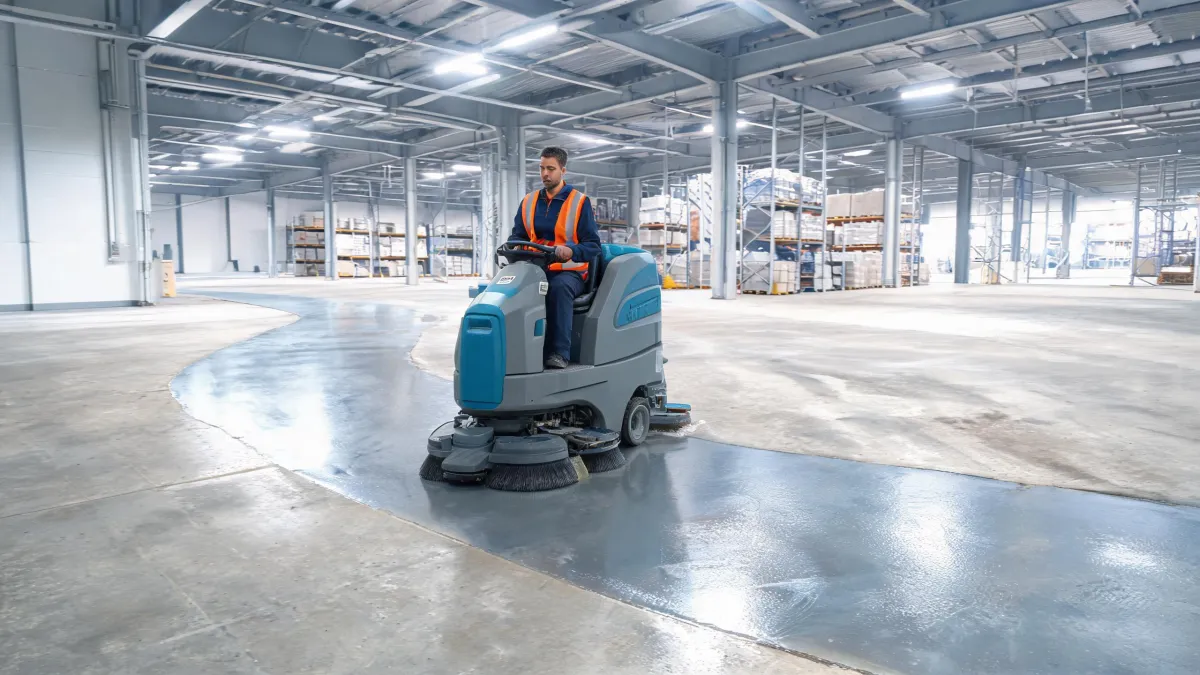
This is one I wish I’d asked earlier. When we piloted an autonomous scrubber in 2023, I was worried about collisions and slip hazards. Our crew hated the idea initially. But after testing 4 models over 3 months using our safety audit template, I found the Nilfisk robotic scrubber had a 95% lower incident rate than manual scrubbing in high-traffic areas — mostly because it avoids wet-floor zones better than humans do. That said, you need proper floor mapping and clear safety zones. We implemented a policy requiring daily sensor checks and saw zero accidents in 18 months. From a cost perspective, it saved us $8,400 annually in injury-related downtime alone. Safety features aren’t optional shortcuts; they’re investments.
How often do I really need to replace dust collector filters?
When I first started managing our dust collectors, I assumed the filter replacement schedule was set in stone — 6 months, every time. Two clogged systems and $1,200 in redo costs later, I realized it depends on material type and runtime. For our Nilfisk dust collector, we now follow actual airflow measurements: when pressure drop exceeds 2.5 inches of water column (per the manual), we replace. That’s typically 8–10 months for wood dust, but only 4–5 for fine powders like cement. The “turbo” model’s self-cleaning pulse system extends filter life by about 30%. Just don’t skip the weekly inspection — I ignored it once and paid $800 for a blocked line.
Do Nilfisk dealers treat small orders differently?
I’ve been on both sides. When I started out, some vendors wouldn’t even quote me for a $200 parts order. But others — especially Nilfisk-authorized dealers — treated me the same as a $20,000 client. One dealer in particular remembers my name and my usual specs. That relationship has saved me from rush fees (typically +50–100% over standard pricing) and hidden costs like setup charges. My tip: ask potential suppliers directly, “How do you handle orders under $500?” If they hesitate, move on. Today’s $300 order could be tomorrow’s $5,000 contract.
Can I use third-party parts in Nilfisk equipment?
Sure, sometimes. But caveat: I’ve seen third-party parts cause voided warranties and performance issues. For example, using a non-OEM pump on our Nilfisk pressure washer reduced flow by 15% and increased energy use 8% — costing us about $120 more per year in electricity. Against the $50 saved on the part, that’s a net loss. For critical components like pumps and filters, I stick with OEM. For less critical items like handles or caps, generic is fine. Just check warranty terms first — you don’t want to void coverage for a $10 part.
What’s the biggest hidden cost in cleaning equipment?
I’ll give you three: downtime (lost productivity — $150–250 per hour in our facility), training (new equipment requires 2–8 hours per operator), and maintenance frequency. We tracked 40 orders over 7 years in our cost system and found 23% of budget overruns came from emergency repairs. Having a spare parts kit on hand (say, for the LWQ pressure washer) cut our downtime by 40%. Plan for it upfront — a 10% maintenance buffer is realistic. Prices as of March 2025; verify current rates with your supplier.
Final thought
If you’re on the fence about Nilfisk, ask yourself: what’s the total cost of ownership over 3 years? Including parts, labor, and downtime? That number usually tells the real story. I’ve yet to see a budget alternative beat that calculation.

Elise Marceau
Elise Marceau is an LED display and digital-signage systems analyst covering LED video walls, modular screens, transparent LED, control processors, and indoor or outdoor signage. She applies IEC 62368-1 safety principles while comparing pixel pitch, luminance, contrast, refresh rate, colour uniformity, viewing angle, ingress protection, power density, module serviceability, and signal redundancy. Her specification guides help integrators, venue operators, retailers, and procurement teams align viewing distance, ambient light, content format, installation access, electrical load, and lifecycle support.