Quality Inspector's Take: Why We Chose a Nilfisk Advance Floor Scrubber (and Added a Nilfisk Excellent 160 Pressure Washer)
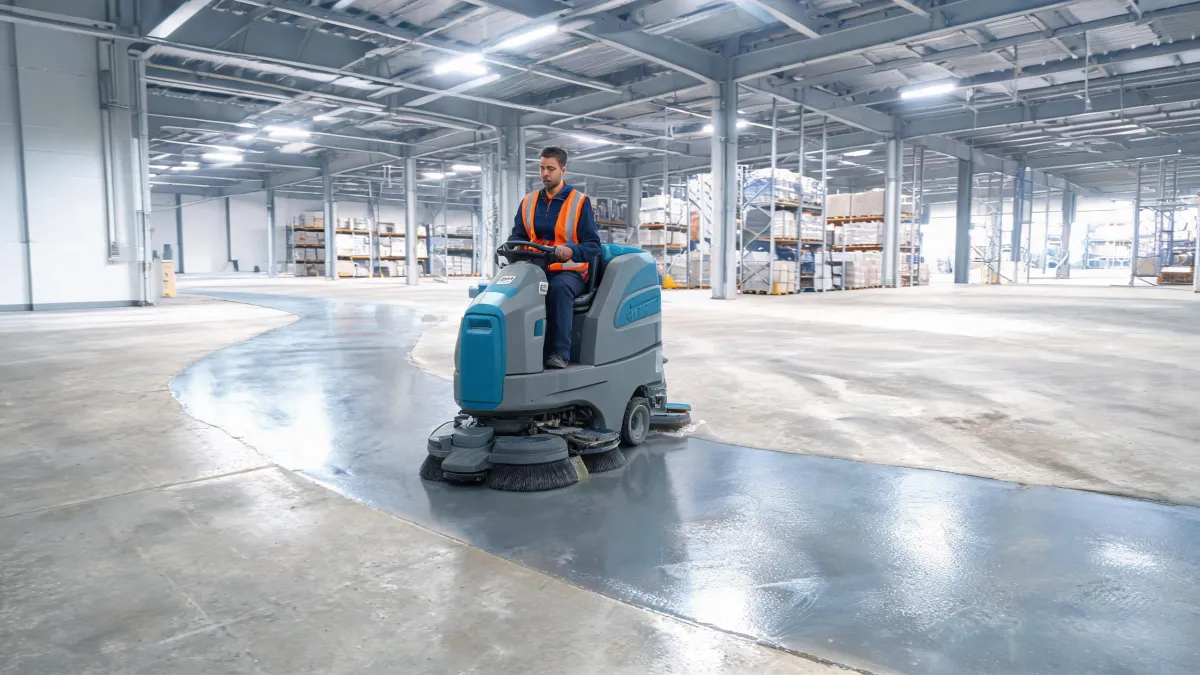
When a floor scrubber dies, it's not a maintenance inconvenience. It becomes a safety conversation. That's how I ended up in a cold warehouse in late November, standing next to a ride-on machine that would not hold a charge, with the second shift waiting for the main aisle to be clean enough to walk.
I'm not the floor care expert. I'm the quality inspector. In practical terms, that means I review equipment before we approve it. Over the last four years I've reviewed about 160 equipment purchases, and I've rejected or sent back roughly a third of the first deliveries since 2022. That sounds harsh, but when you operate a 185,000 sq ft distribution center, cleaning equipment is not decorative.
Here's the honest story of why we chose a Nilfisk Advance floor scrubber—and why the project turned out to be bigger than one machine.
The Call That Started It
Our maintenance manager called me after the second shift. "The ride-on scrubber is down. The battery pack won't hold a charge. The replacement pack costs almost a third of a new machine."
We needed a floor electric scrubber, and we needed it fast. At 185,000 square feet, there isn't a backup scrubber sitting around. Two shifts use the same machine, and when it's down, the floor stays dusty and greasy until someone cleans it manually.
I started where I usually start: a spec sheet.
The Comparison Sheet That Lied
Honestly, I'm not sure why manufacturers publish cleaning specs in a way that makes an underpowered machine look equal to a workhorse. My best guess: comparison shoppers focus on the biggest numbers on the page. If someone has a better explanation, I'd like to hear it.
On paper, the field narrowed to three machines. One had a fancier dashboard. One had a longer advertised run time. The third was a Nilfisk Advance floor scrubber. Nothing in the brochure made it look exciting. It just had the right dimensions and a distributor who could service it locally.
Then we made all three run in the same warehouse aisle.
The first machine cleaned well in straight lines but was awkward around pallet racks. The second left a thin line of moisture at the left edge of the squeegee, which would bother us on a polished floor. The Nilfisk Advance was not the fastest, but the operator who tested it said something that stuck with me: "That one is fine. I don't have to think about it."
The maintenance manager wrote a one-line note on the evaluation sheet:
We don't want another project. We want a machine that finishes the job.That note became my approval criterion.
The Dock Almost Broke the Budget
I was ready to send the PO on Friday. That morning, I walked the dock edge near the levelers and saw black tire marks and oil stains that had been baked into the concrete. A floor scrubber removes surface dirt, but it does not remove years of transfer marks. We needed a pressure washer too.
I told our distributor, "Add something for the dock." That was my mistake. The quote came back with the scrubber only. He heard "add it later"; I meant "include it in this project." We lost two weeks fixing that ambiguity.
The machine we eventually added was a Nilfisk Excellent 160 high pressure washer. I know some facilities choose consumer pressure washers for this job. If you're doing a Ryobi pressure washer automotive setup at home, that can work fine. But our dock gets used seven days a week, and the concrete around the levelers gets a lot of truck traffic. The Excellent 160 is built for more continuous work and easier service. That difference matters more than the upfront price.
That said, I'll be honest about the limitation: the Excellent 160 isn't the right choice for every dock. If you only need to rinse a small loading area once a month, you would be wasting money. For our run time and grease load, it made sense.
The "Budget" Scrubber I Still Think About
Why didn't I pick the cheapest machine in the demo? Because I tried that once in 2022 and it cost us more than the difference could ever justify.
At the time, I approved a lower-priced floor electric scrubber and saved about $3,100 on the initial purchase. The spec sheet looked close enough. The machine struggled with something the spec sheet didn't show: it left a film behind, especially on the high-traffic lane by the shipping office.
Within two months, that film turned into a visible haze. We had to strip and recoat about 8,000 square feet. The rework cost about $19,000. The "savings" from the scrubber was less than one-sixth of the cleanup. I still remember that number.
That is why I now watch demos with the operators who will actually use the machine. A floor scrubber's job is not to look busy. It's to leave the floor dry, clean, and safe.
The First Month
We ordered in early January. Even after making the decision, I kept second-guessing. What if the demo machine had been set up differently? What if we only got lucky with the floor temperature that day? I didn't relax until the first full month of reports showed no haze complaints and no slip-risk notes.
I've learned to be wary of perfect machine stories. There is no perfect machine. The right machine is the one that works with your operators, your floor, and your maintenance schedule. For us, the Nilfisk Advance floor scrubber was that machine. The Excellent 160 pressure washer fixed the dock problem we almost ignored.
What I'd Search For Now
If you're here because you searched nilfisk or nilfisk advance floor scrubber, this is the short version: the Advance is a strong workhorse for open-floor facilities, but it isn't automatically the best choice for narrow aisles or small rooms. Space matters.
If you searched for a nilfisk excellent 160 high pressure washer, it became the workhorse on our dock. Match it to the actual grease load, not to what looks impressive in a brochure.
If you searched for a floor electric scrubber, don't let the category name fool you. A floor electric scrubber with weak brush pressure and a poor squeegee is just a wet mop with a battery. Check the specs that affect the cleaning result, not just the app features.
And if you searched for an EGO floor scrubber or a Ryobi pressure washer automotive setup, think about the work you're doing. EGO makes good outdoor battery tools. Ryobi pressure washers have a place for home use and light automotive washing. They are not what I would choose for daily industrial cleaning. There's no shame in that; they're different product categories for different workloads.
The bottom line: I sign off equipment for a living. The cheapest purchase isn't always the most expensive mistake, but a bad scrubber can become one quickly.

Elise Marceau
Elise Marceau is an LED display and digital-signage systems analyst covering LED video walls, modular screens, transparent LED, control processors, and indoor or outdoor signage. She applies IEC 62368-1 safety principles while comparing pixel pitch, luminance, contrast, refresh rate, colour uniformity, viewing angle, ingress protection, power density, module serviceability, and signal redundancy. Her specification guides help integrators, venue operators, retailers, and procurement teams align viewing distance, ambient light, content format, installation access, electrical load, and lifecycle support.