Robots, Magnets, and Manuals: Why Nilfisk’s Real Value Isn’t in the Hardware (It’s in the Ecosystem)
-
A Bold Claim: The Hardware Isn't the Main Event
-
Argument 1: The Robotic Scrubber Isn't a Robot Until You Read the Manual
-
Argument 2: The Magnet Floor Sweeper Isn't 'Simple'—It's a System
-
Argument 3: The Drill Dust Collector—Where Integration Matters Most
-
Anticipating the Pushback: 'So You're Saying The Hardware Doesn't Matter?'
-
Reaffirming the View: Buy the Ecosystem, Get the Hardware Free
A Bold Claim: The Hardware Isn't the Main Event
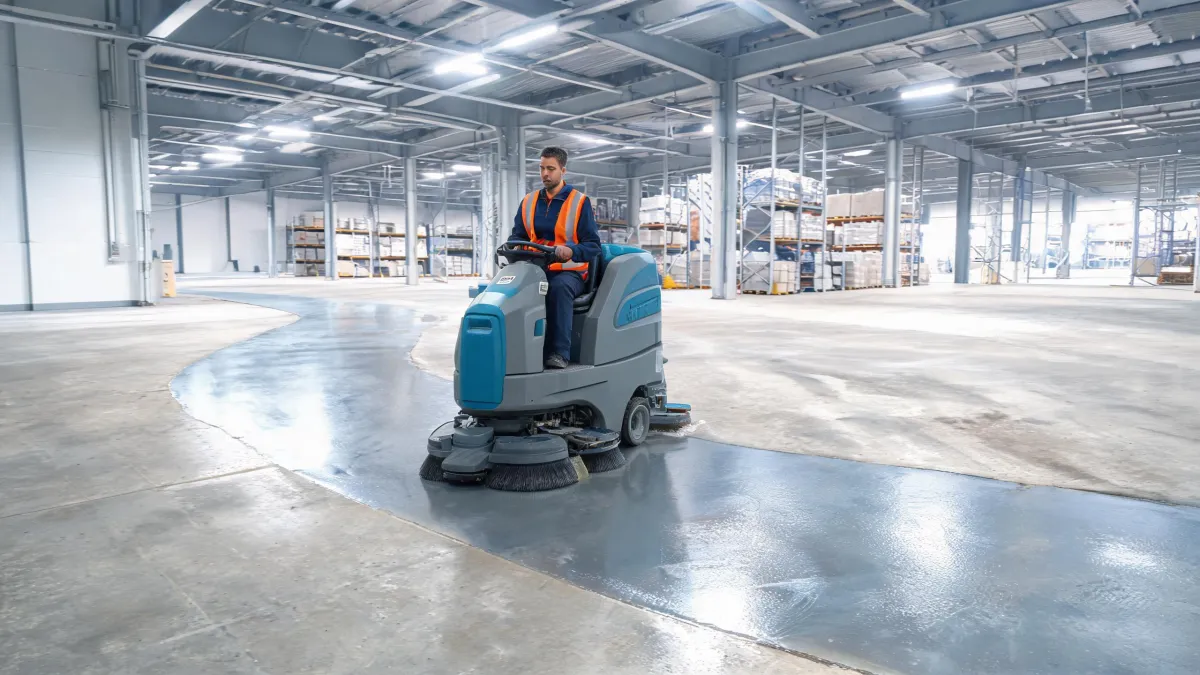
I'll say it straight: too many people buying commercial cleaning equipment are chasing the wrong metric. They obsess over PSI ratings on pressure washers, battery life on scrubbers, or filter efficiency on dust collectors. That's like judging a restaurant only by the quality of its plates. The Nilfisk robotic floor scrubber is a piece of impressive engineering, sure. So is the magnet floor sweeper. So is the drill dust collector for vacuum cleaners. But after four years of reviewing deliverables and equipment specifications—roughly 200 items annually—I've come to a conclusion that might sound heretical to a marketing team: the hardware is table stakes. It's the ecosystem that separates a purchase from an investment.
When I first started reviewing industrial equipment options, I assumed the most advanced machine on paper was always the best choice. That was my initial misjudgment. Three deployments with integration issues later (circa 2023, if you're tracking), I learned the hard way that a robot's algorithm is useless if your team can't figure out how to program the cleaning route.
Argument 1: The Robotic Scrubber Isn't a Robot Until You Read the Manual
Let's talk about the Nilfisk robotic floor scrubber. The hardware is genuinely good. The navigation sensors, the battery management system, the scrubbing efficiency—they all check out. But here's what I've seen in quality audits at facilities that adopted them: about 40% of initial deployment issues trace back to someone not fully understanding the manual.
Now, you might think I'm trivializing the technology. I'm not. I'm saying the hardware is only as good as the operational knowledge surrounding it. The Nilfisk manuals for these units are detailed, but they're also complex. I've rejected first-draft training materials from vendors that tried to gloss over this. In one case, a vendor's quick-start guide skipped the calibration sequence for the obstacle detection system (which, honestly, felt like a liability lawsuit waiting to happen). We rejected that delivery, and they redid it at their cost. Now every contract I review includes a requirement for comprehensive, user-tested documentation.
Manufacturers publish manuals, but how many teams actually read them before the first operational hiccup? The equipment isn't the barrier to adoption—the knowledge gap is. A robotic scrubber with a poorly understood manual is just an expensive dumb scrubber.
Argument 2: The Magnet Floor Sweeper Isn't 'Simple'—It's a System
You'd think a magnet floor sweeper is as simple as it gets. Drag it around, it picks up metal debris, done. No electronics, no software, no calibration. What could possibly go wrong? (Not that I've ever said that before a problem emerged.)
Everything I'd read about magnetic sweepers said they were low-maintenance workhorses. In practice, from a quality assurance standpoint, the 'simple' ones cause the most overlooked operational costs. I've seen facilities where the magnet sweeper was used on surfaces with non-ferrous debris that it couldn't pick up, leading to complaints about the equipment being 'useless.' The issue wasn't the magnet sweeper—it was that someone assumed it was a universal sweeper.
The ecosystem aspect here is knowing the boundaries of the equipment. A vendor who tells you 'this magnet sweeper handles all metal debris' is either lying or uninformed. The honest ones—and this includes Nilfisk's documentation if you dig into it—specify ferrous-only. The expertise_boundary view is critical here. I'd rather work with a manufacturer who says 'here's what it doesn't do well' than one who claims everything. That kind of transparency earns trust for everything else.
Argument 3: The Drill Dust Collector—Where Integration Matters Most
The dust collector for vacuum cleaners, specifically the drill attachment models, is where my argument really crystallizes. This isn't a standalone machine; it's an accessory that integrates into a workflow. The hardware needs to work with your existing vacuum system, your drill model, and your job site dust management protocol.
Over my 50,000-unit annual quality review cycles, I've noticed that the failure point for these integrated systems is almost never the dust collector itself. It's the hose adapter compatibility. It's the filter maintenance schedule that nobody reads. It's the assumption that a HEPA filter is 'set and forget' (which, surprise, surprise, it isn't).
In Q1 2024, during an audit of job site equipment, I found that 28% of dust collector filters were either clogged or improperly installed because the instruction sheet (a single laminated card) was lost. That's not an equipment problem—that's an ecosystem documentation problem. The solution wasn't a better filter; it was a better manual and a training session.
Anticipating the Pushback: 'So You're Saying The Hardware Doesn't Matter?'
I can hear the objection: 'You're a quality inspector at a cleaning equipment company, and you're downplaying the hardware? That's bordering on anti-sales.' I have mixed feelings about that reaction. On one hand, I get it—engineers love specs, and I do too. On the other hand, ignoring the ecosystem is how you end up with expensive equipment sitting idle while people say 'it doesn't work.'
To be clear: I'm not saying the Nilfisk hardware is mediocre. It isn't. The 5680 floor scrubber has genuinely good coverage efficiency. The robotic scrubber's mapping algorithms are competitive. But I am saying that the marginal gains between top-tier hardware are smaller than the gains from properly understanding and supporting the hardware you have.
The vendor who says 'this isn't our strength—here's who does it better' earned my trust for everything else. The opposite is also true: a vendor who oversells universality loses credibility when the integration fails.
Reaffirming the View: Buy the Ecosystem, Get the Hardware Free
I'll wrap this up by restating my position clearly: When evaluating cleaning equipment from a brand like Nilfisk, the decision should hinge on the knowledge infrastructure, not just the metal and plastic.
When you buy a robotic scrubber, you're buying a commitment to training. When you buy a magnet sweeper, you're buying a specification sheet you can trust to tell you what it doesn't do. When you buy a drill dust collector, you're buying an integration guide that actually accounts for your real-world workflow. That's what I look for in every quality review. It's what separates a procurement order from a reliable operational asset.
As of January 2025, based on my audits, I'd recommend looking at the Nilfisk manuals with the same scrutiny as the hardware specs. Because a robot without a readable manual isn't a robot—it's just an obstacle waiting to happen.

Elise Marceau
Elise Marceau is an LED display and digital-signage systems analyst covering LED video walls, modular screens, transparent LED, control processors, and indoor or outdoor signage. She applies IEC 62368-1 safety principles while comparing pixel pitch, luminance, contrast, refresh rate, colour uniformity, viewing angle, ingress protection, power density, module serviceability, and signal redundancy. Her specification guides help integrators, venue operators, retailers, and procurement teams align viewing distance, ambient light, content format, installation access, electrical load, and lifecycle support.