The $47,000 Floor Scrubber That Didn't Clean Anything: A Buyer's Guide to Total Cost Thinking
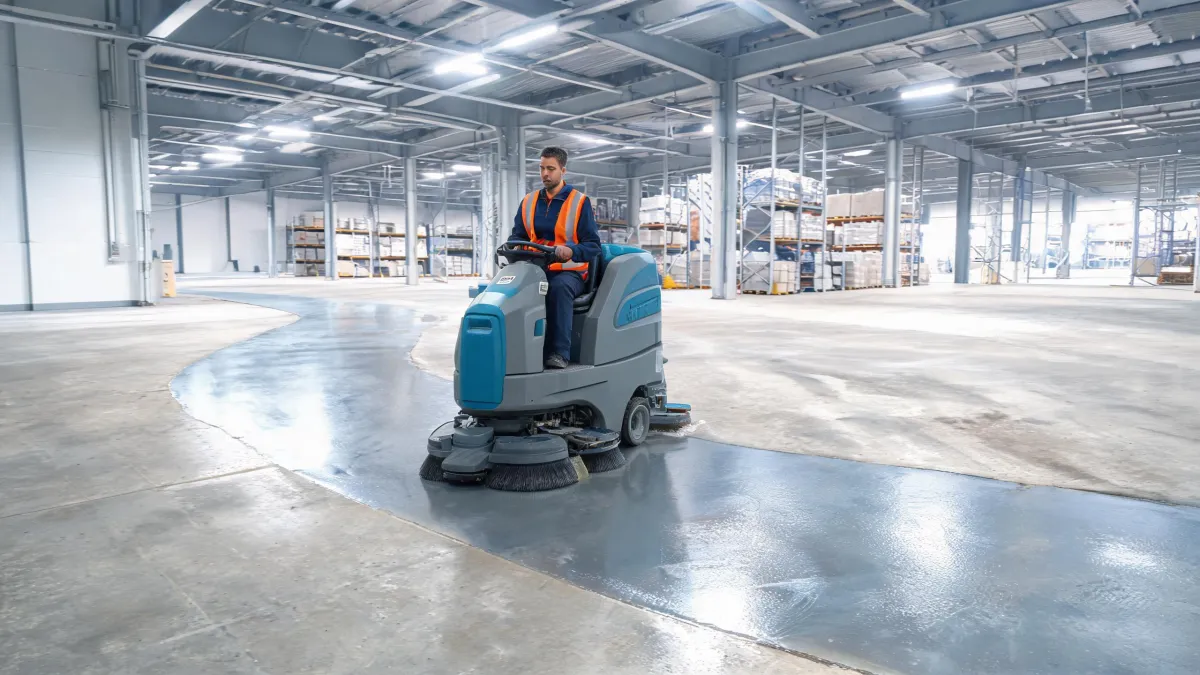
I remember the day I got the approval. It was a Tuesday, and I was excited. I'd found what I thought was a real bargain on a nilfisk advance floor scrubber for our warehouse. The price was nearly $3,000 under the other quotes. I ordered two. By Friday, I was on the phone with my VP of Operations, explaining why we had a brand-new floor sweeper scrubbers setup that didn't actually work for our layout and was going to cost more to fix than we "saved." Two months later, after a return fee and buying the correct nilfisk viper ride-on floor scrubber as710r-245, we spent about $47,000 total.
That was the year I learned about Total Cost of Ownership (TCO). The hard way.
The $47,000 number isn't just a dramatic opener—it's the real math on what happens when you buy on first price alone. And what's wild is how many procurement teams keep making this same mistake, especially with big-ticket industrial gear like floor scrubbers, stationary dust collector units, or that donaldson torit® unimaster® dust collector system everyone in logistics keeps talking about.
We Thought It Was a Price Problem
Let's start with the surface problem. That's where most buyers get stuck.
Every month, I talk to facility managers or office admin people who say: "The budget is $8,000 and the nilfisk advance floor scrubber quote is $9,500. Can't find anything cheaper?" Or they'll ask: "Why is the quote for a floor sweeper scrubbers system from Company A $12,000 while Company B is offering me $9,200?"
Here's the trap: Those questions feel like smart, practical questions. They sound like due diligence. They sound like you're protecting the company's money.
But they're actually the wrong questions.
They assume the problem is the sticker price. The quote. The invoice line item. And yeah, my finance team loves a low quote. But they also hate surprise expenses. And surprise expenses are exactly what you get when you don't dig deeper.
The Real Problem: What The Price Hides
When I took over purchasing in 2020, I quickly learned that price is just the tip of an expensive iceberg. The under-the-surface costs are where the real money goes. And this is the part most reviews or online articles won't tell you—because it's specific to your situation. But there are patterns.
1. The "Saving" That Costs More
The $3,000 I "saved" on that nilfisk viper ride-on floor scrubber as710r-245 actually cost me:
- Return freight (special handling): $1,200
- Restocking fee: $800
- Two days of maintenance crew overtime while we figured out what to do: $2,100
- The emotional cost of explaining it to my boss (priceless, but let's say expensive): easily worth another few grand in lost sleep
I had calculated the risk before buying. The upside was the $3,000 savings. The risk was the machine not fitting our layout. I kept asking myself: is $3,000 worth potentially wasting two weeks of hallway chaos and overtime? I thought it was. I was wrong.
2. The Operating Cost You Didn't Calculate
This one gets me. Most buyers focus on per-unit pricing and completely miss the setup fees, the onboarding time, the training your staff needs, and the maintenance contracts that add 30-50% to the total over 3 years.
For a stationary dust collector or a donaldson torit® unimaster® dust collector, for example, the filter replacement costs and energy consumption can be major cost drivers. The question everyone asks is "what's the price of the unit?" The question they should ask is "what's the total cost to install, operate, and maintain this unit for 5 years?"
That difference between purchase price and TCO? It's often bigger than the purchase price itself.
3. The Opportunity Cost of a Bad Fit
This is the one nobody puts on a spreadsheet. And I'm as guilty as anyone.
What did it cost us to have a machine that didn't properly clean our facility for two weeks? Probably more than the cost of the correct machine. The hallway looked dirty. The production team complained. The maintenance team was frustrated. That's not just a bad vibe—that's lost productivity and maybe a hit to customer perception. You can't Gantt chart your way out of that one.
Total Cost Thinking: The Smarter Way to Buy Equipment
So what do I do now? I stop looking at price first. I start looking at how a purchase fits our entire operation.
Here's my framework—and it's not rocket science. It's just the stuff I wish I'd known before I made that mistake.
- Beyond the sticker price: What does it really cost to own this thing for 3-5 years? Factor in maintenance, consumables (filters, pads, brushes), and replacement parts. Ask the vendor for a service schedule upfront.
- Integration cost: Will this machine actually work in our space? Will my team need training? Will it integrate with my existing cleaning regimen? A nilfisk viper ride-on floor scrubber as710r-245 might be perfect for a 20,000 sq ft warehouse, but wrong for a narrow-corridored office floor.
- Risk cost: What happens if it breaks? How quickly can I get support? Is the vendor known for responsive service, or will I be waiting a week while my facility gets dirtier? I now calculate the worst case—a week without the machine—and multiply that by the cost of that downtime.
The $500 quote that turns into $800 after shipping, setup, and revision fees isn't actually a $500 quote. It's a $800 quote with a misleading number in the subject line. Similarly, a cheaper floor sweeper scrubbers setup that needs constant repairs or requires a specialist to maintain it will cost you more than a more expensive, more reliable unit that just works.
So glad I finally switched to this mindset. I almost went back to the old way of just comparing list prices (ugh). Which would have meant repeating the same mistake, just with a different machine.
"The value of a good upfront evaluation isn't just the speed of the purchase—it's the certainty that the equipment will actually do its job for the next five years. For critical facility assets, knowing you won't have to buy again next year is often worth more than a lower price with 'estimated' performance."
This isn't about saying the most expensive option is always better. It's about saying the cheapest option is rarely the best overall. TCO includes: base price + setup fees + maintenance costs + energy costs + training costs + potential downtime costs + replacement costs. The lowest quoted price often isn't the lowest total cost.
And this isn't just for floor scrubbers or dust collectors. It's for any big purchase. Vendors know this. A vendor who can show you a clear TCO analysis for their nilfisk equipment? That's a vendor worth talking to. A vendor who just wants to fight on price? Probably hiding something.
That's what I tell every new facility manager I mentor. It's not a fancy system. It's just experience. Expensive experience. But I'm glad it's someone else's turn to avoid that lesson.
Of course, your situation could be different. One time, the cheap option actually worked out for us on a small vacuum. But that was the exception that proves the rule. For the big stuff—the stationary dust collector, the ride-on scrubber—it's worth doing the math right.
Think about your last big equipment purchase. Did you end up paying more than the quote? Did it perform as expected? If you're nodding your head right now, you might already know what I'm talking about. If you're looking at a new purchase—especially for something like a donaldson torit® unimaster® dust collector or a nilfisk floor scrubber—maybe it's time to ask the question you haven't been asking.

Elise Marceau
Elise Marceau is an LED display and digital-signage systems analyst covering LED video walls, modular screens, transparent LED, control processors, and indoor or outdoor signage. She applies IEC 62368-1 safety principles while comparing pixel pitch, luminance, contrast, refresh rate, colour uniformity, viewing angle, ingress protection, power density, module serviceability, and signal redundancy. Her specification guides help integrators, venue operators, retailers, and procurement teams align viewing distance, ambient light, content format, installation access, electrical load, and lifecycle support.