Why Cheap Industrial Cleaning Equipment Costs More: A Nilfisk Procurement Deep Dive
Every month, the same scene plays out in my office. The cleaning supplier invoice arrives, I approve it, and then I walk out to the production floor and see dust in the corners, a puddle near the wash bay, and someone sweeping with an ancient push broom. We spend real money on cleaning. The floor still looks like a dust bowl.
I'm a procurement manager at a 280-person metal fabrication company. For the past six years, I've tracked roughly $180,000 in cleaning and maintenance spending through our cost system. When I audited our 2024 numbers, I found almost $46,000 went to cleaning equipment, filters, bags, rentals, and repairs. That's not a vague budget category. It's line items. It's receipts.
The conventional story is that this is a maintenance problem, or maybe a floor discipline problem. But after tracking invoices and comparing vendors, I think the real problem is how we buy cleaning equipment in the first place.
The Surface Problem: You Keep Buying Cleaning Tools Like They're Commodities
Let's start with what I used to do. I'd look at a shop vacuum, see a $400 price tag, and think: good enough. Then I'd buy two, because they're cheap. Nine months later, I'd buy another one because the motor burned out. Then another, because the filter clogged and the operator used it without a bag.
Not ideal, but workable. Until you add the labor. Every time a vacuum dies, someone spends twenty minutes cleaning the mess, thirty minutes troubleshooting, and an hour filling out a purchase request. That's not cheap. That's a subscription to bad outcomes.
The Deeper Issue: Under-Specified Equipment and the Cheap Trap
Here's something vendors won't tell you: a standard shop vacuum and an industrial vacuum cleaner are not the same machine class. A shop vacuum is built for occasional messes. An industrial model is built for hours of operation, fine dust, and continuous airflow.
Here's the thing: most of the cleaning equipment sold to B2B buyers isn't designed for continuous production environments. It's consumer gear with a yellow sticker. A standard shop vacuum is rated for intermittent use. A commercial pressure washer might be okay for occasional washdowns, not daily use. And a floor sweeper without proper filtration just redistributes dust.
In our facility, the biggest shift happened when I stopped asking what the price was and started asking what this equipment is actually rated to do.
Shop Vacuums vs. Industrial Vacuum Cleaners
Look, I'm not saying every facility needs a Nilfisk industrial vacuum cleaner. I'm saying you need a machine designed for the duty cycle you're actually going to run. We ran a comparison during our 2023 annual cleaning review. Old setup: two shop vacuums, total cost after 14 months of filters and repairs: about $1,400. Replacement: one Nilfisk industrial vacuum cleaner with proper filtration and a continuous-duty rated motor, total after 14 months including filters: $2,650. The Nilfisk cost more. It also did not catch fire, did not clog every week, and did not require the maintenance team to rebuild the motor switch.
Everything I'd read said premium options always beat budget ones. In practice, for our specific use case, the gap was narrower than expected in purchase price and much wider in reliability. The cheaper route wasn't cheaper.
Floor Sweeping Is Not Cleaning
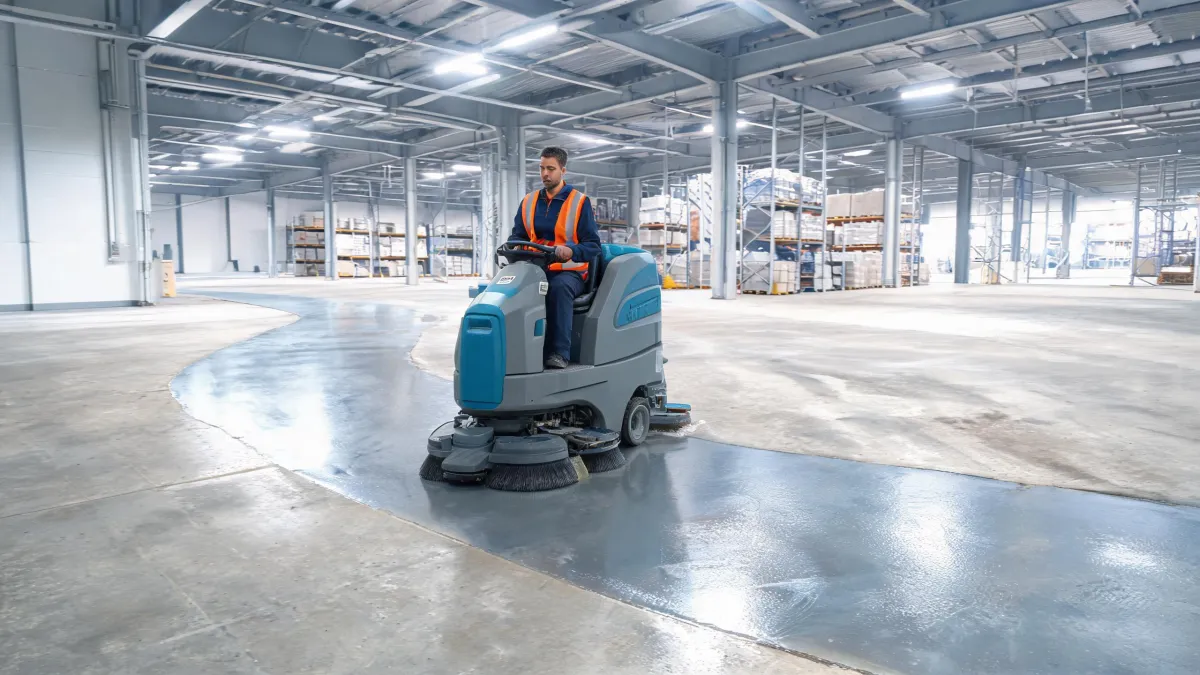
We bought the Nilfisk Terra 28B walk behind floor sweeper after I watched a crew sweep the aisle for twenty minutes. The dust cloud hung in the air for another hour. The Terra 28B is not a complicated machine, but it has one feature that changed our routine: the filter system captures the dust instead of pushing it around. That's not a premium marketing feature. That's the difference between cleaning and moving dirt.
Dust Collection Is Engineering, Not Shopping
Now for the one that worries me: if you search for 'magnesium dust collector' or 'best air dust collector,' you'll see a list of boxes with dust hoses. That's not how dust collection works. A magnesium dust collector is a safety system, not an accessory. The filter media, the grounding, the airflow, the spark risk, the housekeeping procedures—all of it has to match your specific process. I'm not 100% sure of the exact code section numbers, but I know enough to be careful: we don't buy those from a catalog. We send the dust and airflow data to an engineer.
Per FTC advertising guidelines (ftc.gov), a company that calls itself 'the best air dust collector' has to substantiate that claim. But substantiation isn't proof for your facility. The best product for someone else's metal finishing shop may be the wrong product for yours.
What Poor Industrial Cleaning Actually Costs
I've kept a cost tracking spreadsheet for six years. Not to micromanage people, but because I got burned twice by hidden fees and needed data. The total cost picture includes at least six categories that don't show up on the invoice:
- Repairs and downtime. Every hour of production time lost to cleaning equipment breakdowns is an hour you already paid for.
- Re-cleaning. A vacuum with poor filtration doesn't remove dust; it just suspends it, so you clean the same surfaces twice.
- Consumables. Cheap filters clog faster, and clogged filters kill motors.
- Safety and compliance. With combustible dust, the stakes are different.
- Labor inefficiency. A broom is cheap until you pay someone to use it for three hours a day.
- Urgency premiums. In March 2024, we paid $620 to express-ship a replacement fan for our dust collection system. The alternative was missing a customer deadline worth $18,000. That $620 wasn't waste. It was the cheapest insurance I bought that quarter.
The uncertain option is always the expensive option. You just don't know the price until later.
That last point doesn't get enough attention. When people ask me if rush delivery is worth it, I say yes in specific situations. An extra $400 for guaranteed delivery on a needed part is not overpaying. It's buying certainty. The late part costs more, but you don't see the cost on the invoice. You see it when a production line stops and the customer waits.
The Short Version: Equipment That Pays for Itself
I'm not here to sell you a full fleet makeover. But after six years of this, I have a simple rule: buy equipment that is designed for the duty cycle you run, and let the cost spreadsheet decide.
The Nilfisk products we use in our plant made sense only because they matched our specific problems:
- Nilfisk industrial vacuum cleaner: For continuous fine dust cleanup. It costs more upfront and less over two years.
- Nilfisk Terra 28B walk behind floor sweeper: For daily floor maintenance, with real dust control.
- Aquasis pressure washer: Replaced two consumer units. Our wash bay water usage dropped noticeably, and we stopped replacing pumps every spring.
One more thing: the phrase 'best air dust collector' is marketing. A dust collector that's engineered for your facility—whether for magnesium dust or general air quality—is an investment. Start with a site assessment, not a search result.
Take this with a grain of salt. My data comes from one metal fabrication plant in the Midwest, not from a laboratory. But after six years of tracking every cleaning-related invoice, I know this: the cheap option usually wasn't. The expensive option, when chosen for the right reason, usually paid for itself.
The floor still gets dirty. It's a factory. But now it gets dirty after the shift, not during it.

Elise Marceau
Elise Marceau is an LED display and digital-signage systems analyst covering LED video walls, modular screens, transparent LED, control processors, and indoor or outdoor signage. She applies IEC 62368-1 safety principles while comparing pixel pitch, luminance, contrast, refresh rate, colour uniformity, viewing angle, ingress protection, power density, module serviceability, and signal redundancy. Her specification guides help integrators, venue operators, retailers, and procurement teams align viewing distance, ambient light, content format, installation access, electrical load, and lifecycle support.