How I Learned to Buy Nilfisk Ride-On Scrubber Dryers—After Paying $18,000 for a Mistake
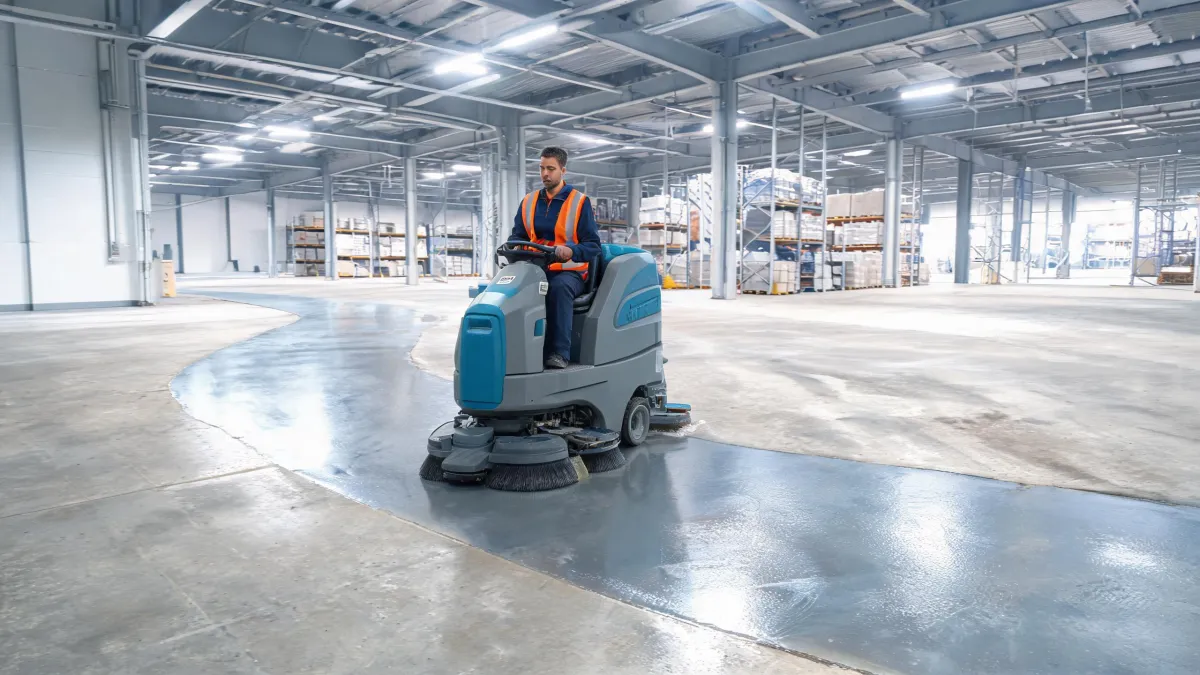
It started with a clean floor. At least, what I thought was a clean floor.
In March 2021, my maintenance team and I were prepping for a customer audit at our 80,000-square-foot distribution center. The flooring in the main aisle had that dull, streaky look you get when a machine is trying to scrub but the squeegee isn’t making full contact. I called it “clean enough.” The customer didn’t.
That audit became the public unveiling of a lesson I’d spent the previous eight months learning: the cheapest ride-on scrubber dryer quote is rarely the cheapest. I’ve been handling cleaning equipment procurement for seven years. I’ve personally made—and documented—four significant mistakes, totaling roughly $18,000 in wasted budget. The big one accounted for nearly all of it. This is how it happened, and the checklist I now use to make sure it never happens again.
The Quote That Looked Too Good—and Was
Back in late 2020, we were replacing an aging walk-behind scrubber. The operation had grown, and we needed a ride-on model to cover the warehouse in the time we had between shifts. I asked for quotes from four floor scrubber companies. Three came back within a reasonable range. The fourth was about 28% lower.
From the outside, it looked like a no-brainer. The machine spec sheet was similar. The battery amp-hours looked acceptable. And the account manager told me, “We can have it on your dock next week.” The reality was that the quote did not include the parts, service intervals, or the technician visits that would turn the deal into a losing one.
I signed the purchase order in January 2021. For the first six weeks, the scrubber was great. Then things started to drift.
What the Sticker Price Wasn’t Telling Me
The first red flag was battery runtime. We scheduled cleaning for two 5-hour windows every night. The machine made it through about 3.5 hours before the low-battery alarm forced the operator to stop, recharge, and wait. That meant the floor wasn’t dry before the first shift started.
I called the vendor. They said battery care was on us—we needed to use their “conditioning process,” which meant extra downtime. Then the brush deck started leaving swirl marks. The pads wore unevenly, and the dealer quoted $600 for a replacement deck kit. Then the vacuum motor died.
This is the part I hate telling people, because it sounds like something from a training manual. The motor died because we ran the machine over a pile of metal shavings and stray nails from the fabrication line. We had not added a nails collector dust attachment to the vacuum inlet. The debris got pulled into the motor housing, and the repair cost was $1,400. The downtime was 9 days.
So now I had a ride-on scrubber dryer that couldn’t finish a shift, a service vendor with no local stock, and a customer audit approaching.
When the Floor Became a Problem
The audit was in March 2021. My team ended up using an old 22-inch walk-behind machine for two nights to make the floor pass a white-glove inspection. It worked, barely, but it put a spotlight on our equipment strategy. The customer’s facilities manager asked me a question that stuck:
“Are you running this operation on backup machines?”
I didn’t have an answer. That was the turning point.
After the audit, I sat down with the maintenance supervisor and a calculator. The first-year total cost of the “cheap” scrubber was 43% higher than the next bid we’d rejected. That included repair calls, extra labor from slower cleaning, replacement parts, and the money we spent looking like amateurs. I had mixed feelings about the whole thing. Part of me wanted to defend the original decision—I had followed the budget. Another part knew I’d skipped the questions I would have asked in any other procurement category.
Before I got into facilities, I spent a few years buying print. In that world, the Pantone Matching System sets an industry tolerance of Delta E under 2 for brand-critical colors. That taught me to trust measurable thresholds. The cleaning equipment world has thresholds too: cost per square foot, uptime percentage, service response time. The cheap scrubber was failing all three.
Why We Switched to Nilfisk
When we went back to the market, I made a rule: show me the total cost over 5 years, not just the machine price. Two companies did that. Nilfisk was one of them, and their quote for a Nilfisk ride on scrubber dryer was not the cheapest sticker price. It was the most honest total price.
We also standardized on Nilfisk pressure washers for the loading docks and equipment bays. That decision came after I asked a simple question: “If a part breaks, where is it tomorrow?” The previous vendor didn’t have an answer. Nilfisk had a local distributor with key spares on the shelf. That alone changed the service math for us.
Here’s what I did not expect: the same transparent approach applied to consumables. Brushes, squeegee blades, filters—the Nilfisk pricing was laid out in a way I could show to my manager without a spreadsheet of hidden fees. No “setup charges.” No surprise “expedited handling” fees. The price was the price.
The Checklist That Saved the Next Purchase
Since that mistake, I’ve kept a four-point checklist for anyone on my team who buys cleaning equipment. It has caught 47 potential errors in the past 18 months, and it probably saved us more than we lost on the bad scrubber.
- Ask what is not included. Not “what’s the price?”—ask “what’s not included?” Service visits, battery replacement cycles, wear parts, remote monitoring, training. All of that either costs money or costs downtime. If a quote doesn’t show a service line, I do not assume it’s free.
- Demand a line-item service plan. The best floor scrubber companies will show you expected failure intervals. If they can’t, they haven’t built one.
- Match the machine to the debris. If your facility has construction residue, metal shavings, or any kind of loose hardware, budget for a nails collector dust setup or a vacuum with debris protection. Do not assume the scrubber will handle it.
- Test the robot option if you can. When we benchmarked, the most advanced robot floor scrubber we evaluated was Nilfisk’s autonomous unit. It mapped the warehouse, returned to charge, and ran overnight without an operator. That’s not a spec-sheet luxury. It eliminates the scheduling bottleneck that killed our cheap machine.
The Real Lesson
So glad I pushed for total-cost transparency before signing the Nilfisk order. I almost renewed the old contract to avoid admitting a mistake. That would have been another year of downtime, another audit embarrassment, and a lot more than $18,000 in waste.
People assume that lower quote means the vendor is more efficient. What they don’t see are the costs that get shifted to later—your labor, your repairs, your reputation. The cleaning industry isn’t immune to that. But there are suppliers who operate differently, and you can find them by asking the uncomfortable questions.
If you’re comparing floor scrubber companies right now, take it from someone who paid the difference twice. Bottom line: the sticker price is a starting line, not a finish line. Get the full picture. Your floor—and your budget—will thank you.

Elise Marceau
Elise Marceau is an LED display and digital-signage systems analyst covering LED video walls, modular screens, transparent LED, control processors, and indoor or outdoor signage. She applies IEC 62368-1 safety principles while comparing pixel pitch, luminance, contrast, refresh rate, colour uniformity, viewing angle, ingress protection, power density, module serviceability, and signal redundancy. Her specification guides help integrators, venue operators, retailers, and procurement teams align viewing distance, ambient light, content format, installation access, electrical load, and lifecycle support.