Lease vs. Buy: The Real Cost of Industrial Cleaning Equipment (A Nilfisk Buyer's Guide)
-
The $3,200 Mistake That Changed How I Buy Cleaning Gear
- Dimension 1: Upfront vs. Ongoing Costs – The Iceberg Illusion
- Dimension 2: Maintenance & Downtime – The Hidden Tax on Productivity
- Dimension 3: Technology & Performance – The 'Kenmore Floor Sweeper Parts' Trap
- My Recommendation: When to Choose Which
The $3,200 Mistake That Changed How I Buy Cleaning Gear
I'm a facilities procurement specialist. For the last six years, I've been handling equipment orders for a mid-sized manufacturing plant. In my first year (2018), I made a classic error: I bought the cheapest industrial vacuum I could find. The unit itself was $1,200. The problems it caused—downtime, poor filtration, replacement parts—added up to over $3,200 in the first 18 months. I documented every penny.
That mistake, and a few others (including a $890 redo on a pressure washer hose order that was 2 inches too short), taught me a brutal lesson. The purchase price isn't the cost. It's just the starting bid. This article compares two common paths for getting industrial cleaning equipment—specifically leasing a floor scrubber versus buying a Nilfisk pressure washer or Zirconium dust collector—using a Total Cost of Ownership (TCO) framework. I'm not here to sell you anything. I'm here to help you avoid my mistakes.
We're comparing three specific scenarios based on keywords I see constantly:
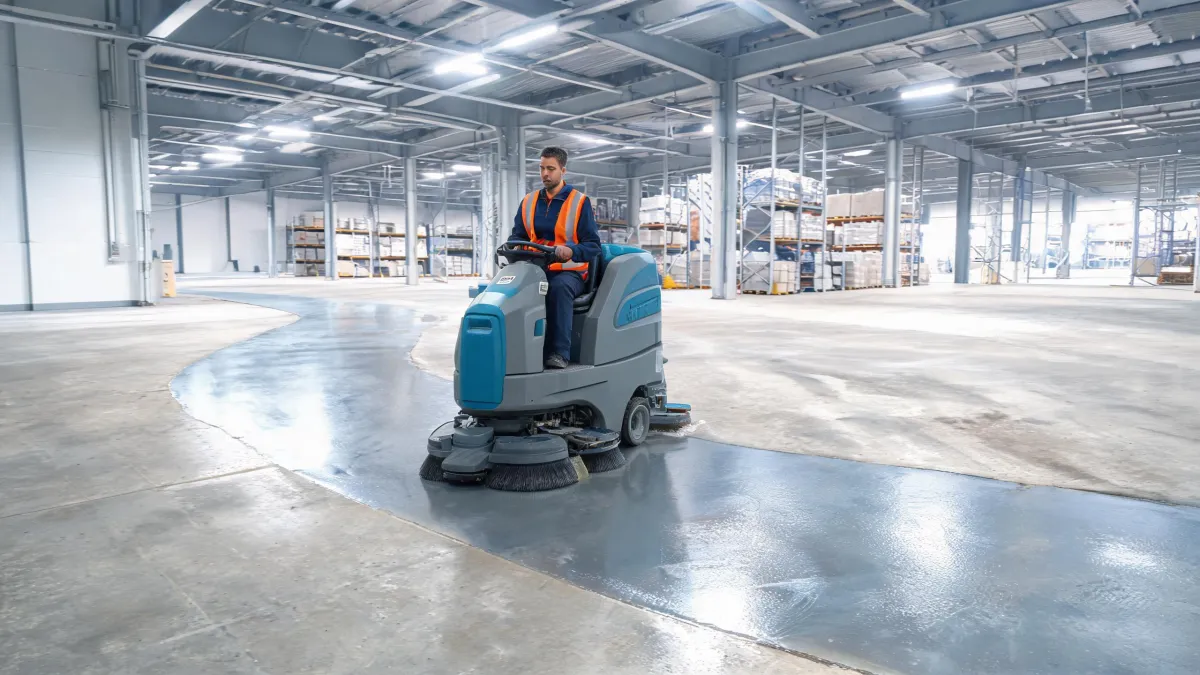
- Scenario A: Leasing - Acquiring a floor scrubber (like those from Nilfisk) via a lease agreement.
- Scenario B: Buying - Purchasing a pressure washer (like a Nilfisk premium model) or a specialized dust collector (like a Zirconium unit) outright.
The core question isn't "which is cheaper?" It's "which is the best value for your specific operation?" We'll look at three critical dimensions: Upfront vs. Ongoing Costs, Maintenance & Downtime, and Tech & Performance.
Dimension 1: Upfront vs. Ongoing Costs – The Iceberg Illusion
This is where most people mess up. They see the monthly lease payment and think it's expensive. Or they see the sticker price of a Nilfisk premium pressure washer and think it's too much. Both are missing the hidden costs underneath the surface.
Leasing a Floor Scrubber: Lower Entry, Higher Monthly Burn
- Upfront: Minimal. Often just a security deposit and the first month's payment. This preserves your capital for other projects (note to self: ask about this if your CFO is tight on cash).
- Ongoing: A fixed monthly fee. This includes the equipment, but depending on the agreement, may or may not include maintenance or replacement parts. I've seen contracts where a simple brush head replacement costs the lessee an extra $150 every quarter. That adds up.
- TCO Trap: Over a 3-5 year period, you can easily pay 1.5x to 2x the purchase price of the scrubber. You're paying for the convenience of not owning it.
Buying a Nilfisk Pressure Washer or Zirconium Dust Collector: High Entry, Lower Long-Term Cost
- Upfront: Significant. A Nilfisk premium pressure washer can run $3,000-$8,000+. A Zirconium dust collector (the ones built for fine particulate) can be $10,000+. It hurts to write that check.
- Ongoing: Lower. Your costs are maintenance, replacement parts (hoses, nozzles, filters), and utilities. No monthly equipment fee.
- TCO Trap: The risk of a major failure is on you. If the motor blows after year 3, that's a $1,500 repair bill you weren't expecting. But if you maintain it, the equipment can last 10-15 years. The math works in your favor by year 4 or 5.
Dimension 1 Verdict: Leasing wins for short-term cash flow and seasonal needs. Buying wins if you plan to use the equipment for more than 3 years. The Zirconium dust collector, for example, has a TCO that drops dramatically after year 2 if you properly maintain the filter system.
Dimension 2: Maintenance & Downtime – The Hidden Tax on Productivity
I once ordered a replacement hose for a Nilfisk pressure washer. I checked the model number, I approved the order, I processed it. It was the wrong length. That error cost $450 in return fees and shipping, plus a 1-week delay where we had to rent a machine from a local supplier. That rental cost? More than the hose. This experience taught me to look at maintenance logistics before signing anything.
Leasing: Simplicity at a Price
- Maintenance: Usually included in the lease (or available as an add-on). The vendor handles repairs, often within 24-48 hours. This is a massive relief for a busy facility manager.
- Parts: You don't need to stock spare parts. The leasing company manages the supply chain.
- Downtime Risk: Low. If the machine breaks, you get a replacement or a loaner. The downtime risk is transferred to the lessor.
Buying: Control, but Responsibility
- Maintenance: It's all on you. You either have an in-house maintenance team or you contract a local service. For a Nilfisk pressure washer, you can often get a service contract, but that's an extra cost.
- Parts: You need to stock critical spares. For a Nilfisk premium unit, that means having a spare hose (the correct length!), nozzles, and seals. For a Zirconium dust collector, the filters are the key. They're expensive and have a specific lifespan (check the manufacturer's specs, as of 2025, many use HEPA H13 filters). Running a Zirconium unit with a clogged filter drastically reduces efficiency and can damage the motor.
- Downtime Risk: High if you're not prepared. A 3-day delay for a replacement part can halt a production line.
Dimension 2 Verdict: Leasing wins for minimizing downtime risk. Buying wins if you have a strong maintenance team and can manage your own spare parts inventory. Honest admission: I've never fully understood why some vendors have parts on a 2-day turnaround and others take 3 weeks. My best guess is it ties to their inventory management system.
Dimension 3: Technology & Performance – The 'Kenmore Floor Sweeper Parts' Trap
This dimension is about the machine's capability and its long-term relevance. I see a lot of search queries for "Kenmore floor sweeper parts". This is a classic trap. You buy a lower-cost machine, but the company eventually discontinues it or makes parts hard to find. Then you're stuck with a unit you can't fix, forced to buy a new one. The TCO of a cheap machine can skyrocket in year 4.
Leasing: Access to the Latest Tech
- Tech: You can frequently upgrade. If Nilfisk releases a new autonomous floor scrubber with better battery life, you can swap your lease at the end of the term. This keeps your facility at peak efficiency.
- Performance: You're always using a relatively new machine. This means higher efficiency, better battery life (for electric units), and better cleaning results.
- The 'Kenmore' Risk: Low. You're not buying an asset that could become obsolete. You're buying a service.
Buying: Asset Lock-in
- Tech: You own the tech. That's great if it's a workhorse like a Nilfisk pressure washer that hasn't changed much in 5 years. It's a risk if you buy a specialized Zirconium dust collector and then new OSHA regulations (like tighter limits on crystalline silica dust) come out.
- Performance: The performance degrades over time, even with good maintenance. A 7-year-old scrubber simply doesn't clean as well as a new one.
- The 'Kenmore' Risk: High. If you buy a niche brand or a model that's discontinued, you're at the mercy of the aftermarket and eBay for parts. I've seen facilities wasting hours trying to find a simple seal. The administrative cost of that is real, even if it doesn't show up on a purchase order.
Dimension 3 Verdict: Leasing wins for staying on the cutting edge of technology. This is a surprise conclusion for many who think owning is always better. Buying wins for proven, stable technologies (like a basic Nilfisk pressure washer) where the design doesn't change much.
My Recommendation: When to Choose Which
After making my share of expensive mistakes, here's how I break it down now. I use a simple decision matrix based on your facility's needs.
Lease the Scrubber if:
- You have limited capital and want fixed monthly costs.
- You want to offload all maintenance risk.
- Technology changes fast in your industry, and you want access to the latest battery or autonomous tech.
- Your need is temporary (e.g., a seasonal peak or a one-year project).
Honestly, I'm not sure why more small facilities don't lease. The cash flow benefit alone is often worth the premium. Even after choosing to lease my first scrubber, I kept second-guessing. What if the lease contract had hidden fees (like for wear and tear)? The 2 weeks until I got the contract reviewed by legal were stressful.
Buy the Nilfisk Pressure Washer or Zirconium Dust Collector if:
- You have the capital and plan to use the equipment for 5+ years.
- The technology is mature and won't change drastically (a pressure washer is a pressure washer).
- You have an in-house maintenance team that can handle repairs and stock parts (like that Nilfisk pressure washer hose).
- The asset has a specific, critical function (like the Zirconium dust collector for hazardous dust) where you need full control.
I will say, buying the Zirconium unit was a gut-check. The upfront cost was high. But calculating the TCO against the leasing option for a similar-capacity unit showed I'd save $4,000 over 4 years if I maintained it properly. The key word is 'if'. You have to commit to the maintenance schedule.
Final Thoughts: The Number That Matters
Don't ask, "Can I lease this?" or "Can I buy this?" Ask, "What is the TCO for this specific piece of equipment over the period I plan to use it?" Include the capital cost, the maintenance, the parts, and the downtime risk. That number is the truth.
And for the love of all that is good in procurement, triple-check the length of your pressure washer hose before you order. That $890 mistake taught me to never trust a spec sheet without a physical measurement.

Elise Marceau
Elise Marceau is an LED display and digital-signage systems analyst covering LED video walls, modular screens, transparent LED, control processors, and indoor or outdoor signage. She applies IEC 62368-1 safety principles while comparing pixel pitch, luminance, contrast, refresh rate, colour uniformity, viewing angle, ingress protection, power density, module serviceability, and signal redundancy. Her specification guides help integrators, venue operators, retailers, and procurement teams align viewing distance, ambient light, content format, installation access, electrical load, and lifecycle support.